


Business owners often want to know what issues customers mention most in reviews. At BBB®, we collect thousands of customer narratives every day. To better understand what drives satisfaction — and frustration — we manually reviewed a sample of 10,000 BBB customer reviews. We also examined established research tools used to measure service quality, including ServQual.
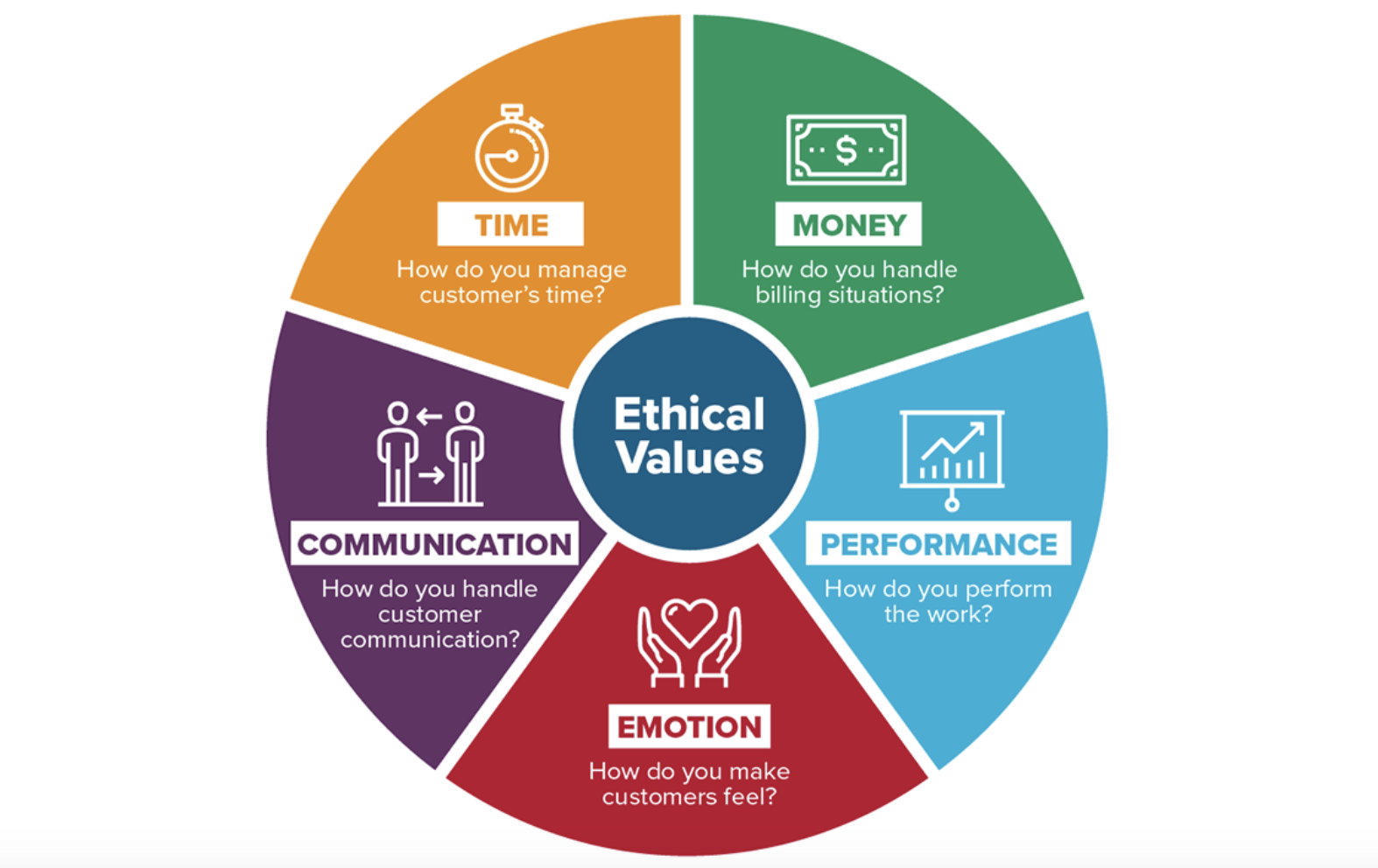
 From this work, we identified five core dimensions that appear consistently across industries. Together, they capture more than 90% of the details found in BBB customer reviews and allow us to spot patterns that can help businesses strengthen performance. We also developed algorithms to analyze these dimensions at scale, giving us deeper insights into what customers experience.
Here’s a closer look at the five dimensions:
1. Money Management
This is often the most visible aspect of an experience. Money management reflects how a business handles pricing, billing and the value customers feel they receive. Positive reviews frequently mention fair pricing and clear expectations. Negative reviews often point to surprises—billing errors, unexpected fees, unclear estimates or automatic renewals customers didn’t anticipate. When financial expectations don’t match the outcome, trust erodes quickly.
2. Time Management
Time is a major factor in customer satisfaction. This dimension focuses on speed and punctuality. Consumers value businesses that arrive on time, finish jobs promptly and avoid unnecessary delays. The costs of poor timing can be real: spoiled food when an appliance repair is delayed, an extra night in a hotel when an HVAC repair takes longer than expected or missed work hours waiting for a technician. Reliability in scheduling builds confidence, while inconsistent timing causes stress and added expense.
3. Communication
Communication includes responsiveness, clarity and expertise. Satisfied customers often highlight helpful explanations, easy contact with company staff and prompt replies. Dissatisfied customers usually say the opposite — they couldn’t reach anyone, messages went unanswered or they received conflicting information. Breakdowns in communication lead not only to frustration but also to mistakes and misunderstandings that may cost time or money.
4. Emotion
Emotion refers to people skills — respect, empathy and professionalism. Many customers remain loyal to businesses because of the personal connection they feel. When customers sense genuine care or appreciation, their trust grows. But when they feel disrespected, dismissed or mistreated, the emotional impact overshadows the service itself. Complaints involving rude behavior, raised voices or harassment often cite emotional harm as the central issue.
5. Work Performance Quality
Whether a business provides a product or service, performance quality is essential. For products, customers expect durability and functionality. For services, they expect thoroughness and accuracy. A dress that unravels after one use or a lawn cut with uneven edges undermines confidence. Even when a business excels in other dimensions, poor performance can overshadow everything else.
Where Ethics Fit In
Ethics influence every dimension. At the center of customer experience is whether a business acts in ways that support customer well-being. Ethical lapses can appear as hidden fees (money), unreturned calls (communication), unfinished work (quality), unnecessary delays (time) or disrespectful behavior (emotion). When ethical principles guide decisions, businesses strengthen trust across all five areas.
Putting the Insights to Work
Businesses can use these dimensions to improve customer experience in practical ways. Start by reviewing your last 25 customer reviews and placing each into one of the five categories. Look for patterns — recurring strengths, repeated frustrations or areas that rarely receive feedback.
Hold a short Customer Experience Huddle with your team to discuss what you see. Identify one improvement in each dimension to implement over the next 90 days. Small adjustments — clearer invoices, faster follow-ups, improved arrival windows or additional quality checks — can create immediate, noticeable benefits.
Track progress through response times, on-time performance, satisfaction surveys and review trends. And remember, BBB is here to help you interpret patterns, compare benchmarks and strengthen your approach.
Ready to go deeper? Explore the full framework and additional insights at bit.ly/5-dimensions.
Content summarized and adapted from research conducted by the International Association of Better Business Bureaus (IABBB) Research Team.