
Stark Market Club
On Wednesday evenings at Maple Grove Elementary and early mornings at Middle School Central, the conversation sounds more Wall Street than playground.
Third graders debate profit margins. Middle schoolers analyze market trends. Students talk confidently about diversification, mutual funds and long-term investing.
At the center of it all is Mika Stark, a third-grade High Ability (Extended Learning) teacher at Maple Grove Elementary and the founder of Stark Market Club—an enrichment program introducing Center Grove students in grades 3–12 to financial literacy and the stock market.
Since launching in 2022, more than 300 students in grades 3–8 have participated. What began as a classroom experiment has grown into a respected, statewide-recognized program that is shaping how young people—and their families—think about money.
From Curiosity to Competition
The idea took root six years ago when Center Grove native Julie Gasper reached out to Stark about a state-funded stock market simulation she had seen mentioned in a gifted educators group.
Each team in the simulation receives $100,000 to invest, with portfolios rising and falling based on real-time market performance.
“I had never taken a business or finance class in my life,” Stark says. “I went to college knowing very little about money, credit cards or financial management. But I was intrigued by the idea that students this young could understand complex, real-world concepts.”
That first year, Stark and her third graders learned side by side. They placed in the top five statewide. Her students were discussing quarterly reports with confidence. Families became invested too—grandparents sent handwritten ticker symbols, and students checked the market before school and again before bed.
When those third graders moved on, they asked her to keep teaching it.
“So I did,” she says with a smile.
Making Big Concepts Kid-Friendly
Stark’s strength lies in making intimidating financial concepts accessible—and even fun.
She starts with lemonade stands.
“You sold lemonade for fifty cents,” she’ll tell her students. “But who bought the cups? Who paid for the sugar? Did you make a profit?”
When students realize their parents may have spent more than they earned, the concept clicks. She connects investing to video game purchases, chore money and even their closets.
“Does your closet only have red clothes?” she asks. “No? Then why would you put all your money in one stock?”
From there, students grasp diversification and the idea of not putting all their eggs in one basket. A portfolio becomes an expandable school folder—holding multiple subjects, not just one.
Stark also brings in real-world examples. Novelty candy shaped like celebrities sparks discussions about branding and consumer behavior. A simple yellow pencil becomes a lesson in innovation and growth.
“Warren Buffett and Elon Musk sat in elementary classrooms just like you,” she tells students. “The difference is they understood early that a dollar is a dollar. Don’t waste it.”
Confidence That Extends Beyond the Classroom
As the club expanded, middle school students asked for more. Stark partnered with Middle School Central teacher Sarah Pironello to continue the program on Friday mornings.
Today, some of her middle schoolers have parent-guided investment accounts funded by chore money, birthday gifts and small businesses—mowing lawns, 3D printing or clearing driveways.
“They’re having conversations at the dinner table about interest rates and market trends,” Stark says. “Those aren’t typical middle school topics.”
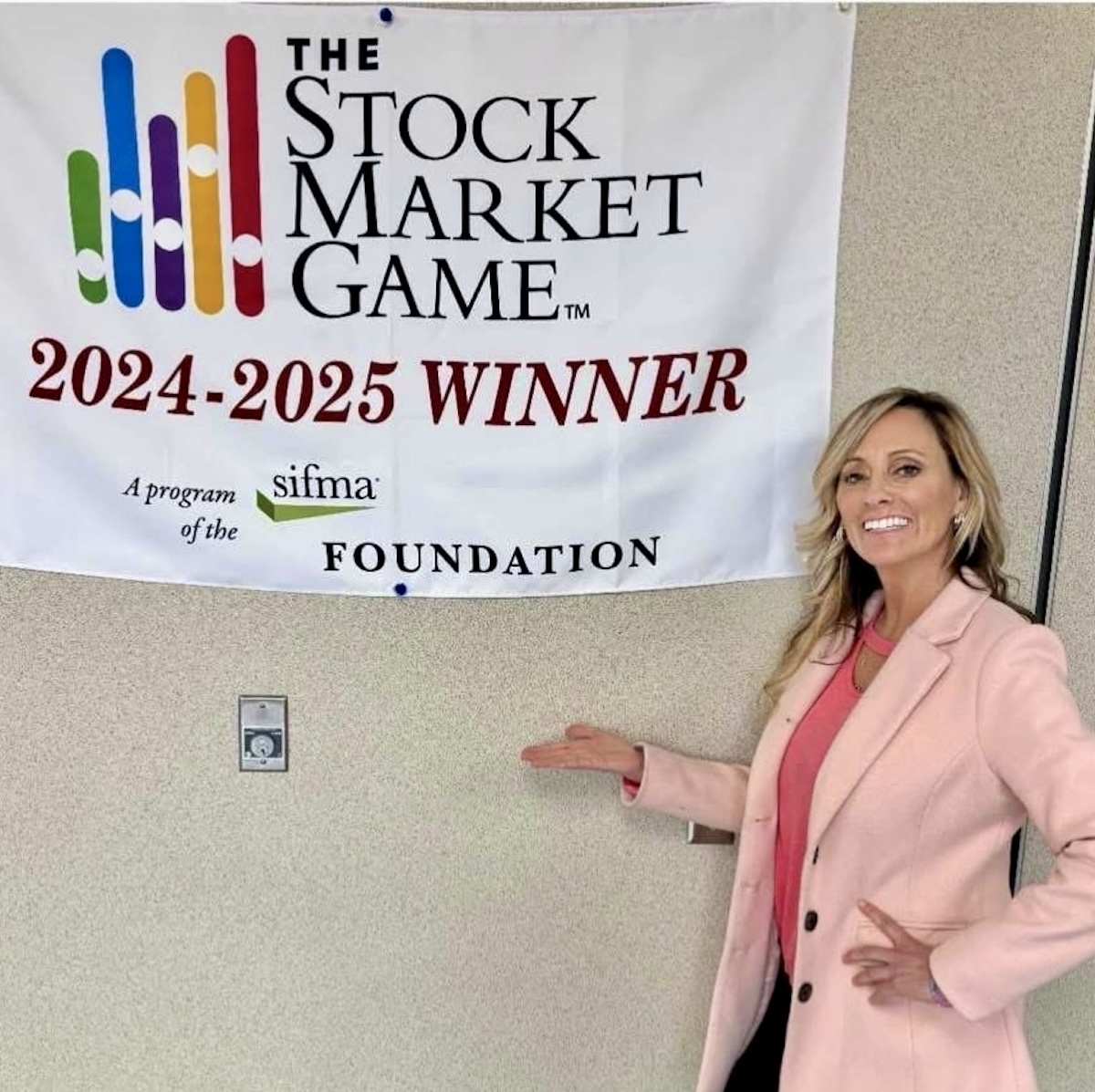
The club has consistently placed in the top tiers of statewide competition, with Center Grove students competing against high schools such as Fishers, Westfield and Crown Point. One middle school group achieved the highest total investment growth in the yearlong program across all participating schools.
As students progress, they explore more advanced strategies, including mutual funds, short selling and day trading.
“It’s comparable to a video game in terms of engagement,” Stark says. “But the skills are real.”
Building Something Bigger
When a student suggested naming the program “Stark Market Club,” the name stuck—though Stark admits it still tongue-twists her when she says “stock market.”
She eventually formed an LLC and developed her own Stark Market curriculum, believing financial literacy will become an essential component of education in the next decade. She has even written her own book.
“I was shy about using my name,” she says. “But it makes me smile.”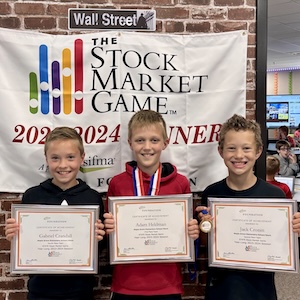
A single mom of five, Stark says her personal journey deeply shaped the club’s creation. After returning to school to earn her building principal and administration license and navigating major life changes during COVID, she began focusing on her own financial education.
“I realized how expensive life was,” she says. “As I learned and made changes in my own habits, everything aligned.”
Running up to six clubs a week while raising five children required grit and long-term thinking—the same mindset she now instills in her students.
A Lasting Legacy
Stark has trained three additional teachers—Sarah Pironello, Kiersey Denief and Will Booker—to expand the club’s reach and ensure its sustainability.
“If something is truly valuable, it shouldn’t depend on one person,” she says.
Looking ahead, Stark hopes her students leave Center Grove with more than investment knowledge.
“I want them to have confidence,” she adds. “Confidence to ask questions, to make informed decisions and to see money as a tool—not something to fear.”
Her bigger vision is generational: students who model smart financial habits, strengthen their families and contribute to a resilient community.
“When students understand how systems work,” Stark says, “they’re empowered to lead and create opportunities—not just for themselves, but for others.”