

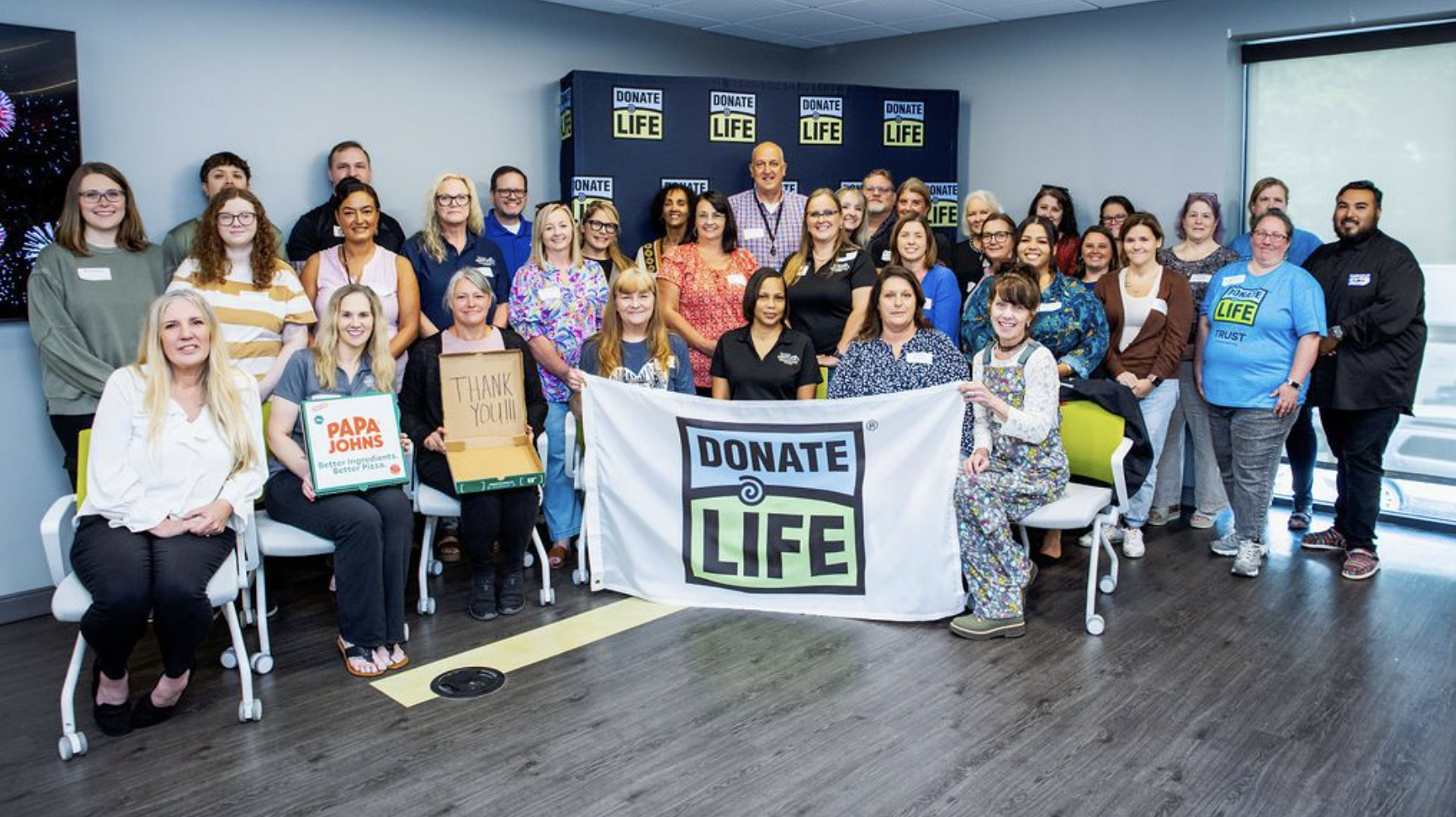
Donate Life KY Brings Hope to Patients & Families Across the State
 In 1992, Kentucky circuit court clerks were looking for a way to give back to their community. One member of the group knew of a friend who had passed away while waiting for an organ transplant, and an idea was born.
What if they asked those who were renewing or getting their driver’s license for the first time if they’d donate $1 to raise awareness for organ donation?
“At the time, organ donation wasn’t really discussed,” says Shelley Snyder, executive director of Donate Life KY. “This was the first time in the U.S. the dollar donation was implemented, and it was a success. The funds were put into a trust for organ donation education, and Donate Life KY was created.”
Across the country, a new name is added to the list of those waiting for organ donation every eight minutes.
There are currently more than two million registered organ donors, yet 17 people still die every day waiting for a transplant, leaving much more to be done.
Donate Life KY keeps a running list of those on the registry, as well as those waiting for a transplant. Many of their stories are told on the Donate Life KY website.
“We just visited a hospital for a little guy who has been waiting on a heart transplant for more than 600 days,” Snyder says. “He’s in-patient. He can’t go to school. The only way he gets this heart is if people know about our mission, they support it, and they register.”
The donor-recipient system is full of stress, grief and often trauma on both sides of the coin. Families are either saying goodbye to a loved one or praying for a miracle to save the one who has been suffering for so long.
 However, Snyder says there are still many misconceptions and misunderstandings when it comes to donations and transplants.
“It can get a little clinical or complex to explain, but only 1% to 2% of people die in a way clinically required to donate organs,” she says. “The organs have to be healthy enough for transplant, and a match has to be found before the organs become not viable.”
This means once the heart has stopped and organs no longer receive blood, they cannot be used.
One misconception is that if a physician knows a patient is an organ donor, it might change their course of treatment.
Not the case, according to Snyder.
“Because the heart has to continue beating and blood has to continue moving through these vital organs, medical personnel are actually doing everything they can to save my life,” she says. “They are trying to get me stable. They also have no idea if I’m an organ donor or not. That system is handled through the Organ Procurement Organization (OPO).”
Hospitals are required by law to contact OPO when it’s determined a life cannot be saved. OPO evaluates the patient and the circumstances, determines if the patient is an organ donor, and only then speaks with family about the process.
If the patient has signed up to be an organ donor, the request is honored just like a will would be in the event of death.
Not only does making the decision ahead of time free family and loved ones from having to decide, it also begins the process of saving someone else’s life.
“More than 100,000 children and adults in America are waiting for kidneys, livers, lungs, hearts, pancreases and intestines,” Snyder adds. “We can also donate tissues and corneas.”
While there’s been an incredible increase in willing donors, there’s also an increase in needed transplants.
 “Decades ago, if you had a heart condition, we’d call in hospice,” Snyder says. “Today, we put you on the heart transplant list. When I started working at Donate Life KY, 22 people were dying every day waiting for a transplant, and now we’re at 17. But that’s still too many. No one should lose their spouse, child or parent. If we had 100% of the people in this country registered, we wouldn’t have a waiting list. It’s so rare when we’re able to use those organs, it’s going to take every single person willing to do it.”
At Donate Life KY, they support both parties: those waiting for organ transplants and those who have donated the organs of a loved one. Patients often travel great distances for treatment. In fact, Snyder said the number one reason for bankruptcy in the country is medical bills. The organization is able to assist with gas cards, lodging expenses and medical equipment.
Donor families can also receive support for transportation, lodging and cremation costs after the unexpected loss of a loved one.
“Donor families are the most amazing, generous people in the world,” Snyder says. “In their darkest moment, they choose to save someone else’s child, parent or loved one. There’s beauty in the humanity of it. Someone whose life has been saved wakes up every day thinking about their loved one.”
Volunteers are often touched by the Donate Life KY mission. Various committees support patients and donors, host fundraising events and more. Even those not directly affected often join the team to give back to their community.
“We cover the entire state of Kentucky,” Snyder says. “We’d love to have all the help we can get. We have a small but strong team. We have a lot of fun, and we want to shout this information and education from the rooftops.”
For more information, visit donatelifeky.org.