
Hear Again
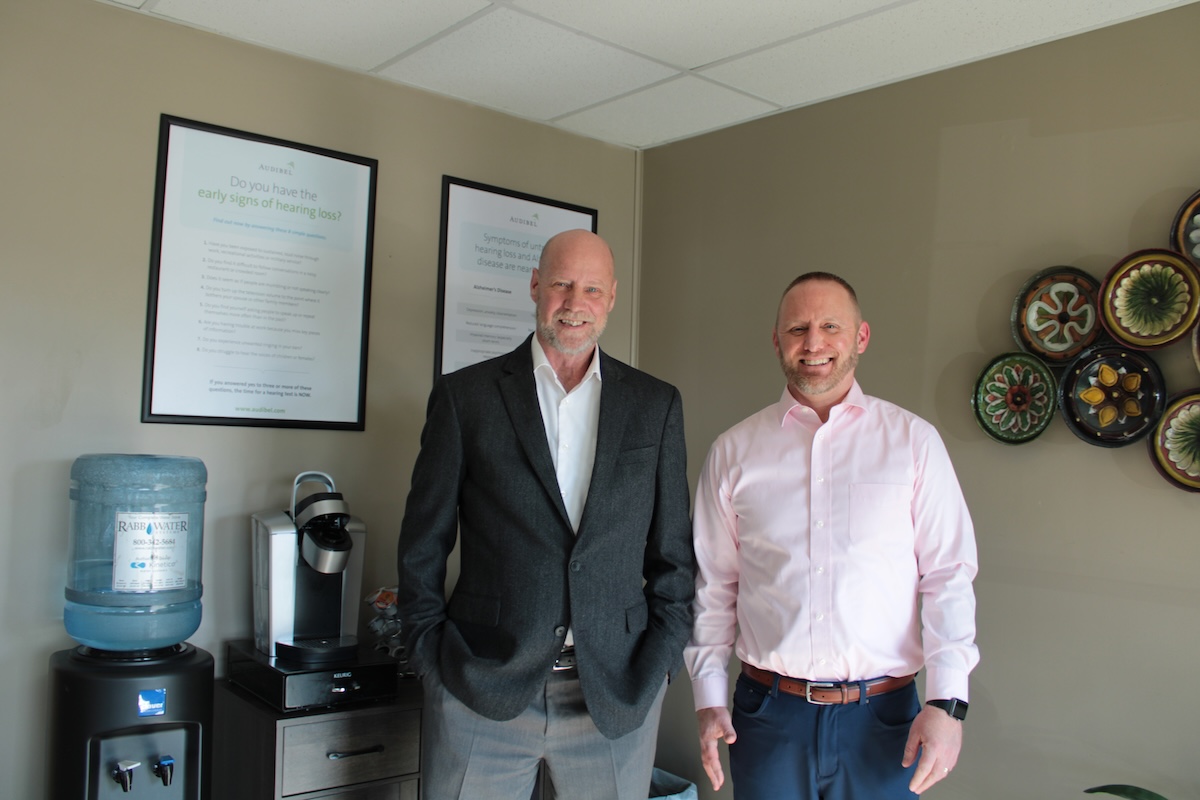
Hearing aids are not only devices to improve hearing, but also to improve overall quality of life. They can even reduce the risk of worsening dementia. Owned by Hoosier natives Greg and Marci Davis, Indiana Hearing Aid has now opened a location in Kokomo in addition to its flagship store in Noblesville, and the owners are thrilled to help even more people hear better.
“We’re best known for our service and taking care of people after they’re fitted with hearing aids. We do ongoing maintenance, updated testing, reprogramming, counseling and doctor referrals if necessary,” owner Greg Davis says.
Davis has been in the business since 1996. A friend of his came from a family that had owned a hearing aid business for 40 years, and they hired him because of his experience with technology and sales. After getting his license, Davis found his passion and opened his own store.
Hearing instrument specialist Matt Morris has been working with hearing aids since 2009.
“A typical day includes servicing hearing aids and doing consultations to evaluate hearing. You wear a lot of hats doing this. Sometimes you’re a family counselor, sometimes selling, servicing, checking things out medically,” Morris says.
Davis adds that they try to define for customers what the problem actually is, which is not always just about hearing itself, but also the way brains process sound and speech.
“It’s the neurological processing and how that is affected over time, and how that in turn affects social dynamics that clients deal with: withdrawal, isolation, the secondary effects from hearing loss that can start complicating issues of dementia and senility. For people who don’t have hearing problems themselves, they can’t fathom it,” he says.
“Hearing isn’t perfect to start with. We have to tell them, ‘Here are the problems that are still going to exist,’ as well as what we call auditory distortion. Long-term effects take away understanding levels, and a lot of times, that doesn’t come back. We’re creatures of input for our entire lives; that’s how we learn. When we’re not getting those inputs, the brain forgets how to process it correctly,” Davis continues. “So we explain the benefits and the limitations. ‘No matter how good we make it, this is where we’re going to be.’”
Davis has worked in many different settings, but he most enjoys having his own practice.
“By being private, it allows us to spend more time with the clients and have that whole phase of understanding what’s going on, instead of treating them like a number. We’re not hindered by having to sell from a particular manufacturer; we just choose what works best for the client’s needs,” he says.
There are third parties and discount programs to help clients who struggle financially. Davis says they check everyone’s insurance and try to get the maximum benefit through their programs.
“In terms of pricing, there’s something for everyone. Refurbished hearing aids are an option. All of them will improve hearing to some degree. It’s like wearing a bad pair of glasses. After a while, you don’t notice it anymore. You don’t know how bad it is until it’s better. The losses are so gradual,” he adds.
“Hearing aids are more than just the thing that goes behind your ear; it’s the whole process. A carpenter is a master of what he does. You or I can go buy the lumber, but we can’t do what a carpenter can do. We’re craftsmen. The devices and the services we provide are superior,” Morris says.
They decide what type of hearing aid to use based on lifestyle. If someone doesn’t go out much, they may just need a basic model. If they’re a restaurant server or someone who works in a busy environment, they may need something else. The newer, advanced devices help more with busy, loud areas and background noise.
“The hearing aids are reading the waves out of the acoustics. They can tell the difference between you being in a quiet room, or if you’re around machines or wind noise. It’s physically impossible to get rid of background noise, but it’s about how quickly the system can recognize speech patterns inside of that noise and then elevate those above all the other sounds,” Davis says.
Morris says that most of their patients are in their 60s or older, but they’ve also had many younger generations come in, hoping to avoid unnecessary hearing loss or early-onset dementia and Alzheimer’s disease. While hearing aids can’t stop those conditions entirely, they can prevent another contributing factor from increasing the risk.
“We don’t do any arm twisting. The clients are getting us. There are a lot of hearing aids out there. All we do is tell them their level of hearing loss, their problem areas, and what we can do to make it better for them. You’re dealing with quality of life. It’s not an extra TV or an extra car in the driveway. It affects somebody’s life. What value is your life, and your quality of life? Hearing someone say ‘I love you’ is important,” Davis says.
The Noblesville branch of Indiana Hearing Aid is located at 160 N. 10th St., Noblesville, IN 46060, and is open from 9 a.m. to 5 p.m. Monday through Thursday. For more information or to take an online hearing assessment, visit Indiana Hearing Aid online.