

On a Roll
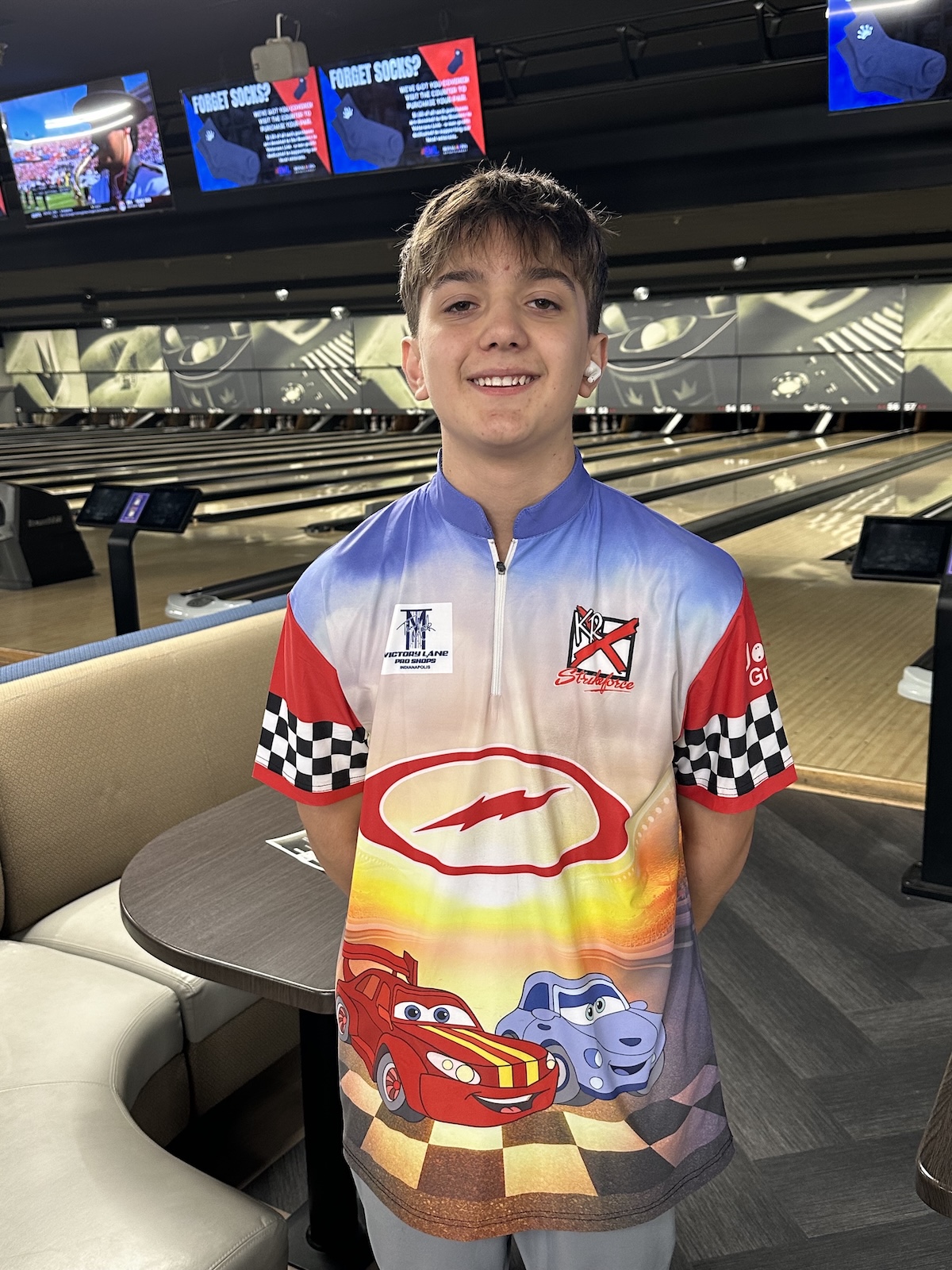
Haydin Smrekar has been having fun bowling with his family since he was a toddler, but now, as a member of the Plainfield High School bowling team, he’s earning thousands for college with his favorite pastime.
During the 2024-25 season, Smrekar finished ninth in the state for the Plainfield High School bowling team — the first time a youth bowler in Plainfield has made it that far.
“My whole family bowls, and I joined a youth league when I was three. I just fell in love with it,” Smrekar says. “In the beginning, I think it was all about hanging out with friends, but the further along I’ve gone, it’s more about the challenge of bowling.”
What most people think of as bowling isn’t quite the same for a competitive bowler. Heading out to the lanes with a group of friends on a weekend and playing a game or two seems simple.
The game most friends enjoy might include nachos, drinks and a lot of conversation, but competitive matches have everyone on their feet. Teammates stand behind you, holding their breath, waiting to see results, then jumping and cheering with every success.
For the competitive bowler, it can be compared to golf. In golf, the player can see the hazards — sand, water, trees — but in bowling, the hazards are invisible.
Oil is placed on the lanes in challenging patterns to make the game more difficult. The patterns change from match to match and even lane to lane.
“They give you a piece of paper with a rough estimate, but you really don’t know until you throw the ball the first time,” Smrekar says.
All bowling balls are not equal, either.
Similar to golf, where each club serves a different purpose, bowling balls have different functions.
“It’s easy to get a little lost. I talk to my dad and we get it figured out,” Smrekar says. “At certain tournaments, you’re only allowed a select number of balls and ball changes, so it can be challenging.”
Despite the frustration, Smrekar wouldn’t have it any other way.
“I’ve invested a lot of time into this and I love the challenge,” he says. “You have those moments when you do really good, and that makes you keep coming back.”
The 15-year-old sophomore still averages around 200 in competitive tournaments, and when he gets stuck, his dad, Dave Smrekar, is the one to talk to. Dave is the varsity head coach for the Plainfield team and was involved in founding the program.
“I was interested in getting a high school team started four years ago. When I started researching it, I found that Jason McCool already had it in the works, so I teamed up with him,” Dave says.
The team competes in a long-established high school sport, though it is not sanctioned by the Indiana High School Athletic Association and is therefore considered a club. Carmel, Ben Davis, Brownsburg, Avon and others have teams and compete against Plainfield throughout the October-February season.
The program is led by the Indiana State High School Bowling Association, which sets the rules, coordinates schedules and manages team scores and results.
At one point, more than 300 schools across the state had bowling teams. There are 11 schools in the Indy West Conference, including Plainfield, with additional teams in the Indy South and Indy East conferences.
Beyond high school competitions, the Smrekars travel around the country for youth bowling tournaments, and the effort is paying off.
“Haydin has $20,000 in bowling scholarships so far,” Dave says. “I think a lot of people don’t realize how much opportunity is out there. He’ll likely get a full-ride scholarship for bowling. We’re in contact with some of the head coaches at the top schools and top programs.”
According to Dave, programs are also actively looking for female bowlers.
The Plainfield bowling team offers varsity, junior varsity and a girls team, but currently varsity is co-ed because there are not enough girls to form a full team.
Many people don’t realize bowling is a sport for all ages and genders.
“It’s a lifetime sport. You can pick it up at any time,” Dave adds. “I know some who didn’t start bowling until college, and now they’re traveling around the country competing in a professional bowling association. You can be three, and you can be 90, and still enjoy the sport.”
In addition to scholarships, Smrekar has had the opportunity to travel across the country and overseas.
“If you go to a week-long tournament, there’s a lot of downtime,” Smrekar says. “We’ve been able to see some cool stuff. I like Plano, Texas, and we’ve bowled in Copenhagen, Denmark.”
The teen athletes also gain skills common to other sports, including communication, sportsmanship, teamwork, responsibility, problem-solving and time management.