
Where Every Nose Knows
A handler steps off the trail and into the trees, guided by a special four-legged friend who is suddenly all business — head low, tail working, nose instinctively reacting to what the forest floor is revealing. A little farther ahead, a volunteer “decoy” waits in the cold, sometimes for hours, so the dog can learn a life-saving skill. Breath hangs in the air. Boots crunch. The woods settle into a hush around the dog and handler, as if making room for the work to be done.
At Pup Assist in Walkerton, training is shaped by a clear mission. For many dogs, that purpose begins with everyday obedience through the basic training program. For others, it develops into more specialized tracks, depending on the dog, the handler and the goals. No matter how far a team chooses to go, the work still leans on the same foundation: reliable, everyday skills that hold up outside the training space.
Sometimes the mission unfolds along Pup Assist’s wooded trails or in a park. At other times, it occurs in a dedicated training space at Pup Assist, designed for practicing real-life manners in a controlled setting. A dog learns to walk without pulling, pausing when asked, looking up for guidance instead of lunging toward every distraction. An owner feels the leash go a little looser and realizes that with consistent coaching, daily life with their dog can feel calmer, more consistent and more enjoyable in all the right ways. The bond between dog and owner deepens as the two learn to communicate clearly and fully trust each other.
In scent-based training, dogs learn to use their remarkable sense of smell with disciplined focus to identify specific target odors or problem sources people cannot perceive. The dog steps into job mode and begins to search with purpose, moving down a hallway, slowing near a doorway, pausing at a seam, hovering at the edge of a baseboard, then signaling with quiet certainty.
Depending on what a dog is trained to detect, that work may involve bed bugs, mold, termites, black powder or other target odors. From the outside, it can look simple, but the stakes are real. This is the kind of training that can protect a home, a business and a family’s peace of mind.
Pup Assist is a certified disabled veteran-owned small business owned by Shawn and Lori Hite and led by Shawn, a master dog trainer specializing in nose work. Dogs and handlers can be trained in scent detection for a wide range of needs, including narcotics, explosives, mold, bed bugs, mushrooms and search-and-rescue. Pup Assist offers private lessons for nose work and basic obedience, along with group obedience classes that include coursework as well as field practice. For teams that want to go farther, some may qualify for search-and-rescue certification and real-world call support.
Shawn and Lori opened Pup Assist in October 2024, bringing their training focus to a dedicated property designed for hands-on work. The tagline on their materials, “Where Every Nose Knows,” speaks to the faith Shawn and Lori place in a dog’s ability, paired with consistent training that turns instinct into reliable work. More than a slogan, it reflects their belief that dogs are capable of extraordinary things when they are trained with patience, structure and trust.
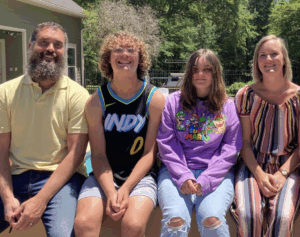
When Shawn and Lori married in September, it marked a joyful milestone in a partnership already formed through shared goals, shared adventures and a deep belief in what purposeful dog training can do. Their facility spans 16 acres of trails, woods and open space designed for practical training that can support a team from the basics into more advanced scenarios. They also support the Marshall County EMA and the Cleveland Township Fire Department with K-9 search needs, while staying dedicated to their surrounding community and to teams beyond their immediate area. Their goal is to help develop dog trailing teams that can assist local authorities with the search for lost individuals and to keep building that network through training, practice and community involvement.
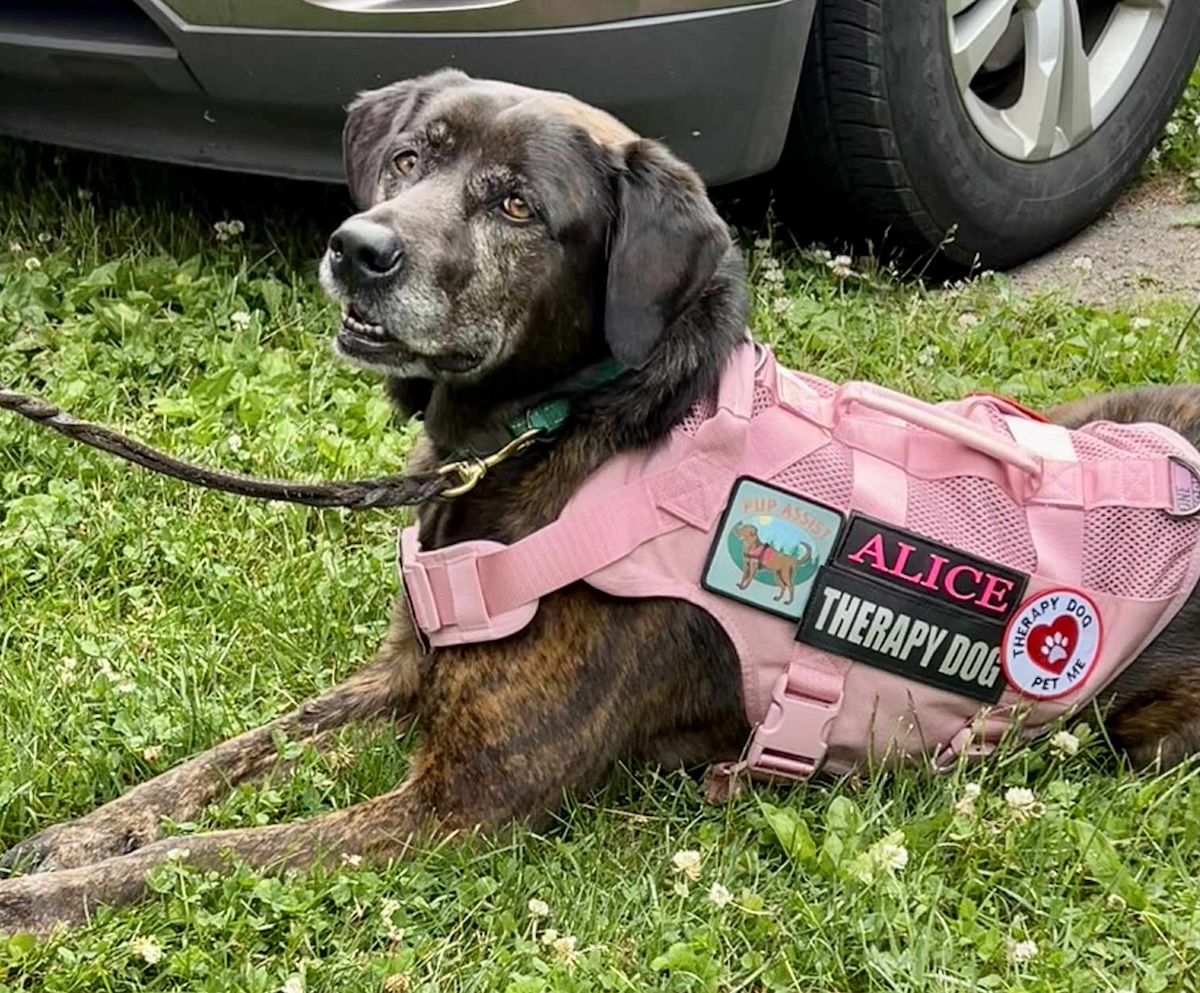
At any given time, Pup Assist is working with a wide range of dogs, each representing a different kind of possibility. Some dogs are being prepared for therapy work, some are building detection skills, others are developing the consistent behaviors needed for future placement, and many are simply learning how to enjoy life as a companion in a home. Shawn and Lori have several dogs who are part of their own household and are currently in training or active work, including Alice, Merit, Calley, Churro and Scout.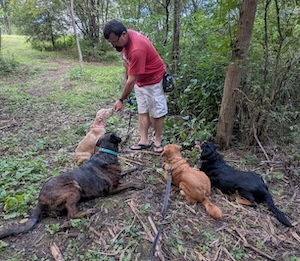
Shawn Hite is a retired U.S. Army staff sergeant and combat veteran. After retiring from the military, he continued his education through Highland Canine’s Master Dog Trainers course in North Carolina. His training philosophy is deeply connected to the idea of purpose. “My goal is to give the dogs a job, to give them a mission,” Shawn says. A well-trained dog, in his view, is not just polite on a leash. A well-trained dog has a clear assignment that engages mind and body, and sometimes that assignment is companionship itself: being reliable, responsive and a true joy to live with.
“Dogs are not designed to be on your couch all day long doing absolutely nothing,” Shawn says. “They need mental stimulation. They need physical stimulation.”
That mission-first mindset shapes everything Pup Assist does. Training is not a one-and-done purchase. It is a relationship that gets built, practiced and maintained.
One of Shawn’s favorite moments is the instant a dog shifts into scent-work mode.
“When you put the dog’s vest on, you clip off the long line, and then they’re in charge,” Shawn says. “You’re following.”
That is the point. In scent work, the dog is the specialist. The handler learns to trust the dog’s information, notice subtle shifts in body language and stay patient through distractions. Shawn calls each dog-and-handler pair a team, because success depends on both ends of the leash learning to work as one.
One of Shawn’s specialties is taking shelter dogs — ones that may have had a harder start in life — and giving them structure and a future.
“Once I figured out that I could successfully take regular shelter dogs and give them a job, that was it,” Shawn says.
For dogs who are part of Shawn and Lori’s personal training program, that progress is built through real routines rather than isolation. “They live with us,” Shawn says. These dogs learn how to settle, how to share space and how to practice manners in normal routines. For many families who attend classes, that same idea carries over at home, because the best results come when training becomes part of everyday life, not a once-a-week event.
The goal is a trained, socialized, balanced dog — a companion a family can enjoy. One local family has seen that kind of change firsthand. About a year after adopting Nola from the Marshall County Humane Society, they watched her grow from uncertain and untrained into a happier, more engaged dog, with Pup Assist playing a role in that progress. Upon adoption, Nola was not house-trained and needed basic obedience training. With time, consistency and the right guidance, she began to settle into her place in the pack. Now she loves the water, delights in taking hikes, enjoys regular playtime and even visits a nursing home, where her cheerful presence brightens the day for residents. The family describes her as joy-filled and endearingly goofy, the kind of dog who makes people smile simply by being herself.
Service-dog work is meaningful to Shawn for deeply personal reasons. As an Army veteran, he understands what it can feel like to return home after combat.
“When I got out, I had horrible nightmares,” Shawn says. “Nightmares to the point where I would wake up in the middle of the night, and I would be attacking something.”
He describes the fear and the changes he had to make as he worked to feel safe again.
Alice, a service canine, helped pull him back into safety. “Alice was the one who did a lot for me,” Shawn says. She interrupts nightmares, turns on a light switch and applies pressure therapy until he reorients. “She doesn’t move until I realize where I am.” Alice also assisted Shawn in focusing on her when large crowds became overwhelming.
That experience fuels Pup Assist’s desire to bring high-level training closer to home for veterans. Shawn wanted to provide access without an overly rigorous process that requires constant long-distance travel and to offer support at a community level. That local focus is strengthened by community involvement, including sponsorship from the Mill Creek Lions Club, which helps underwrite Shawn and Lori’s Veteran K-9 Training efforts.
Search-and-rescue training is not something a trainer can do alone. Dogs need to find many different people, in many different settings, under many different conditions.
“People as a whole, we each have our own unique smell,” Shawn explains. Diet, environment, genetics and daily life create variation. Training with many decoys teaches dogs to rely on scent itself, not familiarity.
Pup Assist calls that K-9 search-and-rescue work “trailing,” and it is built on a deceptively small starting point: a person’s scent. Sometimes a dog begins with a scent article as simple as a hair tie, a sock or a hat. Once the dog locks onto that specific odor, the team is off, following the trail toward one person, not just any person.
In other scenarios, the start is even smaller. Search dogs can work from “skin rafts,” the tiny, cornflake-like flakes of dead skin, sweat, bacteria and oils we shed constantly. Those particles carry our personal scent signature, and dogs can follow them as they settle onto the ground or drift on air currents, even through crowded spaces.
That is why volunteer decoys matter so much. Pup Assist credits the community for stepping in week after week, sometimes in miserable weather. “They are the most important part,” Shawn says. Those volunteering are essentially playing hide-and-seek with the K-9s, giving dogs the chance to learn how to follow a human scent trail in real conditions. The opportunity is open to individuals, families and children with their adults’ permission.
No special skills are needed, and questions and social time with the dogs are encouraged. Since the same person cannot be the decoy again and again if the dog is truly learning to follow scent rather than a familiar individual, the team needs a steady rotation of volunteers. Those interested in helping as a decoy can contact Pup Assist at 219-346-0697.
Training does not pause just because the weather is miserable. On Jan. 3, 2026, K-9 teams Lucy-Lu, Buck and B2 worked through some of the toughest conditions of the season: 22-degree temperatures, ice and snow. Those kinds of days matter because real searches do not wait for perfect footing or comfortable temperatures. Pup Assist encourages teams to work in multiple environments and weather conditions, building steadiness when the trail is cold and the ground is slick.
Shawn has seen firsthand how determined a good dog can be once it locks onto a human scent. One of his favorite examples comes from Lucy-Lu, a bloodhound with a turnaround story of her own. Lucy-Lu came from a breeder in Ohio and was returned due to aggression and resource guarding of valued items. With structure, training and patient handling, she began to change, which was evident in her work.
Last spring, the team trained at Centennial Park in Plymouth during graduation weekend, when the park was packed with families, grills and kids everywhere. With his mom nearby, a young boy, who had volunteered as the “lost subject,” tried to trick the dog by changing locations across the large wooden playground. Even with competing scents and constant movement all around her, Lucy-Lu stayed focused, sorted through the chaos and found him. It was a training moment with a powerful takeaway: When the situation gets complicated, the right dog can still do the job.
Other teams are building that same kind of confidence, step by step. On Sunday, Oct. 5, 2025, Jarika and Bud, known as Team B2, took on Centennial Park in Plymouth in the middle of a busy public setting full of distractions and scent contamination. They ran a 0.5-mile trail with the decoy missing for an hour, and they did it without a scent article. Bud started with only six steps of uncontaminated skin rafts before he took over and went straight to work. In just 10 minutes, Bud found the decoy on the other side of the park.
The story behind that success is part of what makes trailing work so compelling. Only five months earlier, Bud had been a 6-month-old puppy with no obedience training. The difference came through consistent practice, Jarika’s dedication and a network of volunteer decoys willing to take on tougher hides in more challenging conditions.
Training scenarios expand over time, from the Pup Assist property to public spaces, from fresh scent to aged scent trails, and from quiet environments to real-world distractions. Pup Assist also collaborates with agencies in training exercises, because a missing-person response works best when you are familiar with the faces you’re working with.
Even in a business known for scent work, Pup Assist spends plenty of time on basics. Their walking obedience class is designed as a practical entry point for many families, and it is not only about learning to move politely on a leash. Shawn teaches and practices a different basic command each week, giving owners clear steps to work on at home while building steady skills that hold up in the real world. The class covers leash manners, heeling, sit, down, stay, controlled greetings and handler focus. Shawn also values the Canine Good Citizen program as a strong benchmark for dogs that need reliable behavior in everyday public settings.
Group training is crucial because dogs influence each other’s energy, confidence and reactivity. Their structured classes use this peer influence to help dogs practice focus and obedience amid real-world distractions.
Shawn’s approach to owners is practical and encouraging. “Be prepared to learn,” Shawn says. Flexibility matters because everything depends on the dog, the environment and the goals.
For puppies, Pup Assist emphasizes early socialization through the Rule of Sevens, encouraging exposure to a variety of surfaces, environments, people, handling experiences, objects, locations and friendly dogs. Confidence, Shawn says, is key.
Pup Assist chose its name with intention. The heart of the work is not just that a trainer can help, but that a trained dog can assist in real, meaningful ways.
“We’re here to assist you in being able to build that relationship with your dog,” Shawn explains, but the end goal is bigger than a lesson. It is a dog who understands its role, a handler who understands how to guide, and a partnership strong enough to carry into daily life, public settings and, for some teams, the moments that matter most.
Beyond training, Pup Assist also responds to detection-based inspection requests. For example, Merit specializes in bed bug detection, and both Shawn and Lori are equipped to handle Merit on a call.
Whether obedience, scent work or search scenarios, the philosophy of training at Pup Assist circles back to the steady ideas of purpose, partnership and practice.
Lori has a favorite quote that sounds simple, but it fits the heart of what Pup Assist is building: “I truly believe if everyone could start their day petting a sleeping dog that loves them, the world would be a far better place.” It is an image of trust, peace and connection, and it is also a reminder that the bond matters. Training is not only about commands or certifications. It is about living and functioning well together.
Whether for a walking class, private training, detection services or participation in search-and-rescue, the goal is the same: a confident dog and a capable handler.
At its core, Pup Assist pairs a job for the dog with a clear plan for the person holding the leash, and the two grow stronger together with repetition, patience and time. Whether the work happens in a training space, a busy park or deep in the trees, they return to the same truth behind the words on their materials: Where every nose knows. Purpose becomes something a dog can live out, and a handler can truly rely on.
Pup Assist is located at 71271 Spruce Road, Walkerton, IN. For more information, call 574-241-6263, email pupassist@gmail.com, or visit them online at pupassist.com.
Volunteer decoys / SAR contact
Email: searchteamspupassist@gmail.com
Text: 219-346-0697
Message via Facebook (Pup Assist / Heartland K9 Search Team pages)