

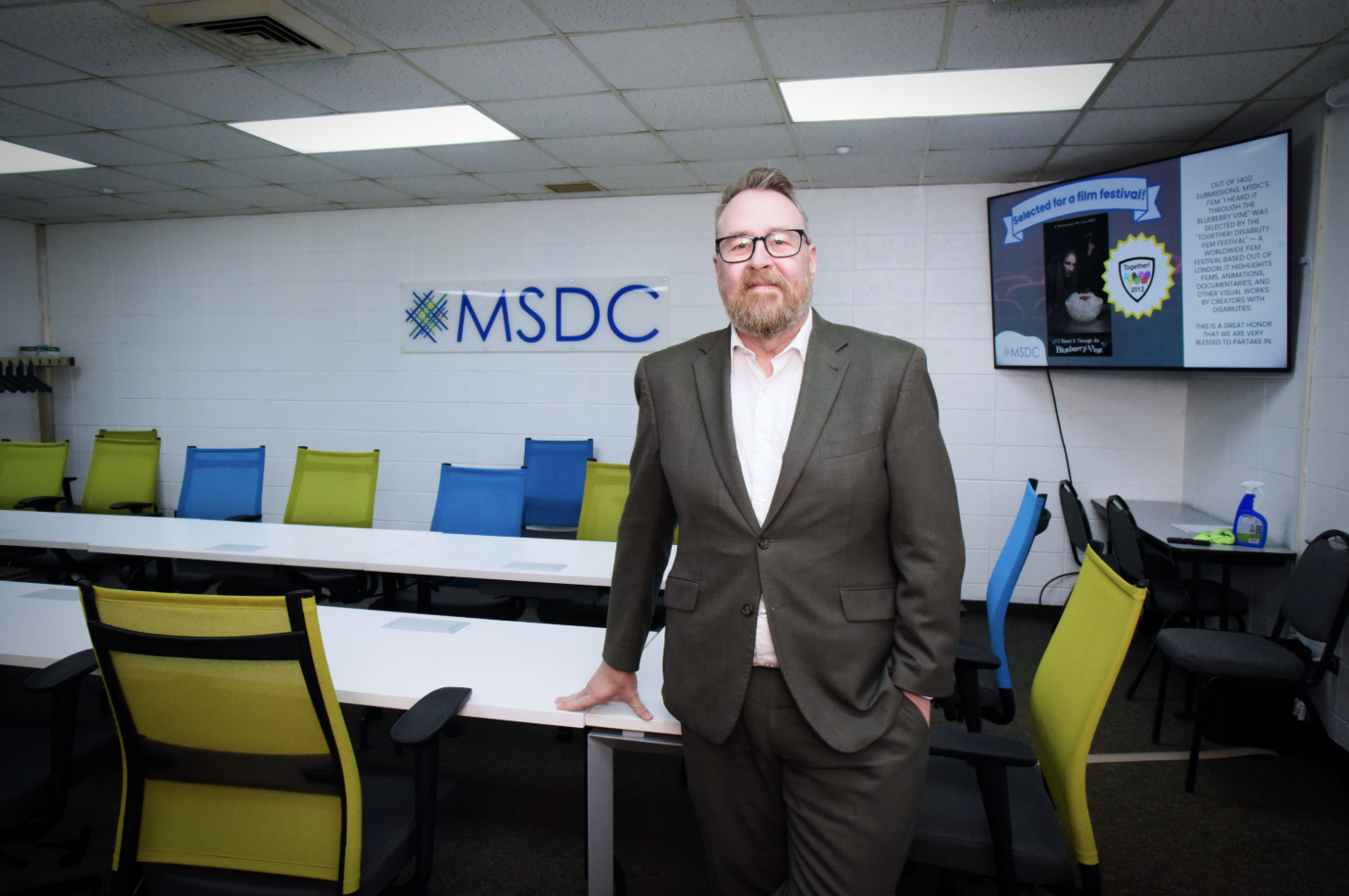
Marshall-Starke Development Center Champions Inclusion & Opportunity
Photographer / Jubilee Edgell
 Morning sunlight filters across activity tables at Marshall-Starke Development Center, where the day begins not with assignments, but with choices. One person has signed up for art, another for cooking, and another for community volunteering. A few review a new job lead with their placement consultant. Each decision represents something powerful — ownership of the day and confidence in individual abilities.
That sense of purpose has defined Marshall-Starke Development Center (MSDC) for more than six decades. What began in the 1960s as a small group of determined parents seeking better opportunities for their children with developmental and physical disabilities has grown into a thriving organization serving hundreds of individuals each year. Today, MSDC operates programs in Plymouth, Rochester, Knox, and Bremen. It offers both facility-based and residential services for adults, as well as Head Start and Early Head Start programs for children and families. None of this would be possible without the dedicated Direct Support Professionals, known as DSPs, whose compassion, patience, and daily commitment bring the Center’s mission to life.
Many have worked side by side with participants for years, celebrating each milestone and encouraging every goal.
Jessye Gilley, VP of Mission Advancement, describes the heart of MSDC’s work in two words: inclusion and belonging.
“Inclusion isn’t just being present in a space,” she says. “It means feeling that you’re part of something — that you’re valued and have a voice.”
Her days brim with activity — coordinating community partnerships, connecting with families and planning events that celebrate achievement. But what she treasures most is watching participants discover new interests and confidence through the choices they make.
“When someone realizes they can contribute — whether through art, cooking, or volunteering — you see that spark,” she says. “It’s joy and pride rolled into one.”
Rick Thompson, CEO and president, shares that same passion for empowerment and inclusion, viewing his work through the lens of leadership and legacy.
“We focus on ability, not disability,” he says. “Our role is to help each person find their place in the community and build the skills and confidence to stay engaged.”
In describing MSDC’s culture, both Jessye and Rick emphasize the same guiding idea: belonging. Every day brings countless small moments of connection — a greeting between friends, a shared laugh in the hallway discussing recent accomplishments.
Those daily experiences, they agree, shape the heart of the Center.
“When people see our participants at local businesses or helping at events, they see ability, kindness, and determination,” Rick says. “That changes perceptions — and communities.”
Participants are often recognized not only as volunteers but also as valued employees in workplaces throughout the region, proving every day that they have a vital role to play in the local economy.
The performing arts program is a perfect example of how growth happens in meaningful ways. Whether painting or performing, the creative process allows participants to express themselves and connect with others.
“Art gives voice to emotions that words can’t always capture,” Jessye explains. “It’s powerful to watch someone who was once hesitant to try new things be selected as a solo vocalist in a performance and realize they have something beautiful to share.”
While artwork is no longer displayed throughout the building, the Center continues to celebrate creativity through partnerships with the Heartland Art Center, where the performing arts program is warmly supported.
Phil McFarland, who co-leads the performing arts program at MSDC and also serves as the organization’s sign language interpreter, witnesses that creative spirit every day. Working alongside Tabitha Johnson, the performing arts coordinator, they guide rehearsals, develop scripts, and help participants grow more comfortable expressing themselves on stage.
“Performance helps people build confidence,” Phil says. “When someone steps on stage — maybe to sing, act, or recite a poem — they’re not just performing; they’re discovering their voice.”
Their programs emphasize collaboration and self-expression, encouraging participants to find new ways to communicate and celebrate individuality. Whether through music or movement, the outcome is the same — confidence, connection, and pride.
Beyond the arts, the Center’s reach extends into every aspect of daily living. Many participants hold paying jobs within the community, working in restaurants, grocery stores, manufacturing, and custodial settings. MSDC’s employment specialists provide on-the-job training and ongoing support to ensure long-term success.
“We work side by side with employers,” Rick says. “They tell us over and over how much they appreciate the reliability and strong work ethic of our participants.”

In April, MSDC officially discontinued its in-house workshop program to further expand opportunities for community employment.
“This change reflects our goal of helping participants realize their potential as community workers earning equal wages alongside their neurotypical peers,” Jessye explains. “It’s about inclusion, equality, and belonging in the truest sense.”
Residential programs are another cornerstone of MSDC’s mission. In supervised homes throughout the area, adults live as independently as possible with staff available for guidance and assistance.
“It’s about dignity and choice,” Rick explains. “We want every person to make their own decisions about where and how they live — just like anyone else.”
Participants shop for groceries, cook meals, keep up with chores, and enjoy community outings, supported by staff who encourage self-sufficiency. None of this would be possible without the dedicated DSPs, whose compassion, patience, and daily commitment bring the Center’s mission to life. Many have worked side by side with participants for years, celebrating every milestone and encouraging every goal. These professionals are the steady presence behind each success, offering guidance, respect, and encouragement that help participants thrive. Weekends might include trips to the park, bowling, or dining out with friends. Many residents also hold regular jobs during the week, demonstrating that independence and productivity go hand in hand. The homes are not just places to stay — they’re places to belong.
Jessye notes that relationships are at the center of everything they do.
“Families trust us because they see that we genuinely care,” she says. “When a parent of an adult participant tells me their son or daughter can’t wait to come here every morning, that means we’re doing something right.”
Her outreach team regularly meets with schools, civic groups, and volunteers to build understanding and collaboration across the community.
MSDC’s commitment to growth begins early. Through its Head Start and Early Head Start programs, the organization supports children and families with early learning, health and family-engagement services. These initiatives give young children the foundation they need for a lifetime of learning while connecting parents with resources and encouragement.
“It’s a continuum of care,” Rick says. “From early childhood to adulthood, we want to provide the tools and opportunities people need to reach their potential.”
Across every department, the philosophy remains the same: everyone deserves respect, purpose, and connection.
“We measure success not just in numbers,” Jessye reflects, “but in moments — when someone smiles because they learned something new or accomplished a goal that once felt out of reach.”
As the morning sunlight moves across the tables, the Center hums with quiet purpose. Paintbrushes dip into color, the aroma of baking fills the kitchen, and a volunteer group gathers to head out for the day. Others prepare for their shifts at local businesses, proud to show the community and their peers what they have to offer as individuals and employees. Each person has chosen their path, confident in their place within this community of belonging.
Marshall-Starke Development Center stands as more than a service provider. It is a place where belonging is lived out daily through creativity, connection, and the belief that every person has something meaningful to give.
To learn more or get involved, visit msdcin.org.