

Hoosier Pilot’s Legacy Spans War, Mercy & History
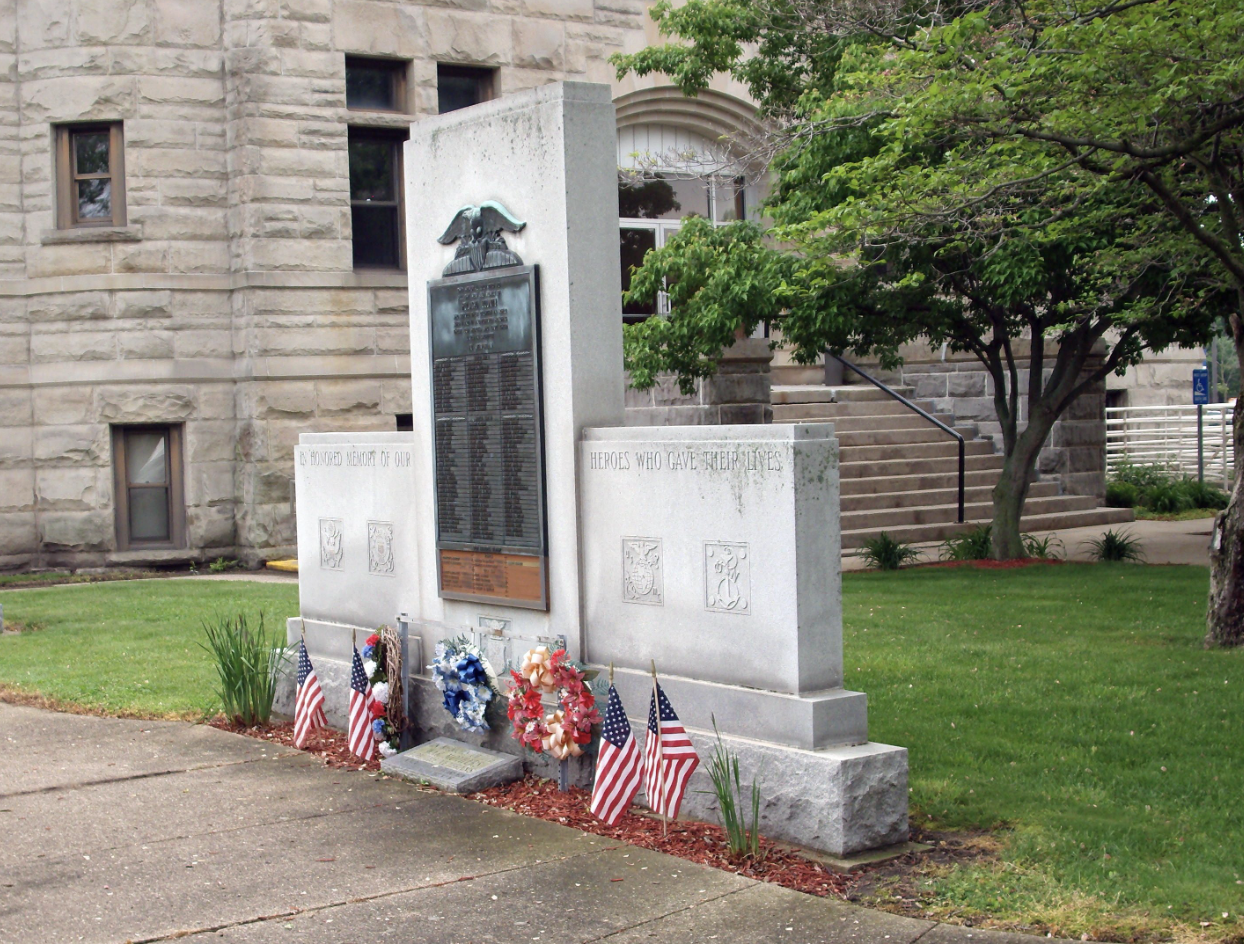
If one pauses on the lawn of the Pulaski County Courthouse to read the names on the county Honor Roll Memorial monument — which is dedicated to those from the Lakes-area county who gave their lives in the various wars of the past century-plus — it would be easy enough to overlook the name of Richard S. Freeman, situated as it is among three rows of names of those who lost their lives in service to their country in World War II.
And while every loss is momentous, Freeman’s life and service were remarkably impactful beyond his native county and are all too little-known today.
A West Point graduate known for his decorated humanitarian missions and whose name would be attached in memoriam to a Hoosier-based Army Air Forces training school, Freeman lost his life 85 years ago this month, on Feb. 6, 1941.
Born in Winamac in 1907, Freeman attended the University of Notre Dame in South Bend before entering the United States Military Academy at West Point, from which he graduated in 1930.
After attaining qualification as a pilot, in 1934 he became part of an air mail delivery program under the auspices of the Air Corps, making him one of the pioneers of the Army Air Mail Service.
That same year, the Air Corps tested its new all-metal monoplane bomber, the Martin B-10, by way of a mass flight to Alaska, and Freeman piloted one of several planes under the command of Lt. Col. H.H. Arnold. Weeks of flights from Bolling Field near Washington, D.C., to Fairbanks included aerial photography missions covering thousands of miles of uncharted wilderness.
Much of the recognition Freeman would receive, however, was for his humanitarian endeavors as a pilot. Among these was his part in a goodwill mass flight of B-17 Flying Fortress bomber planes carrying medical supplies to Buenos Aires, Argentina, in February 1938, which was followed by another such flight that year from Langley Field to Bogota, Colombia.
Exactly two years to the day before his untimely death, on Feb. 6, 1939, Freeman flew to Santiago, Chile, on a super-bomber Boeing XB-15, also full of medical supplies, as part of a crew aiding victims of the 8.3-magnitude Chilean earthquake that killed more than 30,000 people. Freeman and the crew were awarded by the National Aeronautic Association, in conjunction with the Army, with the Clarence H. Mackay Trophy, which is presented annually for “the most meritorious flight of the year.” Interestingly, the trophy had been awarded in 1934 for the Alaskan flights in which Freeman participated, though the award was given specifically to commanding officer Arnold.
Freeman also led a mercy mission to the leper colony near the island of Molokai in the Pacific.
In 1938, Freeman played a role in the filming of the Spencer Tracy and Clark Gable movie “Test Pilot,” in which he was part of the crew flying a B-17 bomber in the hit film.
That same year, the U.S. Army acquired land at Fairbanks, Alaska, with plans to utilize the base it built there for cold-weather testing of aircraft and equipment. Named Ladd Field in 1939 for Air Corps pilot Arthur K. Ladd, who had died five years earlier in a plane crash, Richard Freeman was appointed the founding commander of the base, which was located on today’s Fort Wainwright.
Ironically, for all of the contributions Freeman’s efforts made toward critical services and planes used in World War II, he lost his young life just months before the United States officially entered the war after the bombing of Pearl Harbor on Dec. 7, 1941.
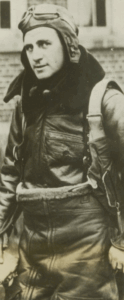 Freeman was engaged in an experimental flight exercise on Feb. 6, 1941, when the U.S. Army Air Corps B-17B Flying Fortress No. 38-216 he was piloting struck the west slope of the Trinity Mountain Range, 12 miles west of Lovelock, Nevada.
In addition to the 33-year-old Freeman, other Army fliers who lost their lives in the accident included 1st Lt. Edward W. Ketcham, T/Sgt. Kay H. Gilreath, Sgt. Everett R. Crabb, Sgt. Joseph P. Davies Jr., Sgt. Elmer S. Trainer, Sgt. Frank C. Whidden and Pfc. Charles E. Applegate.
The plane had been equipped with the then-top-secret Norden bombsight, and authorities suspected, but never proved, sabotage as the cause of the crash.
Freeman’s body was returned to Winamac for burial, and he posthumously received the Distinguished Flying Cross for his service.
Recounting his service, the 1942 West Point yearbook wrote: “In addition to his rating as command pilot, navigator, pilot of multi-engined planes, he was also considered to be an expert bombardier. He had 6,000 hours of flying time.”
Freeman’s legacy carried on when, two years later, the War Department announced in General Order No. 10, dated March 3, 1943, that the advanced flying school southwest of Seymour, Indiana, in Jackson County — which had been established in 1942 — would be named Freeman Army Air Field in honor of the memory of Capt. Richard Shafle Freeman.
The state-of-the-art facility included 413 buildings and four 5,500-foot runways on 2,560 acres. Many of its 4,245 graduating pilots — prior to its last graduation in February 1945 — flew B-17 and B-24 bombers in World War II.
The facility gained notoriety for another reason as well. Among those training at Freeman Field were Black aviators, including a group of the famed Tuskegee Airmen.
Some 1,300 Black airmen were training at the base in the spring of 1945 when three Black aviator officers tried to enter one of the officers’ clubs on the base, which were segregated in spite of Army regulations against segregation. The three were arrested and confined to quarters before an additional 58 Black officers attempted to enter the same club, leading to a violent altercation and more than 60 arrests.
The following investigation reaffirmed segregation at officers’ club facilities on the base, though more than 100 Black officers refused to sign the regulation and were arrested and forced to remain in their quarters. They were transferred to another base to await court-martial, while training of their unit at Freeman was brought to a stop. Later that month, under public pressure, charges were dropped against all except the original three. Only one was ever actually tried and was fined $150 for assaulting an MP.
The incident, which made headlines around the country, played a role in national discussion of race-based segregation in the military, contributing to its eventual end.
In January 1946, Freeman Field was declared surplus and was finally deactivated in November 1948. Just more than 2,000 acres were reallocated for a municipal airport for the town of Seymour; more than 240 acres for agricultural training in Seymour Community Schools, and an industrial park was developed via the Seymour Industrial Association with 60 acres of the land.
Today, a handful of the buildings, as well as the runways, are still standing, and a unit of the Indiana National Guard has an armory there. Freeman Army Air Field Museum is also located near the airport office.
Visitors to the Freeman Field site today will find a bronze marker placed by the Indiana Historical Bureau, telling the story not only of the base but of Richard Freeman as well — a brief testament to the contributions of a little-known aviation hero of the Lakes area.
Jeff Kenney serves as museum and archives manager for Culver Academies and is on the board of the Culver Historical Society in Culver, Indiana, where he is a frequent speaker and writer on local and regional history.