

Connecting Franklin
On any given evening in downtown Franklin, the sidewalks hum with life. Families drift between storefronts, couples linger over dinner, and music spills into the streets during festivals and weekend events. It’s a scene that reflects a thriving community—but beneath the surface, something less visible often struggles to keep up: connectivity.
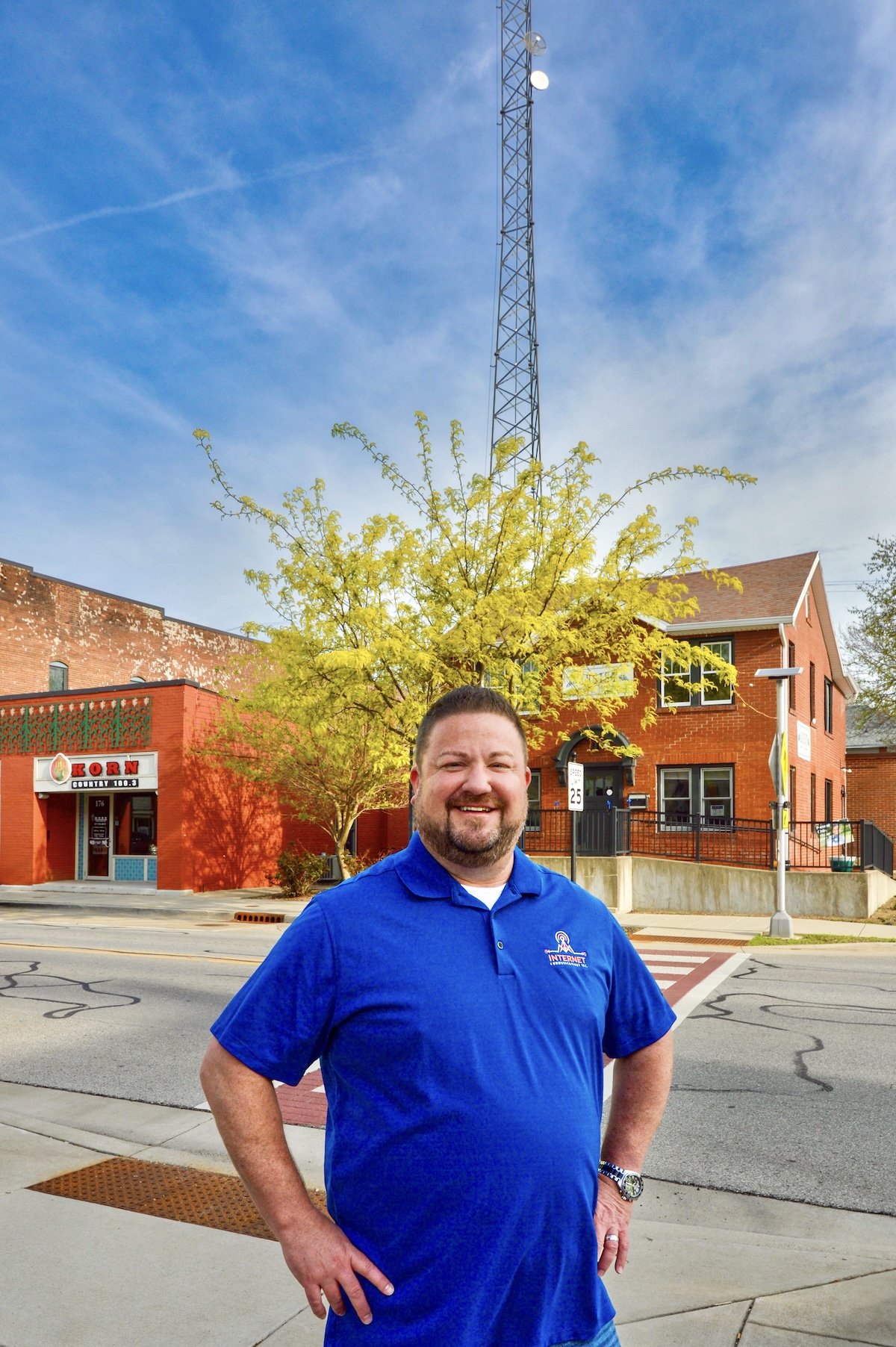
For Tyson Burris, that’s not just a technical issue. It’s personal.
As the founder and president of Internet Communications Inc., Burris has spent decades quietly building the digital backbone that supports businesses, homes and institutions across Franklin and beyond. Now, he’s taking on one of his most ambitious projects yet: bringing free public Wi-Fi to downtown Franklin.
It’s a solution born from experience, frustration and a deep-rooted commitment to the place he calls home.
From Dial-Up Days to a Wireless Vision
Long before streaming, smart homes and cloud computing became everyday realities, Burris was already immersed in the world of connectivity.
“I officially founded the company in 2006,” he says, “but I was working in internet services long before that.”
In the early days, that meant helping customers navigate dial-up connections and later DSL—technologies that, while groundbreaking at the time, were often unreliable. Burris remembers how something as simple as a rainstorm could disrupt service.
“That was fundamentally unacceptable to me,” he says.
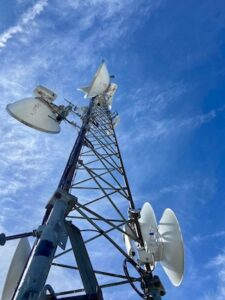
Determined to find a better way, Burris began experimenting with early fixed wireless technology, including Motorola Canopy systems. At a time when most households were struggling with slow speeds, his network could deliver between 3 and 10 Mbps—fast for that era, and more importantly, consistent.
Customers noticed.
“It wasn’t just that we were faster,” Burris explains. “We were more reliable, and we backed it up with strong customer service.”
That philosophy became the foundation of Internet Communications Inc., which steadily expanded by building a network of towers across the region. Some were commercial. Others came through partnerships with local farmers—an approach that reflects Burris’s practical mindset and community-first approach.
“Farmers had the height, and they were community-minded,” he says. “That made a big difference early on.”
Growing With the Community
Over the years, both technology and expectations have evolved dramatically.
What started with trial and error and early equipment has grown into a much more advanced network with significantly faster speeds. Today, Burris and his team work out of their headquarters on Commerce Drive, and the company maintains a significant presence in two locations—733 Henry St. and 401 Shadeland Ave. Those sites give Internet Communications direct connectivity to all major upstream providers and allow the company to support businesses and providers that want to place equipment there.
Despite the expansion, one thing hasn’t changed: the company’s focus on flexibility and control.
“We’ve always tried to build and own as much of our network as possible,” Burris says. “That allows us to adapt quickly and maintain service quality.”
That adaptability has become even more important as the broadband industry shifts. Massive federal investments—like the $42 billion BEAD program—are reshaping how infrastructure is funded and deployed across the country.
But Burris says Internet Communications has taken a different path.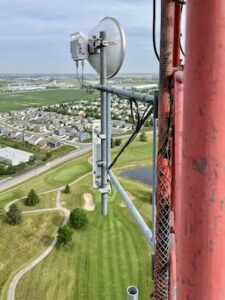
“As a company, we do not participate in or accept funding from BEAD or any local, state or federal broadband programs,” he says. “That’s a key differentiator for us.”
He says many competitors—including Comcast, Brightspeed, REMCs, fiber providers, AT&T and others—do rely on those funding sources.
“I don’t like the government being our competitor,” Burris says, “but that is the landscape right now.”
It’s a perspective shaped by years of hands-on experience—and by his connection to the community he serves.
A Problem Hidden in Plain Sight
For all of Franklin’s growth and charm, its popularity comes with challenges—especially during large events.
That growth has naturally led to his latest focus—improving connectivity right in the heart of Franklin. As downtown has become busier, especially during events, the need for a stronger, more reliable connection has become hard to ignore. For Burris, it’s a challenge he’s ready to take on.
From the farmers market to festivals and concerts, downtown can quickly fill with thousands of visitors. While that’s great for local businesses, it can strain cellular networks to the breaking point.
“The biggest issue is congestion,” Burris explains. “When large crowds gather, cellular networks slow down significantly.”
Anyone who has tried to send a text, process a payment or load a website during a busy event has likely experienced the frustration. For businesses—especially mobile vendors—those slowdowns can translate directly into lost revenue.
“It affects payments, customer experience and overall operations,” Burris says.
He’s seen it firsthand.
“My wife and I eat downtown regularly,” he adds. “And it’s clear there are connectivity problems that shouldn’t be happening.”
At one point, the issue became so persistent that Burris joked about deploying his own Wi-Fi system—from a golf cart.
Instead, he decided to do something bigger.
Building a Better Network Downtown
The idea for a downtown Wi-Fi system has been years in the making, with support from city leaders and groups like the Mayor’s Youth Council. Now, it’s finally becoming a reality.
Installation is set to begin in May, with Wi-Fi access points strategically placed throughout the downtown area.
For users, the experience will feel familiar—similar to connecting at an airport or coffee shop. After accepting terms of use through a hotspot gateway, visitors will have time-limited access to the network. During major events, those limits can be adjusted to accommodate larger crowds.
Behind the scenes, however, the system is anything but simple.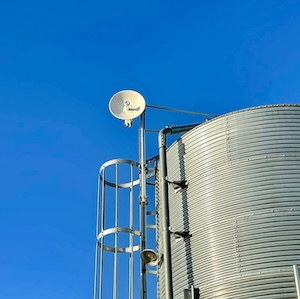
“We’re using high-capacity wireless links and multiple fiber backhaul entry points,” Burris explains. “That ensures performance and reliability.”
The network is designed specifically for outdoor use, complementing—not replacing—indoor Wi-Fi systems. It also opens the door to additional benefits, from cost savings for local businesses to potential promotional opportunities through the platform.
Perhaps most importantly, it provides a solution to the congestion problem by offloading data traffic from cellular networks—a strategy widely recognized as essential in high-density environments.
Overcoming Obstacles
Like any ambitious project, bringing downtown Wi-Fi to life hasn’t been without challenges.
Early plans to mount equipment on municipal light poles were ultimately set aside due to aesthetic concerns. Negotiations around using city-owned facilities also proved difficult, particularly when it came to access and control.
From a technical standpoint, even the height of installation matters. Outdoor Wi-Fi works best when placed between 15 and 25 feet above ground—low enough for devices to connect effectively, but high enough to provide coverage.
“That creates limitations,” Burris says. “You can’t just put equipment anywhere.”
The solution has been a more creative, collaborative approach—partnering with private building owners throughout downtown. In many cases, those partnerships also include providing internet service or other infrastructure in exchange.
It’s a model that reflects Burris’s willingness to adapt and persist.
“We’ve had to adjust along the way,” he says. “But we’ve kept moving forward.”
Rooted in Franklin
For Burris, the project isn’t just about technology—it’s about community.
A graduate of Indian Creek, he has deep ties to the area. His mother worked at Franklin College for nearly 50 years, and his family remains closely connected to the city. His wife, a nurse, shares that same sense of commitment to helping others.
Together, they’ve raised four children—each of whom has spent time working in the family business.
“Family has always been a major part of the journey,” Burris says.
That perspective carries into everything he does, from how he runs his company to how he approaches new initiatives.
“Being local creates accountability,” he explains. “People will absolutely let you know if you’re not doing things right.”
It’s a dynamic he welcomes.
“I take the good and the bad,” he says. “That’s how we make improvements.”
When he’s not working, you might find Burris enjoying a meal at Iozzo’s Garden of Italy—a reminder that he’s not just building infrastructure for the community, but living in it every day.
Looking Ahead
As Franklin continues to grow, so too will its need for reliable, scalable connectivity.
Burris believes the future lies in a layered approach—combining fixed wireless, fiber and public Wi-Fi to create a resilient network capable of meeting rising demand.
“Connectivity is essential,” he says. “People rely on it as much as electricity in many ways.”
The downtown Wi-Fi project is just one piece of that larger vision. Similar initiatives are already being explored in nearby communities like Bargersville and Trafalgar, with the goal of expanding access and improving performance across the region.
At the same time, rising costs in labor, materials and construction are making traditional infrastructure projects more challenging—underscoring the importance of flexible, cost-effective solutions like fixed wireless.
For Burris, the mission remains clear.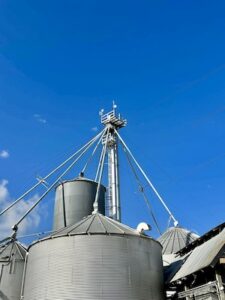
“Our goal is to make sure Franklin is ready for the future,” he says.
A Stronger Signal for a Stronger Community
Back in downtown Franklin, the crowds will keep coming. The festivals, the markets, the shared moments—they’re all part of what makes the city special.
Soon, thanks to Burris and his team, those experiences may come with something new: a stronger, more reliable connection.
It’s the kind of improvement most people won’t think about—until they need it.
And when they do, it will be there, quietly supporting the businesses, visitors and everyday interactions that define Franklin.
For Burris, that’s exactly the point.
Because in a connected world, the best technology isn’t just fast or powerful.
It’s dependable. It’s accessible.
And, at its best, it brings people together.