

Fire and Steel
[Text Wrapping Break]As the scent of hickory and salt begins to drift through the neighborhood, every chef knows that summer isn’t just a season — it’s a high-stakes performance. For years, the traditional gas grill was the undisputed king of the patio. But lately, a new challenger has claimed its territory: the Blackstone griddle. As a professional, I don’t see this as a rivalry. I see it as an orchestra. When you pair the intense, focused heat of a gas grill with the expansive, edge-to-edge searing power of a flat-top, you unlock a culinary versatility that a single heat source simply can’t match.
The Gas Grill: The Soul of the Smoke
The gas grill remains my go-to for anything requiring that classic char and deep, ambient heat. It is the master of the “low and slow” and the “quick and smoky.” When I’m looking for that melt-in-your-mouth texture for a heavy hitter like brisket, I turn to the expert-approved 3-2-1 method. This technique — unwrapped, wrapped and then finished with a glaze — ensures you never serve a dry or tough piece of meat again.
The gas grill excels because of its airflow. It allows for a convection-like environment where smoke can circulate. It’s also about the tools. Before the season even starts, I make sure to sharpen my technique and my cutlery to handle these larger cuts of meat with precision.
The Blackstone: The Versatility of the Griddle
If the gas grill is the soul, the Blackstone is the engine. The sheer surface area allows for a level of consistency that grate cooking lacks. Think of it as a giant cast-iron skillet that never ends. It is the ultimate tool for delicate proteins that might otherwise fall through the grates or dry out in the open air.
For a lighter, fresher summer fare, I love using the griddle for seafood. A flaky spiced salmon, finished on the flat-top to achieve a perfect crust, is the centerpiece of my favorite salmon tacos topped with a tangy Greek yogurt sauce. The Blackstone also excels at “sheet pan”-style meals without the oven. You can whip up a garlicky, lemony shrimp scampi in under 30 minutes, keeping the kitchen cool and the flavor concentrated on the steel.
Choosing Your Weapon
Knowing when to use which tool is what separates the amateur from the pitmaster.
- Food Type
- Preferred Tool
- Reason
- Thick-cut steaks
- Gas grill
- Deep char and internal temperature control
- Smash burgers
- Blackstone
- Maximum surface contact for the Maillard reaction
- Delicate fish
- Blackstone
- Prevents sticking and breaking apart
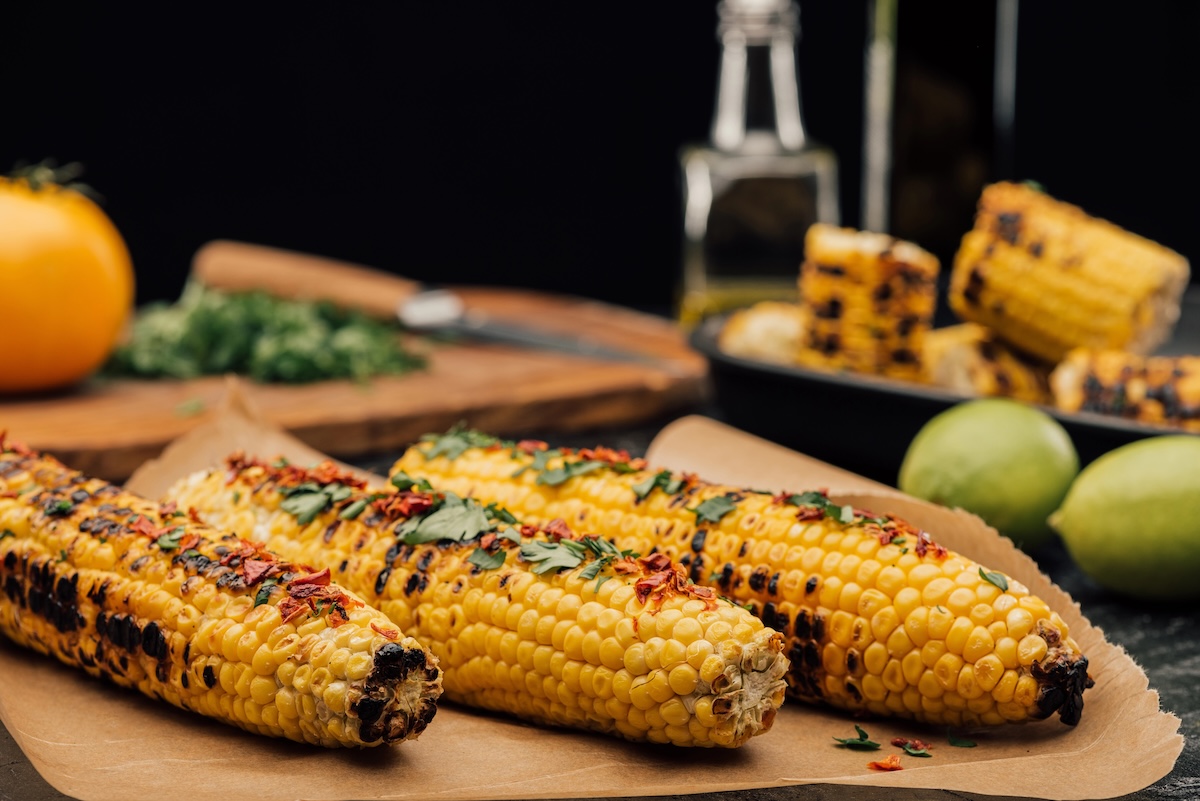
- Corn on the cob
- Gas grill
- To achieve those signature charred kernels
- Sautéed veggies
- Blackstone
- Even heat distribution for high-volume cooking
The Hybrid Approach
The real magic happens when you use them in tandem. Start your vegetables on the griddle with a dash of olive oil and sea salt while your brisket or steaks are resting under foil after their time on the gas grill. This ensures every component of the meal reaches the plate at its peak temperature.
Summer grilling is more than just cooking; it’s an art form. Whether you are following a meticulous 3-2-1 brisket method or throwing together a quick weeknight shrimp scampi, the combination of fire and steel will elevate your backyard game to professional heights.
Chef’s Note
Always ensure your culinary tools are in top shape before the season kicks off.
The Ultimate Grilled Elote (Mexican Street Corn)
Prep Time: 10 minutes
Cook Time: 10 minutes
Serves: 4
Ingredients
- 4 ears of corn, husked
- 1/4 cup mayonnaise or crema Mexicana
- 1/4 cup Cotija cheese, crumbled
- 1 teaspoon chili powder (or Tajín seasoning)
- 1/4 cup fresh cilantro, chopped
- 1 lime, cut into wedges
- Pinch of salt and black pepper
- Instructions
- Preheat your gas grill to medium-high heat. Place the husked corn directly on the grates.
- Grill the corn, turning every two to three minutes, until the kernels are tender and lightly charred on all sides, about eight to 10 minutes.
- While the corn is still hot, lightly brush each ear with mayonnaise or crema Mexicana.
- Roll the corn in crumbled Cotija cheese until coated.
- Sprinkle generously with chili powder (or Tajín), chopped cilantro, and a pinch of salt and pepper.
- Serve immediately with a lime wedge for squeezing.
Essential Tools for the Pitmaster
Every pitmaster knows that your results are only as good as your tools. While the grills provide the heat, your hand tools provide the precision. Two of the most critical items in any outdoor kitchen are a high-quality fish spatula and a sturdy pair of tongs.
A fish spatula is indispensable for more than just seafood; its thin, flexible edge allows you to slide under delicate proteins or smash burgers without breaking the crust. Meanwhile, a reliable pair of tongs acts as an extension of your arm, providing the grip and leverage needed to turn heavy steaks or adjust corn on the cob safely over high flames.
The Crucial Step: Post-Cook Care And Seasoning
Proper maintenance is the secret to a long-lasting relationship with your Blackstone. After every cook, while the surface is still warm, use a metal scraper to remove any stuck-on food debris. Apply a small amount of water to steam off stubborn spots, then wipe the surface dry with a paper towel. Once clean, apply a thin layer of high-smoke-point oil, such as flaxseed or avocado oil, and spread it evenly across the entire surface with a fresh towel until it begins to smoke slightly. This process, known as seasoning, builds a durable nonstick patina that protects the steel from rust.
The gas grill requires a different approach to ensure its longevity. After your final sear, let the grill run on high for about 10 minutes to carbonize any remaining grease. Use a high-quality grill brush to scrub the grates while they are hot. To maintain their nonstick properties, lightly coat the clean grates with a cooking oil spray or an oiled rag. This simple routine prevents oxidation and ensures that your next rack of ribs or piece of salmon releases perfectly from the steel.