


Carmel Clay Historical Society Marks 50 Years With a 70s-Inspired Gala
 Writer & Photographer / Stephanie Duncan
The Carmel Clay Historical Society is celebrating its 50th anniversary and the first anniversary of the Carmel Clay History Museum opening with a golden anniversary gala that will honor the unforgettable decade that started it all. The fundraising gala will feature 1970s-inspired music and food, while recognizing the people and significant moments of the past 50 years.
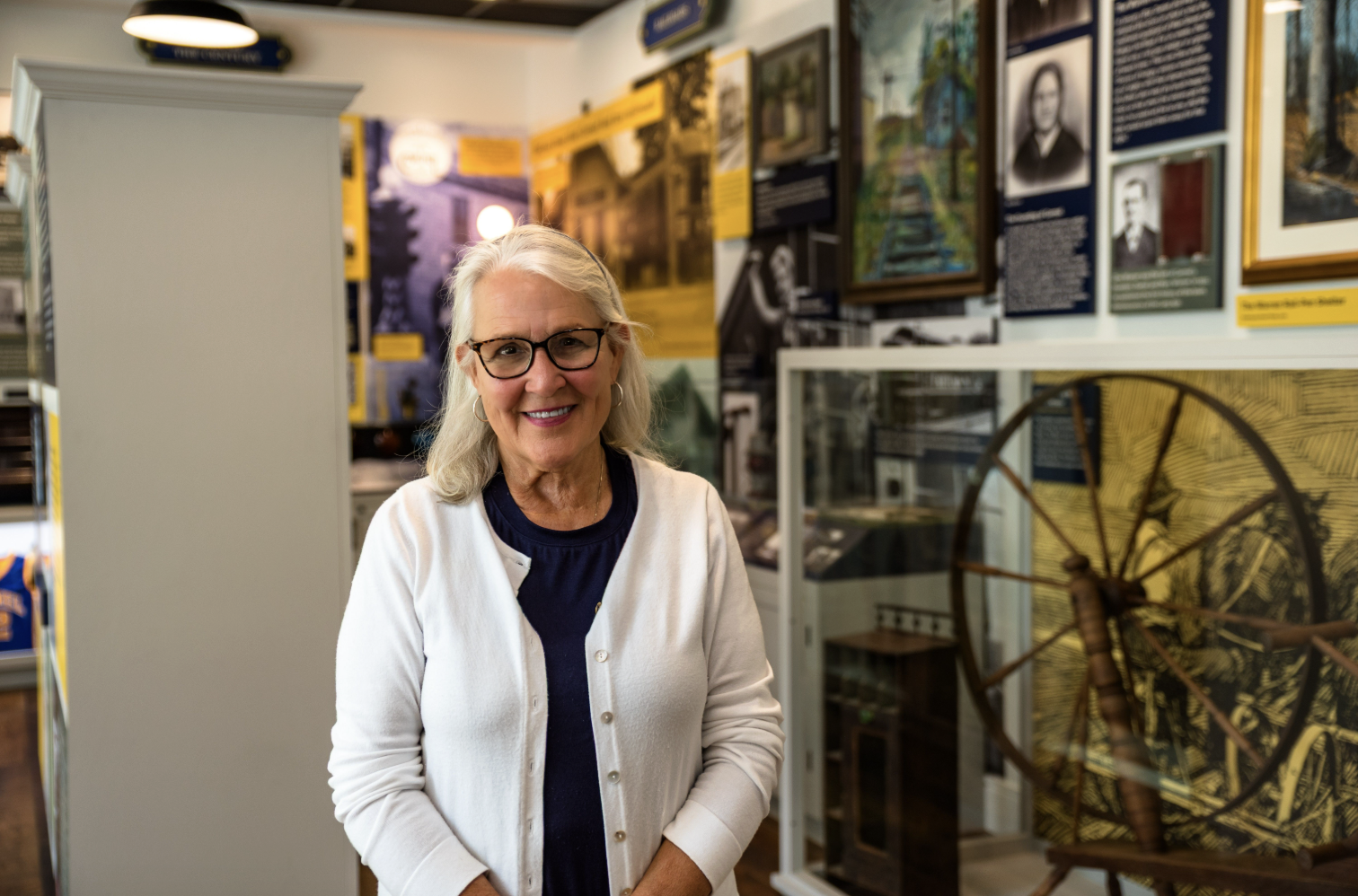
The story of how the museum came to be is an interesting one, and the society’s executive director, Debbie Clark Gangstad, is thankful they can now showcase Carmel’s history and tell the story of the city’s growth over the years.
“The growth has been incredible, not only for our organization but for our city,” Gangstad says. “And we didn’t even have a mayor in 1975. It was run by a town council.”
Founded in 1975, the society initially stored its historical archive in a small cottage and only brought out key pieces during special events. Over the years, the house began to show signs of disrepair, prompting Gangstad to ask the then-township trustee, Doug Callahan, if there was any funding available for a new facility that could safely store the archive and welcome the public.
The pandemic stalled initial plans, but Gangstad is overjoyed by how the vision for the museum came together.
“I’m very proud to share it with the community,” she says. “This museum is for everybody. You don’t have to have lived here for 50 years. Come on in and find out what Carmel’s about.”
The museum offers free admission, allowing anyone to learn more about Carmel’s history. Located in the heart of Carmel at 211 First St., beside the Monon Trail, its main feature is the fully restored 1883 Monon Railroad Depot. Initially slated for demolition, the Depot was saved and donated to the society in 1975.
 Gangstad attributes the Depot’s preservation to passionate elementary students who visited as part of a historical walking tour hosted by the society. Founding members Ineva Chapman and Virginia Luzader led tours for Woodbrook Elementary third graders. When the group reached the Depot, the guides explained that the city planned to demolish it. Though the building’s rotting floors and leaky roof made it unsafe, the children believed it should be preserved.
“The kids said, ‘It’s our history, it should not be demolished.’ The teachers were happy to hear that, because they felt the same way,” Gangstad says.
The students wrote letters to the newspaper editor, raised funds, and inspired the City of Carmel to donate the Depot to the historical society later that year. A photo of the third-grade class that saved the Depot is displayed in the museum today.
During the museum’s planning phase, the society received offers to build on land near the high school or farther from the Monon— leaving the Depot behind — but they declined.
“To tell our story, we needed to be connected to the Depot, the new and old together,” Gangstad says. “That’s kind of how Carmel is. We’re a lot bigger than we used to be, but we’re still a small town in a lot of ways.”
The museum offers a walk through Carmel’s history, with curated displays of historical artifacts, photography and art donated over the years. Notably, the collection contains more than 250,000 photos of Carmel’s history.
On the top floor, a children’s area features miniature buildings inspired by Carmel’s past, offering families a low-cost way to explore the city’s history. The roof deck provides an outdoor space for events, with views of the Monon Trail and downtown. A $1 donation grants access to the children’s area, with funds used to replace broken toys.
Continuing the legacy of the original walking tours offered in 1975, the society still offers historical walking tours to second-grade students in the Carmel area.
“We really want to celebrate and pay tribute to those people who came from the very beginning,” Gangstad says.
Plans are also in place for an adult walking tour in the fall and a midcentury modern holiday home tour in December.
The museum has welcomed approximately 15,000 visitors in its inaugural year, and Gangstad hopes it will continue to attract new guests. She encourages residents to donate any Carmel memorabilia so the society can preserve and share it with the community.
The museum is open Wednesday through Saturday from 10 a.m. to 6 p.m. and Sunday from noon to 5 p.m. Learn more about the society and upcoming events at carmelclayhistory.org.