

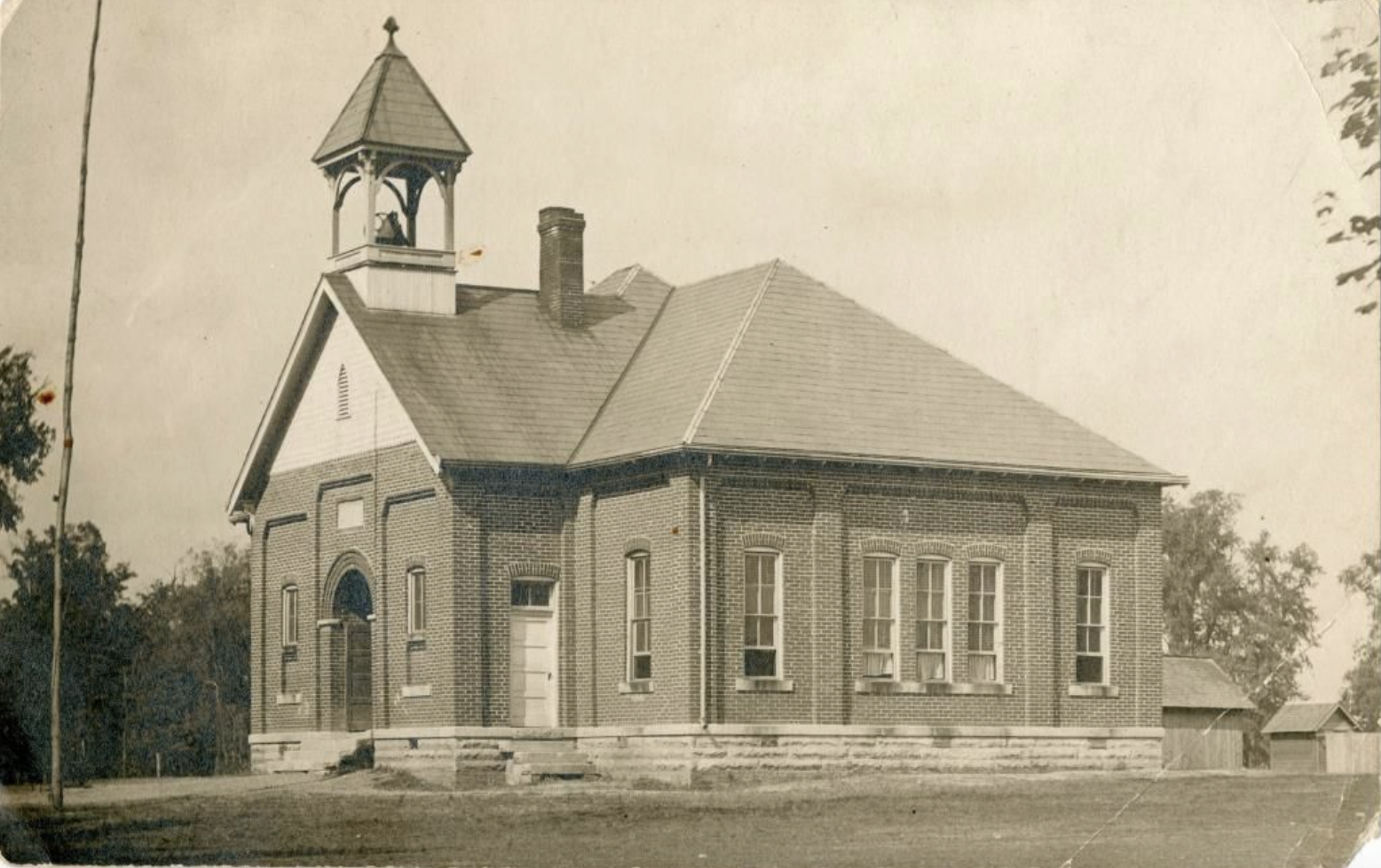

Historic Carmel Schoolhouse Recalls a Century of Community Life
Writer / A.J. Wright
If you have ever driven along 106th Street east of Haverstick Road, you might have noticed the old schoolhouse nestled in a wooded lot. It looks out of place and time in front of the sprawling lawn of St. Elizabeth Seton Catholic Church, but it was once the heart of a thriving farm community on Carmel’s southeast side.
The story of the school starts in December 1837, when James Farley donated the southwest corner of 106th Street and what is now LaSalle Road for a log schoolhouse. The log school was also used by Methodists, who alternated their meetings between this schoolhouse and another closer to 116th Street. In 1838, Farley established a public cemetery, now known as Farley Cemetery, and he fenced in a portion of his land for a deer park. In the decades that followed, a vibrant neighborhood composed of some of Carmel’s finest founding families — including the Farleys, Williamsons, Applegates, Harolds and Moffitts — developed around the school.
In 1852, Indiana enacted the Free School Law, which called for the establishment of public school districts in each township. One by one, the old log schools were replaced by one-room frame schoolhouses. The log school on Farley’s property was replaced in 1857. The new school was officially named Delaware Township School No. 6. However, the builder painted the exterior of the school blue, and it was more commonly called the Blue School. The distinctive building became a landmark, and the road leading to the school — now called 106th Street — was then known as Blue School Road. The neighborhood also took its name from the school and came to be called Blue Woods.
Around the turn of the 20th century, the county superintendent worked with township trustees to consolidate rural school districts and replace the aging one-room schools. Delaware Township Trustee Richard Moffitt consolidated the districts in White Chapel (116th Street and Gray Road) and Hazel Valley (Main Street and Cherry Tree Road) with Blue Woods and replaced the Blue School with a two-room brick building in 1904. Though the brick school was never painted blue, it carried on the name Blue School. The second Blue School remained in operation until a new graded school opened in Carmel in 1922.
The Blue School had been a community center for nearly a century, and for many older residents, it was the only school they ever attended. Though the school had closed, former students gathered every summer from 1929 to at least 1971 for a reunion. Viola Williamson attended the Blue School as a child and taught there for two years as an adult. She shared the following memories at the neighborhood’s reunion in 1931:
“We all remember the jolly times we had coasting down the hill in winter and tramping in the woods and playing games in the springtime … Perhaps the most popular game with most of us was ‘town ball,’ which was entirely out of date long ago. It was played and enjoyed by both boys and girls, and I recall some of the girls who could run as fast and catch a ball as well as any of the boys. The big woods across the road [was] always a delight to all of us. We made swings by tying the branches of the trees together [and] found the most beautiful moss and flowers in all the world. Sometimes we wandered so far we lost our way, but some more level-headed than others led the way back to the old schoolhouse.
Uncle Frank Williamson, who attended the first school, tells me that Sammy Bales, who was the director, managed the building of the house and was also responsible for it being painted blue, which was considered rather a freak then, but I was always glad it was painted blue because it gave to it a distinction which it never could have had, should it have been the little red or white schoolhouse.”
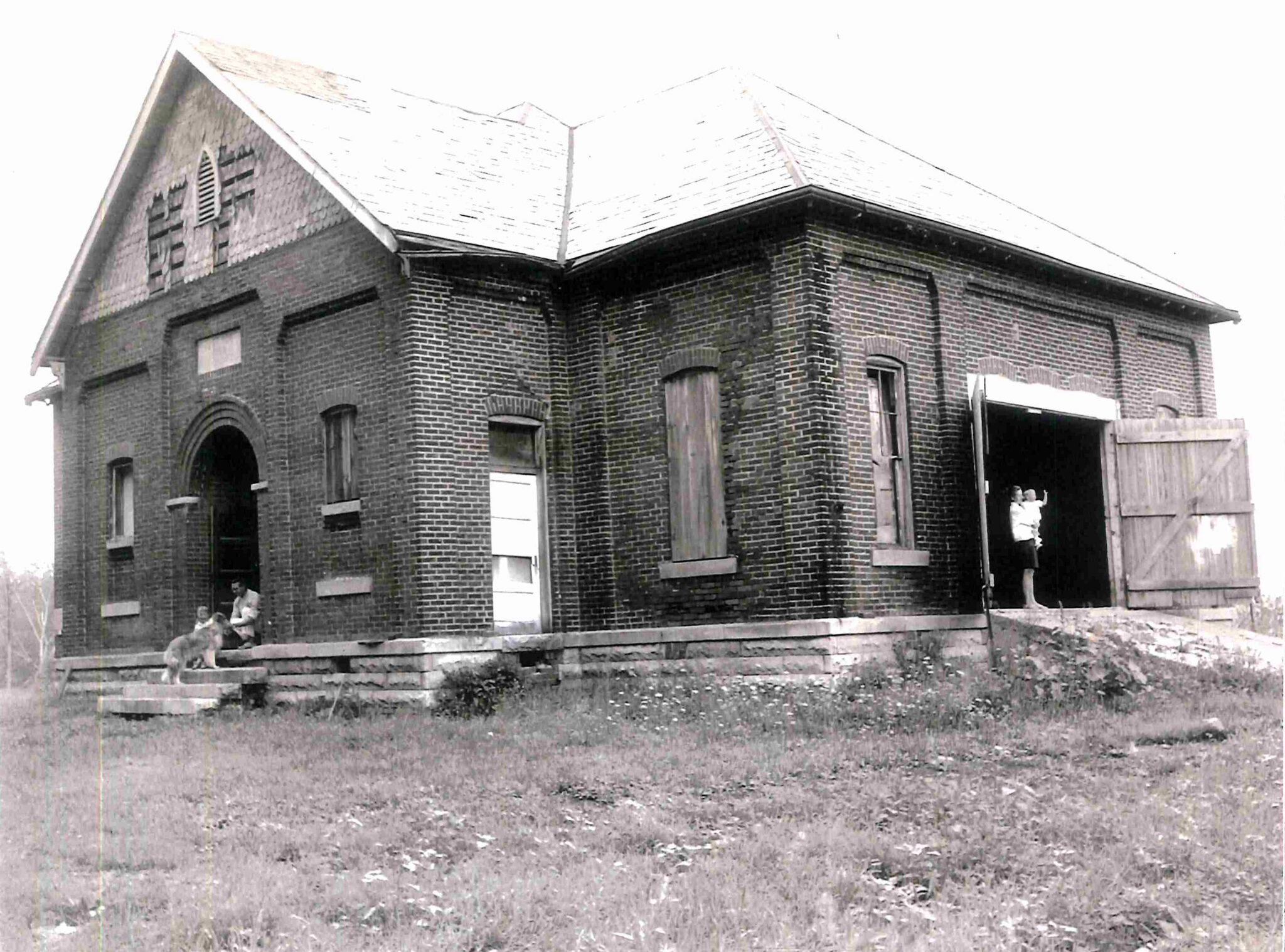
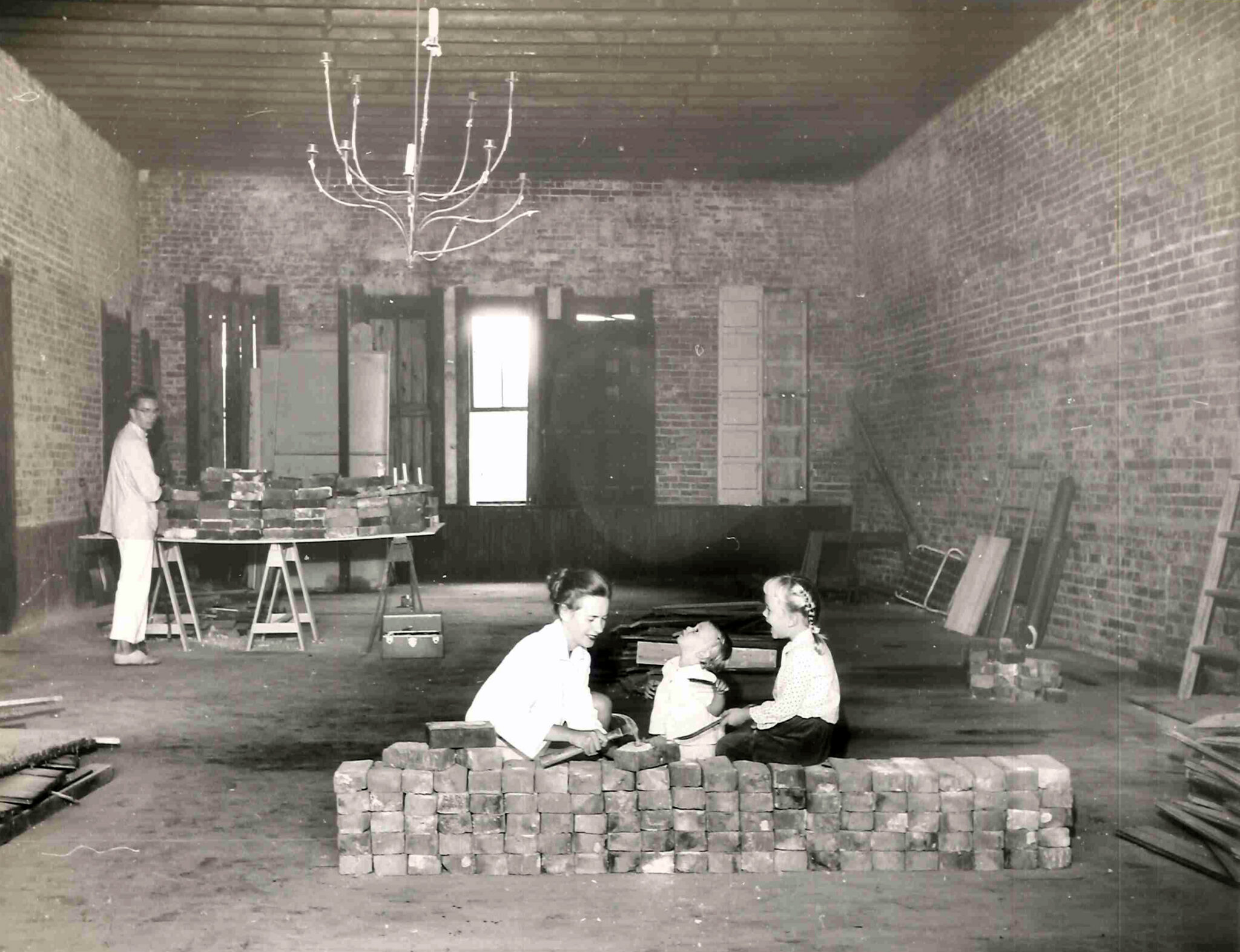
In 1950, the Blue School was renovated for residential use, which likely saved it from demolition. Today, it is one of only a handful of old schoolhouses that remain in Hamilton County — and the only one in Carmel. The building was purchased by St. Elizabeth Seton Catholic Church in 2024, and its future use is uncertain, but there is hope that it will continue to stand along 106th Street to memorialize the idyllic neighborhood it served more than a century ago.
A.J. Wright is a historian at the Carmel Clay History Museum. He has written several books on the history of Carmel that can be found on the museum’s website, carmelclayhistory.org/books.




Comments 1
Thank you. Very interesting. I have relatives buried in Farley Cemetery. How do I access it and where do I park?