

St. Matthews’ Free Tree Program Expands Canopy & Community
Each year, St. Matthews residents welcome more than a hundred new neighbors thanks to the free tree program run by the city. Since 1990, St. Matthews Public Works has offered homeowners the opportunity to have a free tree planted in their yards, providing decades of benefits as the trees age and mature.
 “Residents can fill out a form that consents to taking care of a tree for the duration of the tree’s life or until they leave the property,” says Kenan Stratman, director of public works for St. Matthews. “We do our planting in March, or when the nursery is able to pick the trees up, and take requests throughout the whole year. Planning starts in March or April, and we typically order about 125 trees annually.”
Residents can select from three different trees approved by the city arborist, Daryl Cleary. The three options currently are Yellowwood, Black Diamond elm or Frontier elm. All are considered Class B trees, meaning they generally grow up to 30 feet in height and diameter and make for hardy trees along the roadway. Stratman says the roots of all these trees grow downward, reducing the odds of future sidewalk issues.
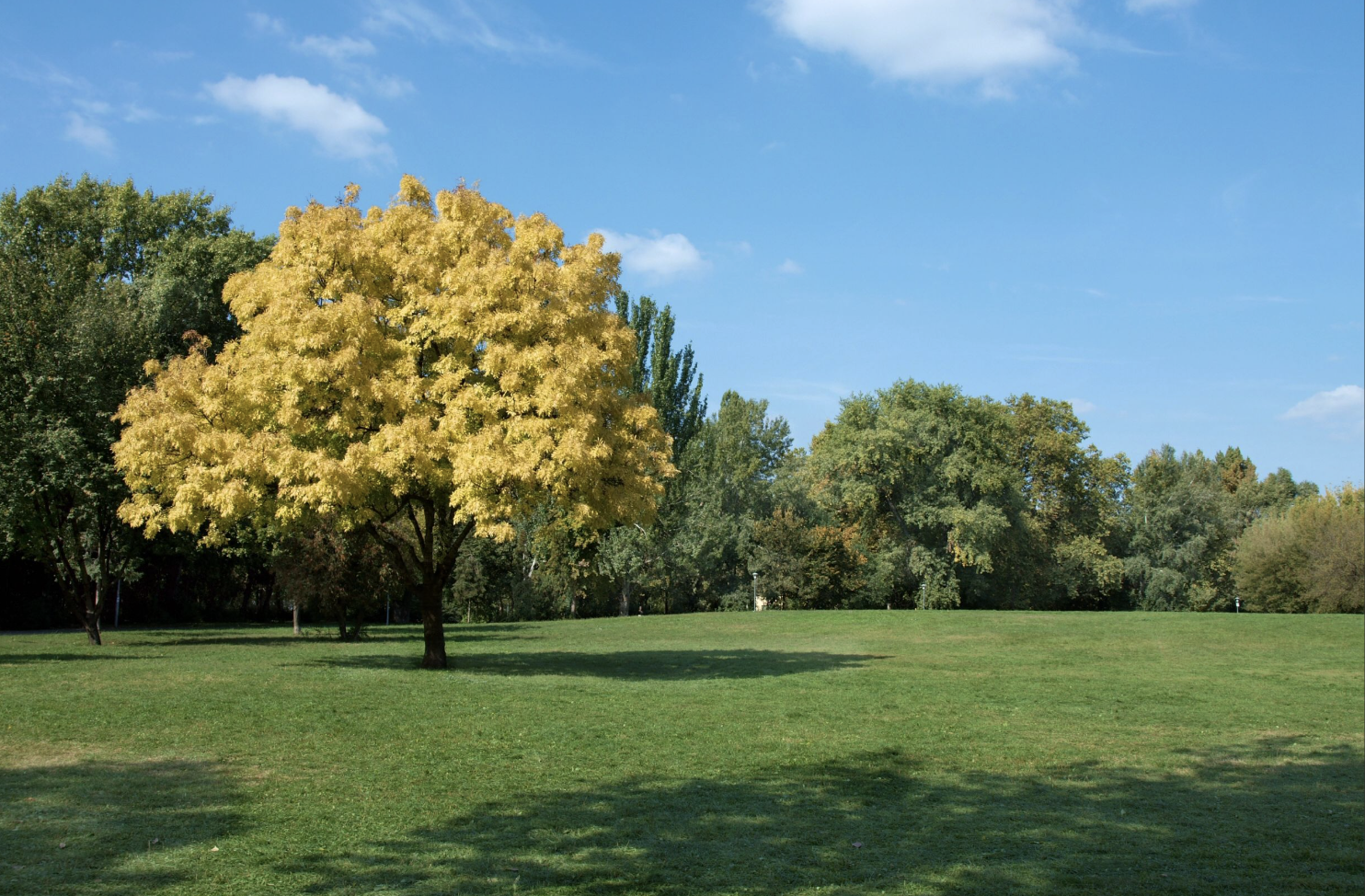
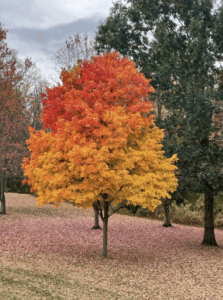
“These three trees are flowering trees and are pretty to look at,” Stratman says. “They have good fall foliage. Historically, they are not common to have diseases and can maintain our tree canopy to reduce heat.”
Trees are generally planted only in the right-of-way area of a property, in the yard between the sidewalk and the road. Stratman says the team takes utility lines into consideration and will plant a tree farther into the yard with the homeowner’s consent.
“There are a couple things we take into consideration,” hesays. “We have utilities marked before we do any digging to make sure we don’t put anything over a water, sewer or electric line. The other thing we look at is existing power lines. We don’t want to plant under power lines because they end up getting butchered. For those who want a tree but have a power line in the right-of-way, they sign a release that allows us to go up into the yard and plant the tree farther away.”
Requests for trees come from all over St. Matthews, and leftover trees are usually planted in parks after all residents’ requests are filled. Only homeowners are allowed to request a tree planted on their property, and requests can be submitted on the “Request a Tree” form on the City of St. Matthews website. Trees must be placed 20 feet apart or 30 feet from a traffic sign, and the requester assumes responsibility for maintaining and trimming the tree after it is planted. More than 3,000 trees have been planted in St. Matthews through the program.
“It takes about two months to plant all the trees,” Stratman adds. “A lot of that has to do with weather and other things going on. It takes about an hour to plant a tree and transport it to the property. We measure, dig down and set the tree.”
 If a property owner would like to plant a different tree, they are free to do so at their own expense and only need permission if planting in the right-of-way area. Trees not allowed in the right-of-way include species that bear fruit, trees that drop seeds or other growth continuously or annually, and evergreens that may block sunlight on adjacent sidewalks, which could hinder ice melting during the winter. Trees planted in the right-of-way must also have a sidewalk clearance height of 8 to 10 feet and a street clearance height of 14 feet. Stratman says there has been an effort to ensure larger trees are planted away from homes and areas where they could cause damage.
“If you drive around St. Matthews, you’ll see some massive oaks,” he says. “A lot of those drop big limbs. We want to provide the tree canopy, but at the same time we don’t want a tree that is massive and can cause problems.”
While tree removal is the responsibility of the homeowner, St. Matthews does offer free stump grinding. After a tree has been removed in the city right-of-way, residents can have the remaining stump ground at no charge by the Public Works Department. If a resident needs a tree in the right-of-way removed because it is diseased or hazardous, permission from Cleary is required.
“We recommend residents request stump removal between March and September,” Stratman says. “That way, when we reseed, the grass has time to grow. If you remove the stump while it’s cold, you’ll have a mud hole all winter. We ask the resident to remove the tree with 12 inches of stump remaining. We have a grinder that grinds the stump and roots down. We come in with a backhoe, remove the wood chippings, and put down fresh soil, seed and straw. Some stumps cost between $500 and $1,000 to remove, so it’s a benefit to the homeowner.”
Stratman says the city spends about $28,000 a year on the free tree program and sees countless benefits to the neighborhood and surrounding area.
“This is an indefinite program,” he says. “These trees help reduce climate change and purify the air.”
For more information on the St. Matthews free tree program, call 502-899-2544 or visit stmatthewsky.gov/cityarborist.