

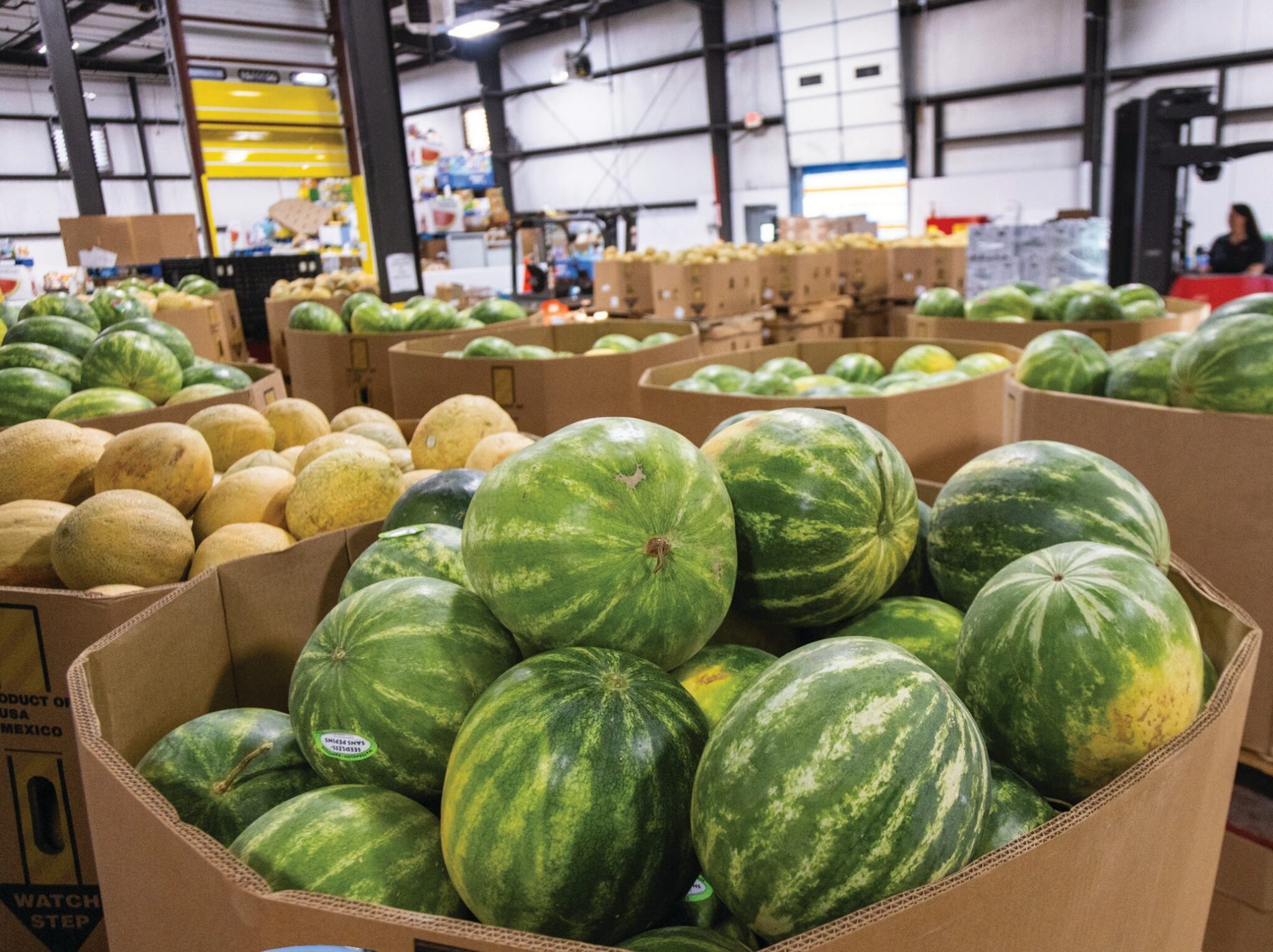
Since 1971, Dare to Care has been serving the Kentuckiana family, one meal at a time. Now a few years past their 50th anniversary, they have only grown — but the need for food in Louisville and its surrounding area is growing right along with them.
“Dare to Care is the leading hunger relief organization across Kentucky. We serve 13 counties — eight in Kentucky and five counties in Indiana,” says Alexis Richardson, Director of Communications.
“Essentially how we operate is we source millions of pounds of food from retailers. We get food from the local government, and then a tiny piece of what we distribute is purchased food that we are buying ourselves. But the biggest chunk of what we distribute is coming from donated food, whether from the federal government or from large retailers — Myers and Kroger, Sam’s Club, Costco. We are reaching out to all of those folks and getting food from them.”
Dare to Care acts as the food bank, distributing to the boots-on-the-ground food pantries across the Kentuckiana community. “We have 400-plus of those partner pantries across the 13 counties, and those pantries can look anything like the Salvation Army, Ronald McDonald House, your local YMCA, Boys & Girls Clubs.” In addition to these locations, there are also mobile pantries, where community members can drive up to various “stations” and have food dropped off directly to the trunk of their cars.
But Dare to Care can’t make the change our community needs without the community’s help. They can always use volunteers, donations and general involvement. For those looking to volunteer, an important step before this food can be sent out to the community is sorting food and separating out pallets — this is one of the organization’s biggest needs. For those looking to donate, every dollar given provides two meals to people in need.
Dare to Care also hosts community events throughout the year. Among these are a bourbon auction and Taste of Derby food festival, with funds raised going back into supporting the fight against food insecurity. They also welcome community members to organize food or fund drives, and are shifting toward encouraging fund over food. Given that Dare to Care can often get food in bulk at lower prices, fund drives actually maximize the impact of every gift.
Whether you can help in person or not, everyone has another role to play: advocacy.
“Advocate. Because right now, we are seeing an extremely high rate of food insecurity. We actually just announced that we are seeing the highest rate of food insecurity that we have seen in the history of Dare to Care. We’re seeing 200,000-plus neighbors who are considered food insecure,” Richardson says. “That’s data we get from the USDA and it does lag by two years. And so, what that tells us is that this doesn’t even account for their recent changes to SNAP.”
“We really do need community support to make sure that people have access to the foods that they need, but also for the food pantries, who are struggling to keep up with their rising demand. I think that’s what’s really important. Because it’s not sustainable, and I think that unless we see policy changes, I think it’s only gonna get worse.”
The numbers reflect the personal lives of our own community — and it’s something that Dare to Care’s workers see on the front lines, every day. “It’s only continued to get worse over the last couple of months of this year,” Richardson says. “I think that people are just really surprised to see that people are really struggling right now… It’s a lot of families who have never been to a food bank; 30% of the people that we’re serving right now are first-time visitors, so they never had to come to a food pantry, and now they do.
“And a lot of these families are working families who are working every day, working two jobs, and they still can’t afford food at the end of the day. The paycheck just isn’t stretching in the way that it was before the rising cost of living. And so I think that that surprises people.”
It isn’t enough to provide access to just any food — many places considered food deserts or food apartheid are not without food, but they are without nutritious food. “We are really committed to providing healthy foods to people, because we do know that food is a dictator of your life expectancy,” Richardson says. “And so we want to make sure that the foods that we’re putting out are nutritious and fueling your body, rather than . . . giving you high blood pressure, high cholesterol, things like that.”
Dare to Care was founded after a 9-year-old boy died of malnutrition the day before Thanksgiving. Originally a group of faith leaders across the community, simply loading cars with food and delivering it to the community to combat hunger, the organization still honors this boy’s life each November. “It’s our responsibility to look after our neighbor, and make sure that a tragedy like that doesn’t ever happen,” Richardson says. “And so I would just encourage anyone who reads this to look at how you can make a difference.”
It’s easy to turn our minds to helping more during the holiday season, and even though Dare to Care originated with a Thanksgiving tragedy, it’s important to remember that hunger lasts all year long. “We just encourage people to think about food insecurity all year long because it really is an issue that doesn’t start or stop at a certain point. Throughout the year, we really see people just struggling — in the summertime, kids aren’t in school, and so they don’t get school meals, and so their parents are trying to figure out how to supplement food that they would typically get during a school year. And so, hunger doesn’t stop; it’s really all year long.”
As much as Dare to Care can use volunteers, the best approach is a larger commitment — not a single day of service, but consistent service.
“Hunger doesn’t necessarily ramp up during the holidays. It’s just consistent,” Richardson says. “I would just encourage anyone who’s looking to get involved, whether they’re donating or volunteering during the holidays — I would encourage them to continue that work.” Whether it’s giving of money, talents or time, “find a way that speaks to you, but get involved, because our community needs us… Make your voice heard.”
Ultimately, the what and the how doesn’t matter — it’s about being on a mission to serve the Kentuckiana community, one meal and one family at a time, where any contribution can change a life. Whether it is organizing a fund drive or sorting pallets, Dare to Care’s volunteers are bringing neighbors together over good food — and finding good friends along the way.
To learn more about Dare to Care, including how to get involved or how to find food pickup locations, visit daretocare.org.