

How Mental Performance Coaching Makes All the Difference
 Like many athletes, Jeff Becker lived and breathed his sport, having played and then coached basketball throughout his life. He started his own travel basketball club and journeyed around the world running camps and training athletes. As the director of the PHHacility Basketball Training Facility, a multi-million-dollar private basketball facility that offers a focused and high-quality environment for players, he loved the sport. However, seven years ago, he questioned the direction his life was taking.
“I felt like we were chasing the wrong carrot,” says Becker, who had grown tired of the ego and entitlement he was witnessing.
His heart wasn’t in it anymore so when a mentor of his asked if he had ever considered doing mental performance coaching, he was intrigued. This mentor, who was a Division 1 coach, explained that often teams invite mental performance consultants to talk to their players because they relate better to athletes than psychologists do.
Becker, a self-described “professional development nerd,” loved the idea.
“I’ve always been into reading books and listening to podcasts to better myself,” Becker says.
He understood what was most important in life — and what we carry with us.
“I could teach you how to shoot a jump shot, but realistically that’s going to fizzle away,” Becker says. “However, if I can teach you more confidence, how to control your emotions, shift your perspective, and be a better leader, those are lifelong skills you can use.”
When he first launched Jeff Becker Mental Performance Coaching in 2019, he envisioned traveling from state to state, going locker room to locker room, speaking team to team about culture leadership. Then COVID hit. Since no one could get on the field, Becker conducted mindset Zoom calls. This led to him doing one-on-one calls, and now 95% of his work is dedicated to one-on-one client calls where he works with all demographics, including young athletes, Olympians, and pro players all around the world. He offers mental performance coaching to baseball players, golfers, rock climbers, jujitsu martial artists, chess players as well as those in corporate, sales, and construction.
“It doesn’t matter who you are,” Becker says. “Mindset isn’t everything, but it affects everything.”
 To increase an athlete’s performance, Becker knows he must impact their mindset. That starts with a perspective shift. According to Becker, people get trapped in three words: comfortable, lazy, and emotional.
“We have roughly 60,000 to 90,000 thoughts a day, and 95% of those thoughts are repetitive,” Becker says. “Think about the trenches you build when you have the same thoughts over and over for days, weeks, months, years, and decades. We must get out of this rut by shifting our perspective.”
He maintains that the best way to do this is to be less emotionally reactive in situations. Humans are the only species on earth that can think how to respond. Having the ability to focus on what we want and detour away from what’s comfortable is the key.
“In other words, choose the harder path immediately,” he says.
In his program, he conducts weekly touchpoint calls with athletes where he focuses on something intentional for that week in order to build habits and routines. In addition, athletes can access a player portal where they can view motivational videos and podcasts. It includes an audio library with 50 2- to 4-minute audios that discuss everything from having a bad performance to how to stay confident.
Every athlete starts with a free consultation with Becker where he learns about their journey to determine if working together is a good fit.
“Every week I hear gut-wrenching stories from athletes and/or parents,” Becker says. “Some athletes are in the deepest darkest hole that they’ve ever been in.”
It’s not unusual for athletes to resent their parents for being an overbearing sports presence. Becker also hears from frustrated parents who say their son or daughter no longer listens to them.
“When you’re 13 to 18, you don’t listen to your parents much. I didn’t, either,” says Becker, who credits his youth pastor for changing the trajectory of his life. “He told me I had the potential to play college basketball but that I didn’t work hard enough or take it seriously. When the student is ready, the teacher will appear.”
Ten years ago, Becker and his father wrote a book together called “Tender Lions: Building the Vital Relationship Between Father & Son.”
Becker, who has three children all under age 4, previously ran a podcast called The Winning Edge, but he paused that before the birth of his second child to devote more time to family. He may resurrect the podcast down the road, but right now his focus is on raising his three young children with his wife.
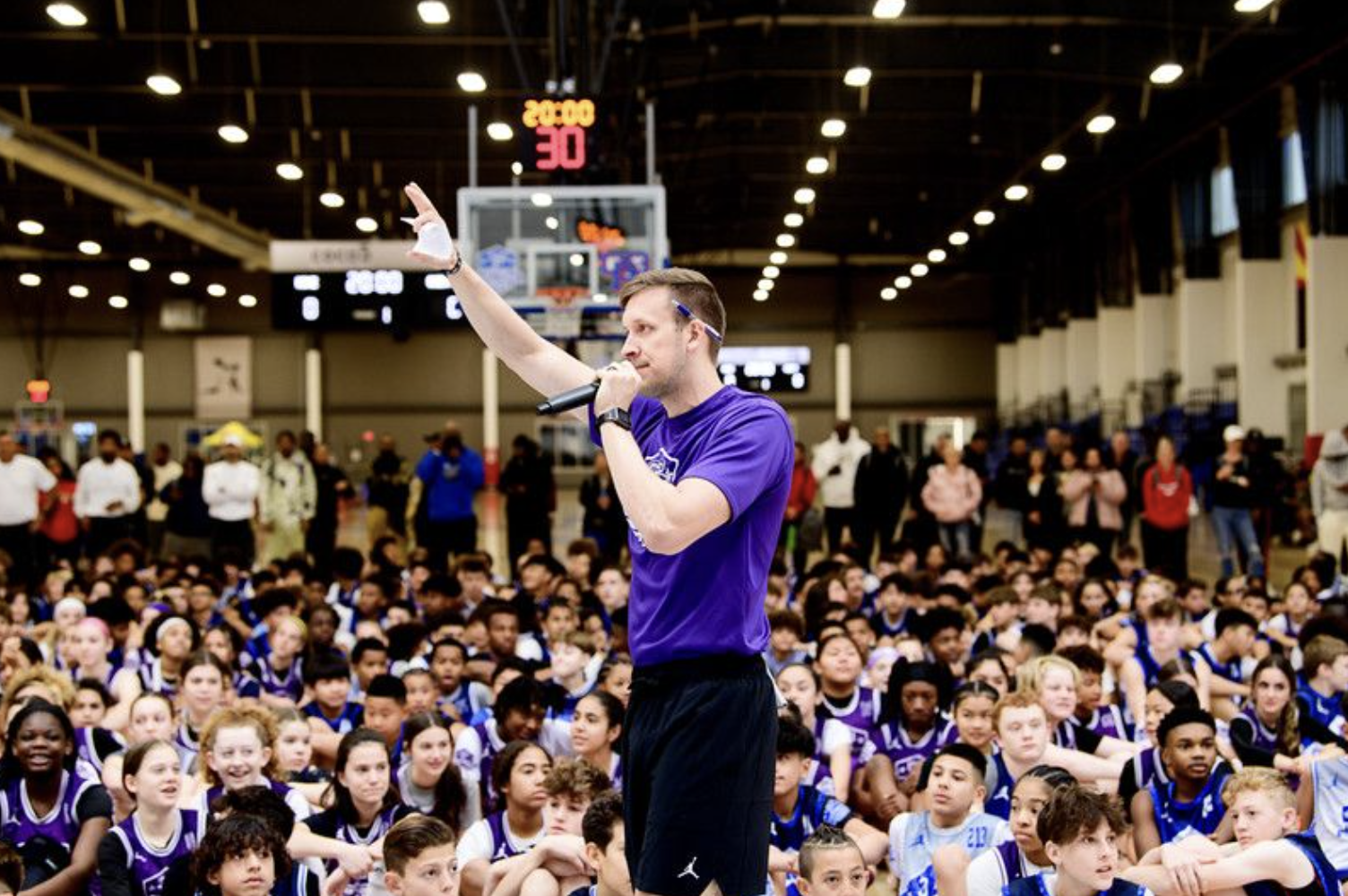
Becker, who used to be the Lead Director of the Chris Paul CP3 Rising Stars All-American Camp, made it mandatory for parents of his athletes to attend his workshops. He did this for a very specific reason.
“Parents are the most important and impactful person in an athlete’s life,” Becker says. “So many parents are focused on results, accolades, status, GPA. Parents should be the support system and the safe place for their child.”
This means refraining from stepping into the role of coach. Becker notes that parents need to settle into a spectator role where their only job is to cheer, support, and offer positive comments.
“Then,” he says, “on the car ride home, shut up.”
He says the best athletes have families who have built a team of great role models that surround them, all of whom share a like-minded growth mindset. Together, they support the athlete.
“When parents have that team in place, that takes a load off their shoulders,” Becker says. “Believe me, your child doesn’t need or want another coach. They want a mom and a dad.”
Becker has spoken to close to 20,000 families at camps, and at each one he shares that the five most important words every parent can say to their son or daughter after any sporting event are, “I love watching you play.”
Through the years, he has heard from countless parents who say that by implementing this five-word sentence into their post-game play, they have changed the relationship with their son or daughter forever. Then they shake his hand and thank him.
For more information, visit coachjeffbecker.com or email jeff@coachjeffbecker.com.