
Pleasant Acres Horseshoeing Helps With Horse Hoof Issues
Writer / Lois Tomaszewski
Photography Provided
The right shoe can help make working easy on the feet for humans. The same applies to the horses on whom humans rely for transportation or sport. Unlike a human, horses cant buy their shoes from a store; their owners rely on the services provided by a farrier, such as Pleasant Acres Horseshoeing, operated by Emery Miller.
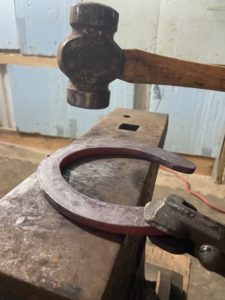 Miller says hes always been interested in horseshoeing, even watching his uncle as a young boy. It wasnt until he needed shoes quickly for the colts he was training that he decided to develop his interest into a business. He started shoeing horses for the public eight years ago, and doing his own farrier work four years before that.
Proper shoeing and hoof care are important in keeping a horse sound. Proper shoes can correct problems in conformation and ensure that a horse is able to perform tasks without harm.
The Amish buggy horse is one of the most important to keep sound, Miller says. Families rely on these for transportation.
The rhythmic pounding of horse hoof on pavement can cause lameness and other mobility issues if the horse is not properly shod. While wild horses do not need to be shod, horses used by humans are a different matter, Miller explains.
Shoes protect the horse who wears down the hoof growth too fast, he says.
The right shoe can help correct problems from poor conformation. Regular hoof trimming can reduce potential problems that might keep a horse out of commission for a period. Neglecting a horses feet is also considered negligent care, depending on the severity of the hoof problem.
One of the first steps Miller takes when called to shoe a horse is to watch how it walks. He watches for conformation issues that may make the horse unsteady. He looks for the way the hoof lands when the horse walks and determines whether the horse is sound, meaning whether it can walk without issue.
Most of the time, a manufactured steel shoe can be used. It can be adapted to fit each hoof, and with proper trimming can serve the horse well. Other times, a horse may require a custom shoe to address issues with the foot or leg structure.
The shoe is then nailed in place into the hoof wall. There are no nerves or blood vessels in the hoof, so the horse does not feel any discomfort when the shoe is attached.
A store-bought shoe takes about 60 to 90 minutes to put on the horse. A handmade shoe on-site extends the time of the visit to up to three hours.
This requires a very high skill level, Miller says.
 Miller honed his farrier skills watching his uncle. He has also pursued continuing education, to properly diagnose and correct defects or problems with the soundness of his customers horses.
You have to keep on learning, he says.
Continuing education can be costly, but Miller considers it vital to his business. Knowing the anatomy of the horses hoof, and being able to adapt shoeing techniques to address problems, ensure that the horse can continue to work or compete at its best.
A horse does not stand on his foot, he explains.
The bone that makes up the foot is protected by the hoof, which extends beyond the bone like a fingernail. This hoof wall in not sensitive to trimming or shoeing, but the bone and the tendons that attach the hoof to the bone are. These areas of sensitivity and living tissue illustrate the importance of knowing the structure of the hoof, Miller says.
We cannot change the sensitive structure, he says. The way we trim the hoof has a direct effect on this part of the foot.
Regular shoeing is considered an important part of horse ownership. Most horses can go 10 weeks between shoeing but in some cases more frequent visits from a farrier may be required, Miller says. The process is designed to keep a horses feet in balance, which is a major benefit.
Miller raises and trains horses at his farm in Milford. He had a pony growing up, which sparked his interest in horses. He still shoes his own horses, but also works with the Amish community and hunter-jumper horses in the area.
To arrange a visit with Miller at Pleasant Acres Horseshoeing, call 800-213-1925, ext 5.