

Pulaski Memorial Hospital Expands Oncology Care Close to Home
A cancer diagnosis has a way of changing the rhythm of life in an instant. The words themselves are frightening enough. Then come the appointments, the testing, the decisions, the insurance questions, the side effects and the emotional weight carried not only by the patient but by everyone who loves them.
For families in rural communities, that burden can grow even heavier when treatment requires long drives to larger cities. That is why Pulaski Memorial Hospital’s oncology program matters so deeply.
At a time when some surrounding rural oncology services have closed or scaled back, Pulaski Memorial Hospital has expanded its own cancer care offerings, giving more patients in Pulaski County and neighboring areas access to treatment closer to home. What has grown there is not simply a service line but a coordinated effort built on expertise, thoughtful planning and a belief that people facing one of life’s hardest battles should not have to leave their community to receive excellent care.
“From the patient perspective, keeping that care local matters,” says CEO Steve Jarosinski.
Jarosinski says the hospital’s commitment to oncology begins with a simple understanding. Patients who are already enduring a stressful, exhausting day should not also have to spend hours on the road if quality treatment can be provided nearby. Keeping care local supports quality of life, reduces added strain and makes it easier for patients to remain consistent with treatment.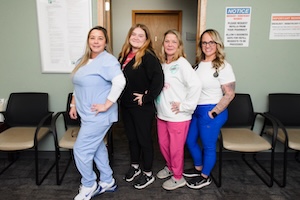
That decision has required both heart and strategy. Jarosinski explains that Pulaski Memorial’s participation in the federal 340B drug pricing program helps make oncology services more sustainable by allowing qualifying hospitals to purchase certain medications at significantly reduced prices. As a critical access hospital, PMH also benefits from cost-based reimbursement for many Medicare patients, which helps support rural care.
Even so, the challenges are real. Medicaid reimbursement is limited. Insurance denials and prior authorizations can delay treatment. Recruiting specialized staff in a rural market is not easy. Yet Pulaski Memorial chose to grow rather than retreat.
Brian Ledley says hospital leadership recognized early that as nearby programs closed, the need in this region would increase quickly. The hospital responded by bringing in additional providers, expanding clinic access, repurposing space and investing in the people and systems needed to support a much larger program.
“We’re vital in providing health care services in a rural area,” Ledley says.
The growth has been dramatic. Linda Webb, chief nursing officer, says the oncology model once operated on a much smaller scale, with more limited clinic and infusion availability. As demand increased, the hospital moved quickly to strengthen the program in practical ways that would protect patient care and support staff.
Instead of allowing rapid growth to strain the program, hospital leaders worked to reinforce it. Webb says PMH invested in a new oncology-specific electronic medical record to improve safety in chemotherapy ordering, pharmacy review and medication administration. The hospital also contracted with a vendor to assist with prior authorizations so oncology staff could spend less time navigating administrative requirements and more time focusing on patient care.
One of Webb’s clearest priorities is making sure that care feels both clinically strong and deeply personal.
“It’s listening to those patients,” Webb says.
Physical space has grown as well. Oncology office visits now take place in a renovated clinic area across from the hospital, while infusion services have expanded within the hospital itself. Webb says the hospital has also been working with an architect on additional renovations to create an even stronger infusion area for the future.
Those improvements support a program that has grown from serving only a handful of patients each month to caring for dozens.
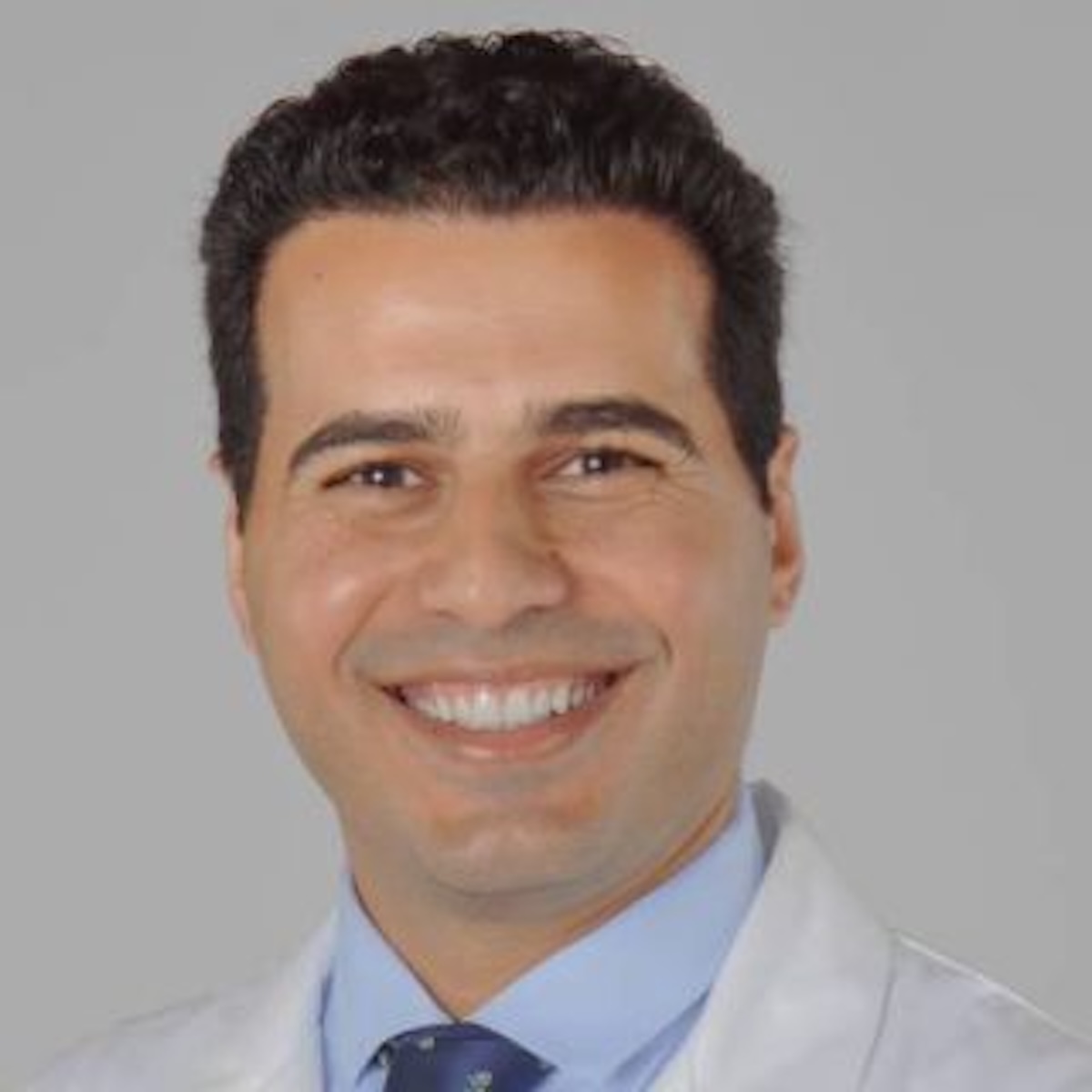
The oncology clinic is led by Dr. Kalid Adab and provider Shannon Tingle, FNP, who together guide patients through diagnosis, treatment and follow-up care. As a nurse practitioner, Tingle says her approach to oncology is grounded in both evidence and relationships. When she first sits down with a newly diagnosed patient, Tingle says her philosophy is to be transparent, kind and understanding.
“I like to give them all the information and invite their questions so we can talk through everything together,” Tingle says.
Tingle bases her practice on evidence-driven care, using NCCN guidelines while also collaborating with larger institutions such as the University of Chicago, Mayo Clinic, Rush and Indiana University. That means patients can receive local treatment while still benefiting from consultation, second opinions, advanced diagnostics or referrals when needed.
She believes one of the greatest advantages of oncology in a community hospital is continuity.
“The patients get to see the same provider, the same nurses,” Tingle says. “They get comfortable with the staff.”
That continuity builds trust and creates a sense of stability during an uncertain time. Patients are more likely to keep appointments, stay on schedule with treatment, ask questions and remain engaged in their care when they know the people caring for them.
Tingle is also quick to challenge outdated assumptions about cancer treatment. Modern oncology, she says, is no longer defined only by the harshest images people may still carry in their minds.
“The evolution of cancer treatment is not just cytotoxic chemotherapy anymore,” Tingle says. “There are targeted therapies, there are immunotherapies and there are biosimilars.”
Patients today often have more options, better symptom management and more opportunities to maintain daily life while in treatment.
That progress is paired with a level of personal care that staff members describe again and again. Webb speaks with admiration about oncology nurse Kelly Ortman, RN, OCN, whose national oncology certification reflects years of experience, continuing education and deep commitment to the specialty. In a rural setting, Webb says recruiting oncology-certified nurses can be difficult, which makes that expertise especially valuable.
Ortman’s work helps anchor the program clinically but also emotionally. Her role includes not only overseeing safe, knowledgeable care but also helping create an environment where patients feel known and supported.
“There’s a family atmosphere,” Ortman says.
That atmosphere shows up in warmed infusion chairs, carefully prepared spaces, thoughtful touches during long treatment days and staff members who know their patients well enough to anticipate needs before they are spoken.
Tingle says those close relationships are also what keep many oncology professionals motivated despite the emotional demands of the field.
“You have to care about people in this work,” Tingle says.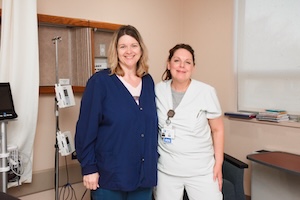
Pulaski Memorial’s oncology program also works in close coordination with surgery, imaging, lab, pharmacy and other departments. This coordination allows patients to move through appointments and treatment with less fragmentation. The hospital provides infusion-based care not only for cancer but also for certain blood disorders and chronic conditions requiring similar therapies.
For many patients, local care means more than convenience. It means the difference between manageable treatment and overwhelming treatment. It means less time in the car, fewer disruptions for family members and a greater chance that patients will keep going when treatment gets hard.
One of the biggest messages Tingle hopes readers take away is simple. Access affects outcomes.
People do not always have to drive to Chicago, Indianapolis or another major city to receive excellent oncology care. They can pursue second opinions, advanced consultations and specialized recommendations while still completing much of their treatment close to home.
At Pulaski Memorial Hospital, close-to-home care is not presented as a lesser version of something else. It is a growing program shaped by skill, compassion, collaboration and a deep commitment to providing high-quality oncology care. With nationally certified oncology nurses, evidence-based treatment guided by national standards and strong collaboration with major medical centers, patients receive care that reflects the same clinical rigor found in larger institutions — delivered in a setting where they are known personally.
For patients facing one of the most difficult moments of their lives, that care — close to home, surrounded by familiar faces — can make all the difference.
To learn more about oncology services at Pulaski Memorial Hospital or to schedule an appointment, visit pmhnet.com or call 574-946-2100. Pulaski Memorial Hospital is located at 616 E. 13th St. in Winamac.