

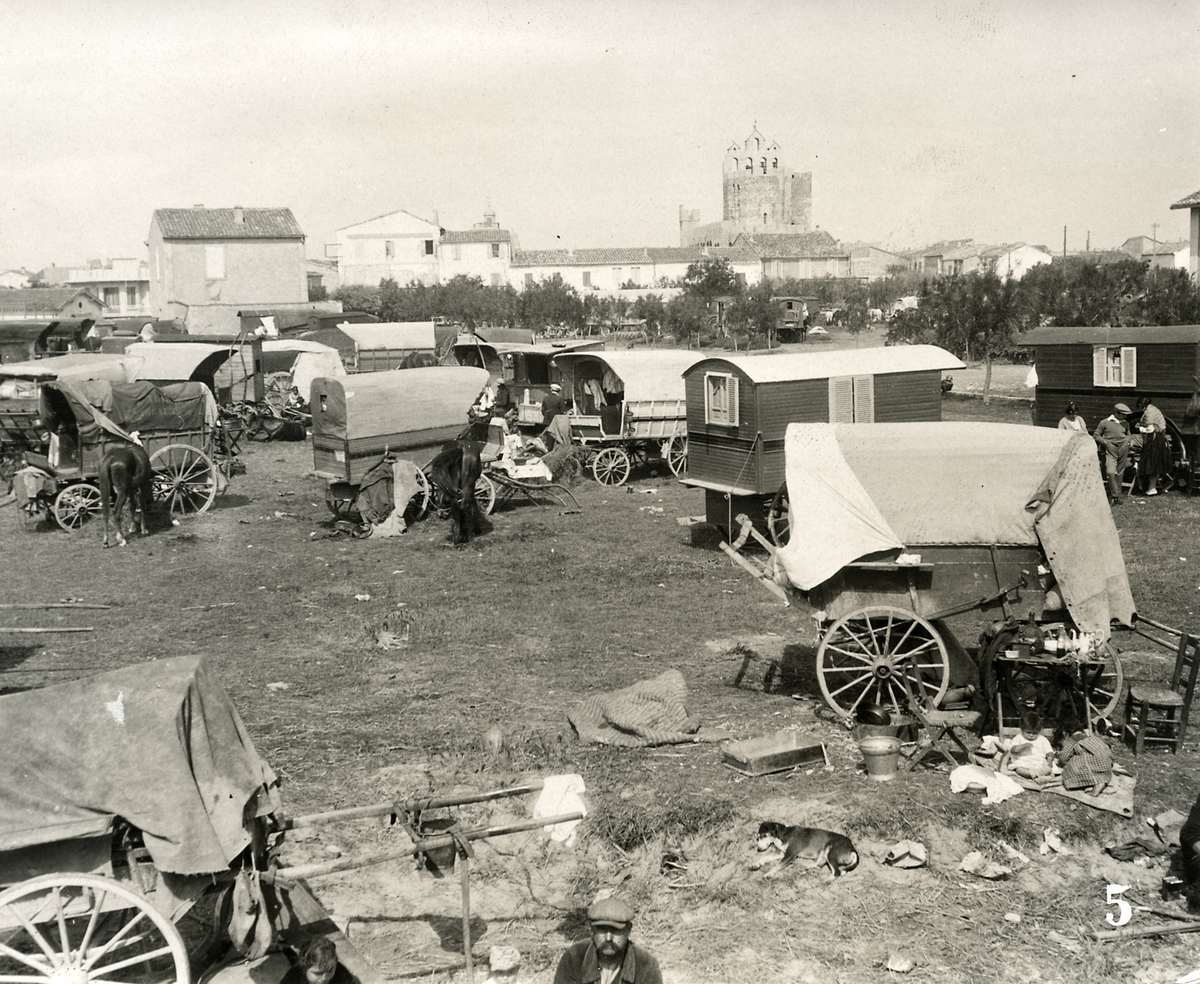
Romani Echoes
Perhaps you’ve dug through old (say, 1930s through 1950s) editions of area newspapers and run across a puzzling headline or story; or perhaps Mom or Grandma recounts an incident or incidents: “Gypsies” came to town and set up a temporary encampment outside the town limits. Fortunes were told and claims of petty thefts or swindles ensued.
Chances were, the group — accused of being dirty and dishonest — was told to move on by the local police and did so … at least until the next time.
This author has run across such stories in the past and was frankly incredulous, initially, as to their authenticity. After all, so-called “Gypsies” (their name derived from incorrect assumptions in Europe that they were of Egyptian origin) were an ethnic group known to travel around Europe many years ago, and while perhaps a Gypsy-looking fortune teller might appear in a children’s cartoon from decades past, surely “actual” Gypsies weren’t frequently seen in the Midwest and Indiana in general, let alone the Lakes readership area specifically.
As it turns out, they very much were … and on a somewhat regular basis.
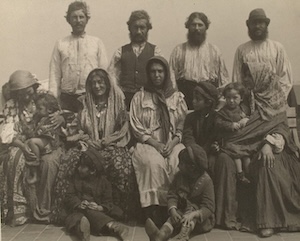
But first, a look at the term “Gypsy.” The word historically has been applied to an ethnic and cultural group who are more accurately called Romani (or Roma, among other names), who originally hailed from North India and made their way to Europe more than 1,000 years ago. They have tended to share a common language and culture, though their religious leanings vary, and they’re perhaps best known for their nomadic lifestyle (though some have settled), for centuries traveling in caravans across Europe.

Visibly distinctive (they tend to have darker hair and skin as well as identifiable, colorful dress), they have faced discrimination and even persecution over the centuries, as is reflected to some degree, at least, in the attitudes they encountered here in Indiana. More on that later.
The first Romani likely arrived in the Americas as slaves with Christopher Columbus, and some were found along the East Coast of today’s United States by the 1500s. However, most of the Romani in the U.S. have ancestors who immigrated here en masse after the mid-1800s, many from Eastern European countries such as Russia, Serbia and Austria-Hungary, along with a number of other immigrant groups to this country from those areas.
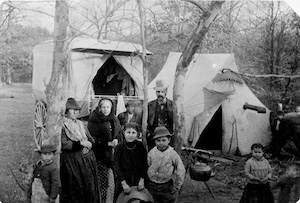
Perhaps surprisingly, by the later 1800s, states like Indiana, Illinois and Iowa became home to nomadic Romani groups regularly camping near railroads and roadways, sometimes following seasonal work, selling goods or performing (including the aforementioned fortune-telling for which they became known). Some occupied storefronts or occasionally (more rarely) lived in permanent dwellings.
Historically, they traveled in family caravans of wagons with tents, though as the 20th century progressed, they utilized automobiles.
Writer Anthony Borgo, in his 2019 article, “Gypsies in Whiting” (www.wrhistoricalsociety.com/gypsies-in-whiting), notes that he first discovered the presence of the Romani people in the Whiting area of Northwest Indiana in a poem by James Hazzard in a book called “New Year’s Eve in Whiting, Indiana,” which included the lines:
“Spring was when they came, every year. Every year we were surprised. Why would a gypsy live here, of all places, and in a storefront? They must know something we don’t’ we agreed. That made us hate them, and be afraid of them. We assumed they came for their usual – magic and crime. Personally, we didn’t admit to much of either in Whiting
…they could know our minds. Their women would take you in her mouth and draw every thought you’d ever had …”
The above-referenced notion of Gypsies having access to some supernatural or even occult abilities or powers was prevalent (and not discouraged by many of the Romani people themselves), and rumors persisted that they might spirit away the children of the gadji (the feminine version of the Romani word for non-Romani). Non-Romani children of yore might recall the threat from parents that, if they misbehaved, they might be “sold to the Gypsies,” and many believed it possible.
Borgo quotes a 1931 article by Marshall Maslin indicating that “(children) weren’t supposed to have anything to do with the gypsies, but they were fascinating,” noting that while they were considered unclean and thieves, nonetheless “…they were color and romance and strange beings from unknown trails and they brought wilderness into little settled hearts … as a boy you were warned about the gypsies, they might kidnap or even stab you, but the danger only wanted you to experience them more. And sooner or later we’d find ourselves trawling out the road that led to where the gypsies camped.”
And non-Romani children were drawn to the outskirts of Indiana towns, Borgo noted, to Romani encampments “to see the bears and monkeys which are adjunct of the outfit encamped there.”
The same article references an incident from June 1926, when two Whiting residents were swindled by “the mysterious gypsies in the area” after a Romani woman allegedly offered to restore the sight of one man’s blind wife for $70. The money roll she supposedly “charmed” with a spell disappeared and returned to the victim was “a roll of dirty newspaper clippings.”
Similar stories appeared in newspapers around the area. In the summer of 1932, it was reported that a fortune-telling “Gypsy” woman snuck a $10 bill out of the pocket of a resident of Fulton, Indiana, and an employee of the town hardware store had a dollar bill slipped from his pocket by a “Gypsy.” By the time the sheriff arrived, no trace could be found for miles around of the thieves.
A 1935 report in the Culver Citizen newspaper said one local man was robbed of $30 by a “Gypsy,” with similar thefts reported in Pulaski County and Walkerton. In 1937, several Starke County residents were similarly robbed, but their money was returned after the “Gypsies” were arrested in Porter County and threatened with prosecution.
A 1924 Culver Citizen article proclaimed that “Gypsies Have Forsaken Wagons for Touring Cars,” explaining that the old days of “Gypsy” wagon caravans were giving way to groups traveling instead in automobiles. The article described a caravan of Romani stopping in Culver to beg oil and gas for their vehicles while one of their very young children was observed puffing away on a cigarette.
Nor was the Hoosierland presence of Romani people during this period limited to Northern Indiana. In a 2006 article (“Gypsies roaming area drew attention”), author Bob Gagen noted that the first mention of Gypsy visitors to Noble County appeared in the Kendallville Daily News on Aug. 24, 1910, when a group of Italian Romani arrived with bears, monkeys and “unkempt women and children” who “gathered a few nickels by begging.” The local sheriff found their campsite and told them to move on and not return.
In the 1930s, LaGrange and Steuben counties reported an “invasion” by “Gypsies determined to buy land and settle in that locality.” It was alleged that they had been successful in buying seven farms along U.S. 20, where they planned to plant mint and onions. Similar property acquisitions were reported in the Shipshewana area. In 1933, the sheriff in LaGrange pursued a Romani caravan after numerous thefts were reported, but failed to catch them. Similar stories appeared around Wawaka and Albion, Indiana, during this period.
Interestingly, when the money was paid back in the Porter County/Valparaiso area in the 1937 incident mentioned above, the stolen money was refunded by an individual called “the King.” This was likely Sam Evans, a Romani fortune teller who ran a Whiting storefront shop on Indianapolis Boulevard across from the Standard Oil refinery there.
Evans, one of the most influential Romani in the Midwest, was a Romani “king” who claimed more than 500 subjects in his band, having succeeded his father as king.
Another Romani king, Henry Arno, was quoted in the Frankfort Times as bemoaning the increasing use of automobiles among nomadic Romani in the early 1930s. “There will be no more flickering campfires, no more gypsy songs about the glowing embers, no more stews cooked over beds of red coals,” he said.
In an article on the amusingartifacts.org website, author Mona Meyer told the story of a Romani king and queen who resided in Evansville, Indiana, in the late 1800s and are buried there. Isaac and Elizabeth Harrison were known as “King and Queen of the Gypsies” and were part of a wealthy band of Romani, owning a large piece of land in Evansville with a beautiful Victorian house “that they occupied when not traveling.” Their stature was such that Elizabeth’s funeral in 1896 drew a crowd of some 6,000 people, according to the article.
That said, not many contemporary accounts of “Gypsies” were flattering. An article in the Pierceton, Indiana, Independent in June 1885 described the Romani as “a crowd of people of very low order … a loathsome sample of the humble people of France … a depraved class of humanity, filthy and dirty … who demonstrated their brutish character when they urged two cinnamon bears to fight.”
Also quoted in the amusingfacts.org article is a November 1903 newspaper, which wrote that “a band of thieving Gypsies are headed toward counties in northern Indiana from Benton Harbor … setting fire to woods … picking pockets … breaking into stores.”
Various sources, more scholarly and more contemporary, give a bit more context to these age-old claims about the Romani, claims which were prominent in centuries past in Europe as well. Various social and economic factors in the medieval era left the Romani with difficulties making a living in their traditional trades, and thus many resorted to begging. Their often impoverished conditions contributed to speculation of their uncleanliness.
Guenter Lewy, in a 1999 article for The National Interest entitled “The Travail of the Gypsies,” wrote that, “A recent U.S. State Department report on human rights around the world noted that Gypsies … ‘suffer disproportionately from poverty, unemployment, interethnic violence, discrimination, illiteracy and disease.’ In Hungary, Gypsies number between half and one million, and they are routinely subjected to harassment and intimidation by skinheads and other extremist elements; many have been attacked physically. Romania has about 2.5 million Gypsies, and there, too, anti-Gypsy violence is rampant.”
The article describes numerous similar incidents and explores the history of anti-Romani sentiment, noting that they “have their own language, but no written or oral history” and that the Romani appear on no census in the U.S., even though there are an estimated 1 million here.
And back to Indiana: it’s interesting to note that, by the mid-1950s and going forward, virtually no more accounts of Gypsy caravans in Indiana appear in newspaper searches — which isn’t to say a few here or there couldn’t have been overlooked. But clearly, the frequency and spread of their appearances, certainly in the Lakes readership area, dwindled to few, if any, by that time (by contrast, newspaper coverage recorded area encampments in 1951 and 1952, after which such reports virtually disappear).
Instead, the search term “gypsy” yields a plethora of song and movie titles and references to food and clothing brands, all reflections of the mystique and romance of the “wandering Gypsy” in the public consciousness … but rarely of the actual Romani people themselves.
There are likely multiple explanations for their lack of presence here — or at least regional coverage of it — but undoubtedly the shift away from the prevalence of the Romani’s past nomadic lifestyle, along with a growing tendency to assimilate into the larger population, plays a significant role.
Wikipedia writes that, today, “…the majority of the Romani population in the United States has assimilated into American society. However, the U.S. Census does not distinguish Romani as a group since it is neither a nationality nor a religion.”
Bob Gagen’s 2006 article remarks that, “Although statistical evidence is scant, the number of sedentary (settled) Gypsies seems to be growing. But the nomads among them continue to wander in their own unique fashion.”
Jeff Kenney serves as Museum and Archives Manager for Culver Academies, as well as on the board of the Culver Historical Society. He frequently speaks and writes on topics of local and regional history.