

Peaceable Primate Sanctuary
At the edge of a quiet stretch of countryside in Winamac, a meaningful mission has grown steadily and thoughtfully. What began as an idea, shaped by years of experience and a single moment of curiosity, has become Peaceable Primate Sanctuary, now marking its 10th year.
Founded and directed by Scott Kubisch, the sanctuary has grown from fewer than 10 primates to nearly 170, with more arriving regularly. Set on close to 80 acres, the property continues to evolve, with new enclosures rising, trees planted by hand, and the landscape constantly unfolding. It is, as Kubisch describes it, “a place in a perpetual state of construction,” guided by commitment and purpose. That commitment began years ago while Kubisch was working at Lincoln Park Zoo. One day, he came across a video of a baboon in a laboratory setting and found himself asking a simple but life-altering question: What happens to these primates when the research is complete?
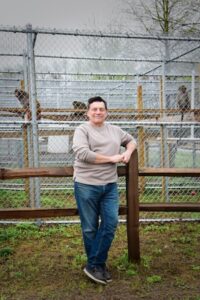
There wasn’t a clear answer, and for Kubisch, that absence became a calling.
“I’m the type of person,” he explains, “that when I find a cause, I’m all in.”
The road to creating the sanctuary was anything but immediate. It took years — nearly two decades — to move from vision to reality. Land had to be secured, nonprofit status established, and funding found. Early support was uncertain, and at times even friends questioned whether the idea would ever come to fruition.
What ultimately changed everything was a remarkable act of generosity.
A friend from his zoo days, Marion Schmidt, believed in Kubisch’s vision and included the sanctuary in her estate. Her gift, distributed thoughtfully over time, allowed the sanctuary to grow with intention.
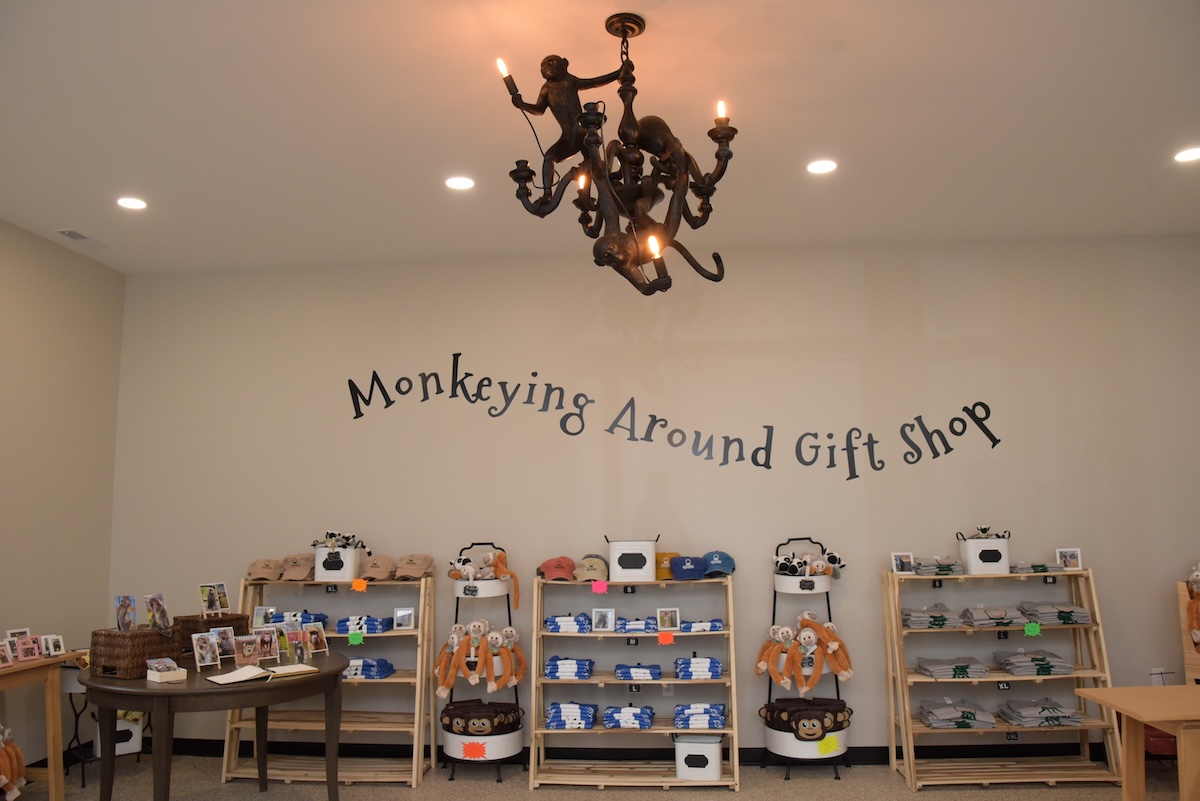
Today, the Marion Schmidt Welcome Center stands in her honor, a lasting reminder of the belief that helped bring the sanctuary to life.
Kubisch speaks of her with deep gratitude, not only for the financial support, but for how it shaped the sanctuary’s foundation.
“It forced me to learn,” he says. “It made me build this the right way.”
At Peaceable Primate Sanctuary, the animals are not simply residents; they are “retirees,” a term Kubisch uses deliberately, reflecting both respect and perspective. Many of the primates arrive from research facilities, while others come from private ownership or roadside attractions. Each arrives with a different history, but all are given the same opportunity — a life defined not by schedules and constraints, but by choice.
Retirement here means deciding when to go outside, when to rest, when to explore, and when to engage. It may sound simple, but for animals who have lived in highly structured and controlled environments, often with little room for choice, it represents something profound. Kubisch recalls one macaque who took nearly a year before stepping outside for the first time. No one forced him, no one rushed him, and when he finally ventured out, he sat quietly, looking up at the sky.
“That’s what this is about,” Kubisch says. “It’s about giving them the ability to make their own decisions.”
Spend even a short time observing the sanctuary, and it becomes clear that each species — and each individual — brings a distinct personality. Baboons tend to be more even-keeled and steady in their interactions. Macaques are curious and playful, often the ones responsible when something has been taken apart or cleverly dismantled — a little mischievous, a little inventive. Lemurs move through their days with an easygoing nature, seemingly content to simply enjoy their surroundings.
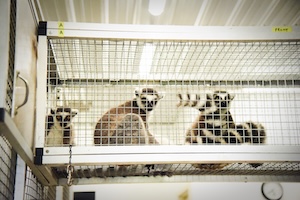
These differences are not only appreciated; they are accommodated. Enclosures are designed with variety in mind, including climbing structures, swings, platforms and enrichment tools that encourage exploration and engagement.
Enrichment is a cornerstone of daily life. From scattered forage mixes and puzzle feeders to scent-based activities and even the occasional animated movie, every effort is made to keep both minds and bodies active. While federal guidelines require enrichment once a day, the sanctuary provides it multiple times, ensuring that the animals’ days are anything but monotonous.
What has surprised Kubisch most over time is how adaptable the animals can be. Despite coming from environments with familiar routines and caretakers, many adjust quickly to their new surroundings, learning new rhythms and forming new bonds. When paired with a companion who has already settled in, that transition can be even smoother — a quiet example of how connection helps ease change.
Behind the scenes, the sanctuary operates through a deeply collaborative team. Erin Roberts is the sanctuary manager, overseeing staff and daily operations. Beth Duvall and Robin Russell manage the administrative and event coordination side, while Megan Selle leads a growing network of interns and volunteers.
Veterinary care is provided by Dr. Iris Bolton, one of a limited number of specialists in primate medicine, helping ensure that the level of care remains exceptionally high.
What stands out most, however, is the culture. There are roles, certainly, but there are no rigid boundaries. Staff members step in wherever needed — setting up events, assisting with care, maintaining the grounds. Kubisch himself is just as likely to be found planting trees, cleaning enclosures or helping wherever the day requires.
“It’s a team effort,” he says. “Everybody’s part of it.”
Like the sanctuary itself, the community’s relationship with it has grown over time. In the early days, there was uncertainty — misunderstandings about what the sanctuary was and what it was not. Rumors circulated, as they often do with something unfamiliar, shifting much like a game of telephone. Over time, as the sanctuary opened itself through tours, events and transparency, those perceptions began to shift.
Today, the support is tangible. Local farms donate fresh produce. A bakery in North Judson provides bread that would otherwise go to waste, helping staff administer medications. Neighbors contribute time, supplies and encouragement. What was once questioned is now embraced.
Events and tours have played an important role in that transformation. Early community gatherings, such as Easter egg hunts designed simply to give local families something to enjoy, helped introduce people to the sanctuary in a welcoming way. While those early events have evolved over time, the intention remains the same — to create connection, invite understanding, and allow people to see the work firsthand.
“If we close the gates and don’t let people in,” Kubisch says, “that’s when the rumors start.”
As the sanctuary enters its second decade, the vision continues to expand — with more enclosures, more educational opportunities, and more capacity to provide retirement for animals in need. At the same time, Kubisch remains focused on something deeper than growth alone.
“My goal,” he says, “is to make sure this place continues long after I’m gone.”
It is a statement rooted in responsibility rather than worry. Systems are being built, leadership is being developed, and a strong foundation is being secured — not just for today, but for decades to come. Legacy giving has become an important part of that vision, allowing supporters to make a lasting impact and helping ensure that animals who arrive without full funding can still be given the care they deserve.
And perhaps, one day, the need itself will diminish.
“I would love for there not to be a need for us,” he admits. “That would be the best outcome.”
For those encountering the sanctuary for the first time, Kubisch hopes they take away something simple and lasting: animals that once drew crowds at roadside attractions, and those that have contributed quietly, without choice, to advancements in medical research, deserve something in return.
“It’s the ultimate payback,” he says.
Here, that idea is not just stated — it is lived out each day in small decisions, quiet moments, careful routines and unexpected breakthroughs. It is seen when a primate steps outside for the first time, when another settles comfortably beside a companion, and in the steady rhythm of daily care.
Ten years in, Peaceable Primate Sanctuary is still growing, building, learning and, more importantly, still honoring the very promise that started it all — offering a place where these animals can simply be.
Contact and Donation Information
Peaceable Primate Sanctuary is a private sanctuary and is not open to the general public. However, tours and special programs are offered throughout the year by request. To learn more or schedule a visit, email admin@peaceableprimates.org or call 574-896-0590.
Those who wish to support the sanctuary can donate through its website at peaceableprimatesanctuary.org or social media platforms.
Sponsoring a day at the sanctuary is also available for groups, celebrations or in honor of a primate, helping provide food, medical care and enrichment for the animals while supporting their continued well-being.