

Game Plan
A new era of collaboration is taking shape in Fishers, as city leaders, school officials and youth sports organizations align around a shared vision for the future of athletics. Backed by a $3.6 million public investment and a first-of-its-kind leadership role, the initiative aims to expand access, enhance facilities and better connect athletes at every level.
Through a newly announced interlocal agreement, the City of Fishers and Hamilton Southeastern Schools will fund major improvements to athletic fields at Fishers High School and Hamilton Southeastern High School. Upgrades such as additional lighting and synthetic turf are expected to significantly increase field availability, benefiting student-athletes, youth leagues and the broader community.
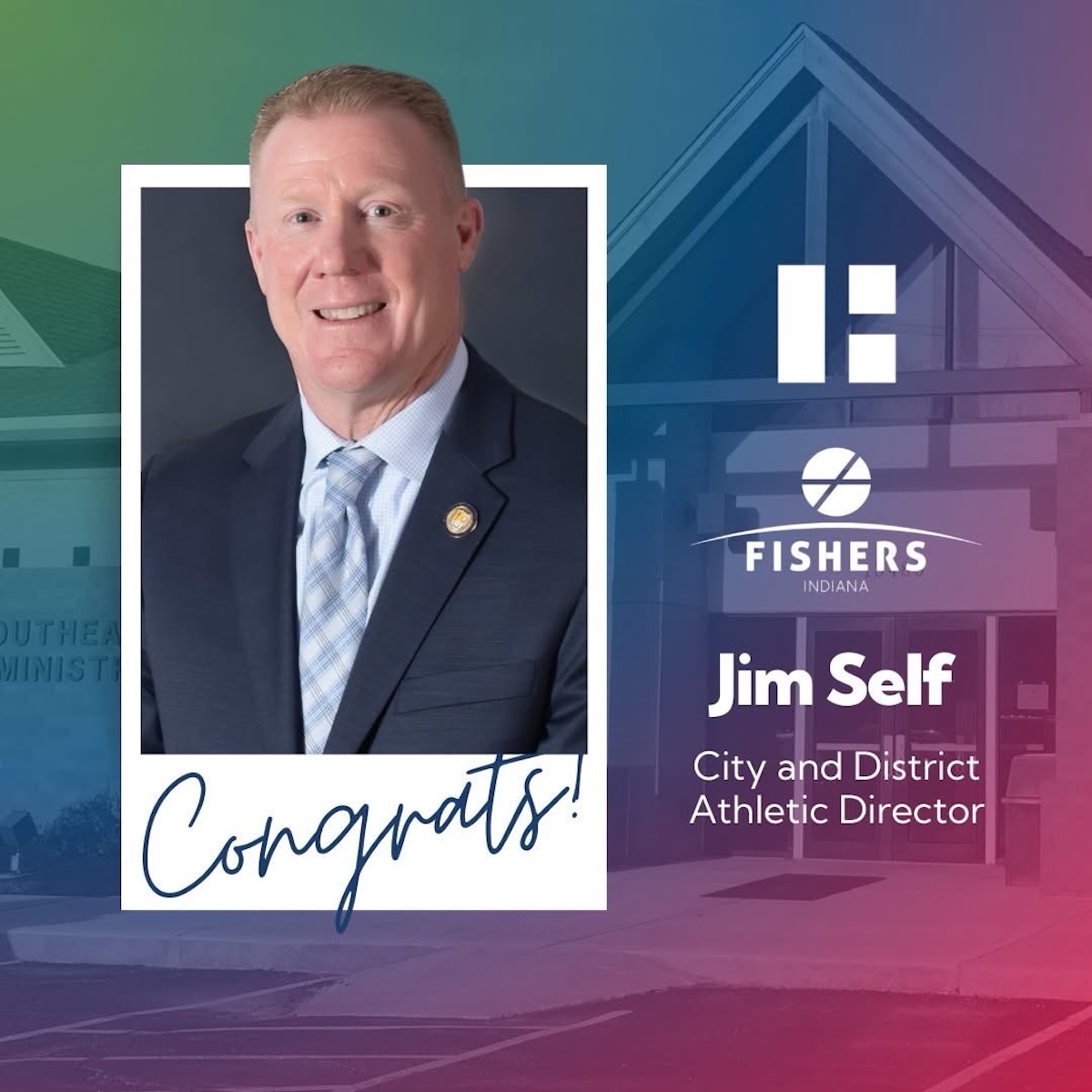
At the center of this effort is a newly created position: city and district athletic director. Jim Self, a longtime leader with 32 years in the district, including 26 as an athletic director, will step into the role beginning May 1.
For Self, the opportunity represents both a continuation and an evolution of his life’s work. “I’ve loved what I do. It’s been my dream job,” he says. “But this is a chance to help bring everything together.”
That “everything” includes a complex and growing ecosystem of athletics in Fishers: two high schools, multiple junior highs, thriving travel sports and one of the region’s largest recreational leagues, MudSock Youth Athletics. Self sees his role not as a disruptor, but as a connector.
“I’m here to serve and support,” he says. “This isn’t about fixing something that’s broken. It’s about coordinating what’s already working well and finding ways to use our facilities and relationships even more effectively.”
That philosophy is echoed by Scott Spillman, who emphasizes that the agreement builds on nearly four decades of collaboration. MudSock Youth Athletics was founded in the 1980s, when community leaders anticipated rapid growth and worked proactively to create a unified system for youth sports.
“They saw what was coming,” Spillman says. “And they built something that could grow with the community.”
Today, that system serves thousands of families and has reinvested heavily in local facilities, contributing tens of thousands of dollars annually toward field maintenance and improvements. The city’s new investment, Spillman notes, will help expand capacity while easing some of that financial burden.
“More turf and more lights simply mean more opportunities for kids to play,” he says.
Beyond infrastructure, the new leadership role is expected to strengthen alignment across all levels of play — from youth leagues to high school programs. Self envisions a more intentional “feeder system,” not just from younger athletes moving up, but also from high school programs that support and engage younger players.
“Are we supporting what’s happening at the junior high and youth levels?” he asks. “That connection goes both ways.”

The agreement, structured as a five-year commitment from the city, will ultimately be evaluated based on its impact on the community. But success, Self believes, won’t be measured by a simple scorecard.
“It’s about opportunities and experiences for kids,” he says. “Are we maximizing our facilities? Are our kids staying here to play, or are they going elsewhere? Are we working together for what’s best for them?”
There are also broader community implications. Well-utilized athletic facilities can serve as a powerful draw for families considering where to live, reinforcing Fishers’ reputation as a destination for both academics and extracurricular excellence.
“If you drive by a school and see full parking lots at night and on weekends, that tells you something,” Self says. “That’s a place people want to be.”
As Fishers continues to grow, so too does the demand for high-quality athletic experiences. With a renewed commitment to partnership and leadership focused on connection rather than control, the city is positioning itself to meet that demand while staying true to its collaborative roots.
“This is about working together,” Self says. “Not against each other. And ultimately, it’s about doing what’s best for kids.”