

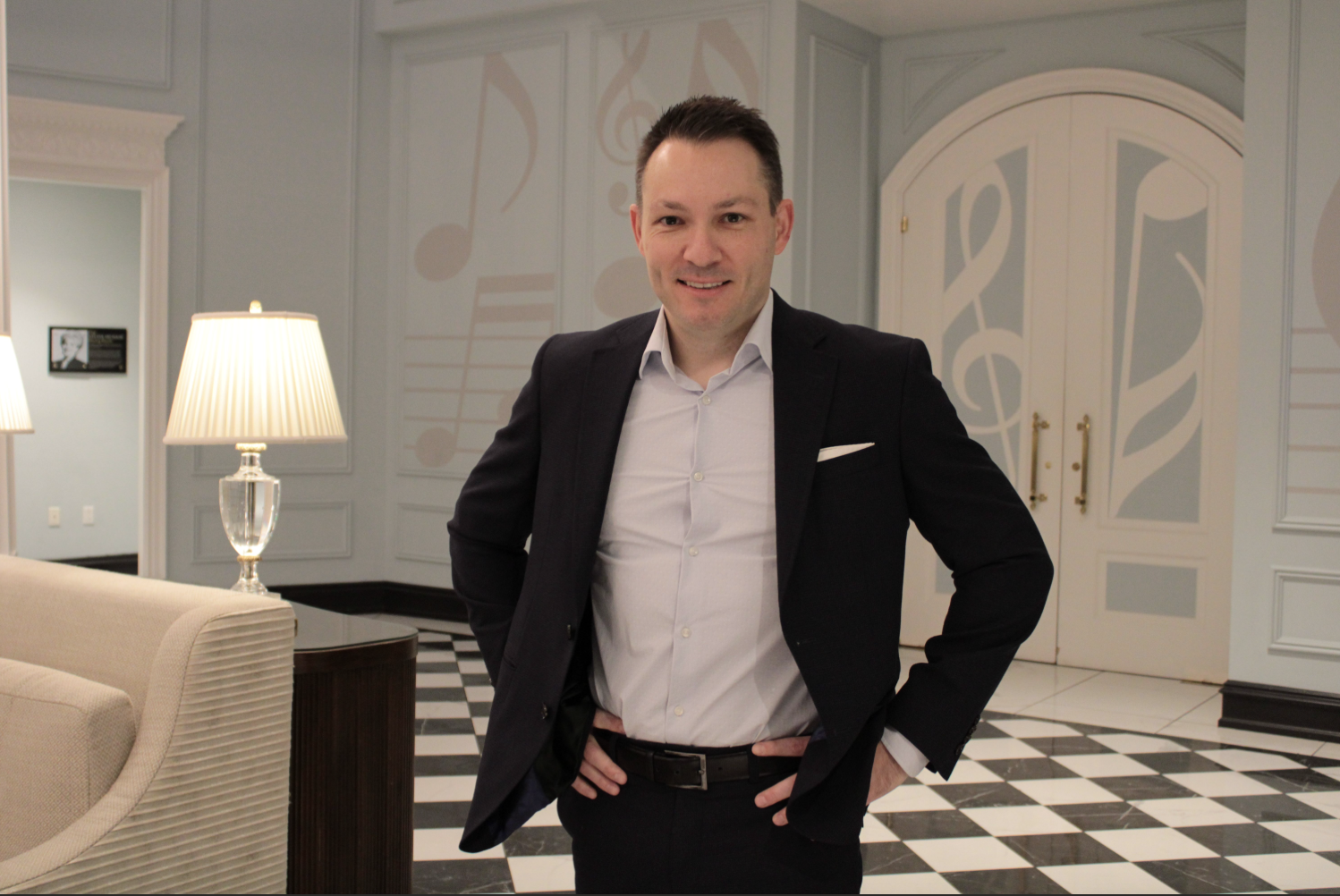
What a Year Without a Phone Revealed About Modern Leadership
Every executive knows the feeling.
 The meeting ends. A decision is made. And later — sometimes months later — you realize the call was rushed, reactive, shaped by a distraction you never acknowledged.
Not because you weren’t capable. Because you weren’t fully present. While Fortune 500 executives check their phones an average of 205 times per day — fueling an estimated $8.9 trillion global productivity crisis — Carmel-based speaker, author, and executive advisor Tommy Short recognized a quieter threat facing modern leadership: The real risk isn’t busyness. It’s reaction masquerading as leadership.
So he did something radical.
He turned his cell phone off for an entire year.
No smartphone. No burner. No landline. Just a laptop, checked once daily.
“This wasn’t about disconnecting,” Short says. “It was about reclaiming authority over my attention.”
A Question Leaders Don’t Want to Answer
The moment that forced his hand came from his four-year-old daughter, Giuliana, on a Saturday.
“Daddy,” she asked, “why are you always on your phone?”
Short couldn’t remember what he’d been looking at.
For most people, that question triggers small rules: no phones at dinner, a weekend detox. Short committed to 365 days — no exceptions. Not because he lacked discipline. But because he understood something most leaders never stop to examine: Leadership isn’t lost in boardrooms. It’s lost in the few feet around you.
Trained for Chaos, Losing to Distraction
Before speaking and coaching executives, Short spent nearly two decades as a Division I Men’s College Basketball referee, including assignments at USA Olympic training camps alongside Coach K, Kobe Bryant, and LeBron James. His job was to make irreversible decisions in seconds — under pressure, with thousands of people screaming for him to react.
No replay. No second chances. No distraction tolerated.
“Officiating trains you to stay non-reactive,” Short explains. “If you react emotionally, you miss the call.”
And yet, off the court, he noticed a contradiction.
He was applying elite decision-making principles in arenas designed for chaos … and surrendering them everywhere else.
“I knew how to control chaos,” he says. “But I was letting distraction control me.”
If that tension feels familiar, it should.
The Cost of Reaction at the Top
Executives don’t have an attention problem. They have a decision problem — one quietly worsened every time focus fractures. But the deeper cost isn’t financial.
It’s delayed judgment.
Missed signals.
Leadership presence described by teams as “checked out — even when physically present.”
“The most dangerous decisions leaders make aren’t made under pressure,” Short says. “They’re made while distracted — often without realizing it.”
What 365 Days Revealed
 The year without a phone not only slowed Short down. It recalibrated him. He documented the experience daily — writing what would later become his forthcoming book, “The Call I Almost Missed,” structured as letters to his daughters and reflections on how leaders lose clarity long before they lose control.
He relearned how to sit with uncertainty without reaching for interruption. There were fewer decisions — but better ones. Less motion — but more direction.
“I stopped optimizing my calendar and started designing my consciousness,” Short says.
What surprised him most was how common the pattern was.
The Pattern No One Was Naming
High-performing leaders excelling at strategy but drowning in reactive execution. They’d mastered complexity yet surrendered sovereignty over their attention.
Executive presence wasn’t being lost in meetings. It was being bled out in the thousand micro-interruptions between them.
Since 2020, Short has worked with leaders across technology, healthcare, and finance, helping them distinguish between appearing productive and actually leading.
“They’d conquered the boardroom but lost command of the space immediately around them,” he says.
From Reckoning to Methodology
That insight became a framework Short calls Own Your 3FT Circle™.
Before leading an organization, a leader must command the three feet around them — the space where attention lives, and decisions are born.
“Most executives try to control outcomes 30 feet away while giving up sovereignty over the three feet that matter most,” Short explains.
The framework anchors his “NoTech Executive Summit,” a 96-hour technology-free immersion launching Fall 2026. Participation is capped at 12 executives per session, with a $25,000 investment and application-only admission.
All technology is surrendered on arrival — not as a gimmick, but as a diagnostic.
“This isn’t about managing devices,” Short says. “It’s about mastering the conditions under which you make decisions.”
Participants engage in structured solitude, guided dialogue, and decision-focused reflection modeled on the same non-reactivity principles elite officials rely on when the stakes are highest.
“This isn’t for managers looking for balance,” he adds. “It’s for leaders responsible for outcomes.”
Presence as Competitive Advantage
Short is not anti-technology. He’s anti-unconscious leadership.
“Your competitors are drowning in digital noise,” he tells executive audiences. “While they’re reacting, presence becomes your advantage.”
His new keynote, “Reclaiming Presence in a World That Profits From Your Distraction,” reframes burnout not as a wellness issue but as a strategic liability — one boards and organizations can no longer afford to ignore.
What Leaders Remember
Short’s daughters, now four and six, won’t remember the mechanics of the phone-free year. They remember something else.
“They remember a father who stayed for one more story,” he says. “That’s legacy.”
When asked if he uses a phone again, Short nods.
“Yes. But it serves me now. I don’t serve it,” he says.
He pauses.
“Every leader eventually pays the cost of distraction,” Short says. “The only question is whether you confront it deliberately — or let it compound quietly.”
For leaders willing to stop reacting and reclaim presence, the path forward is clear.
“The Call I Almost Missed” is set to be released in March 2026.
More information is available at tommyshort.com, Instagram @tommyshort86 and LinkedIn @tommyshort86.