
Building Families
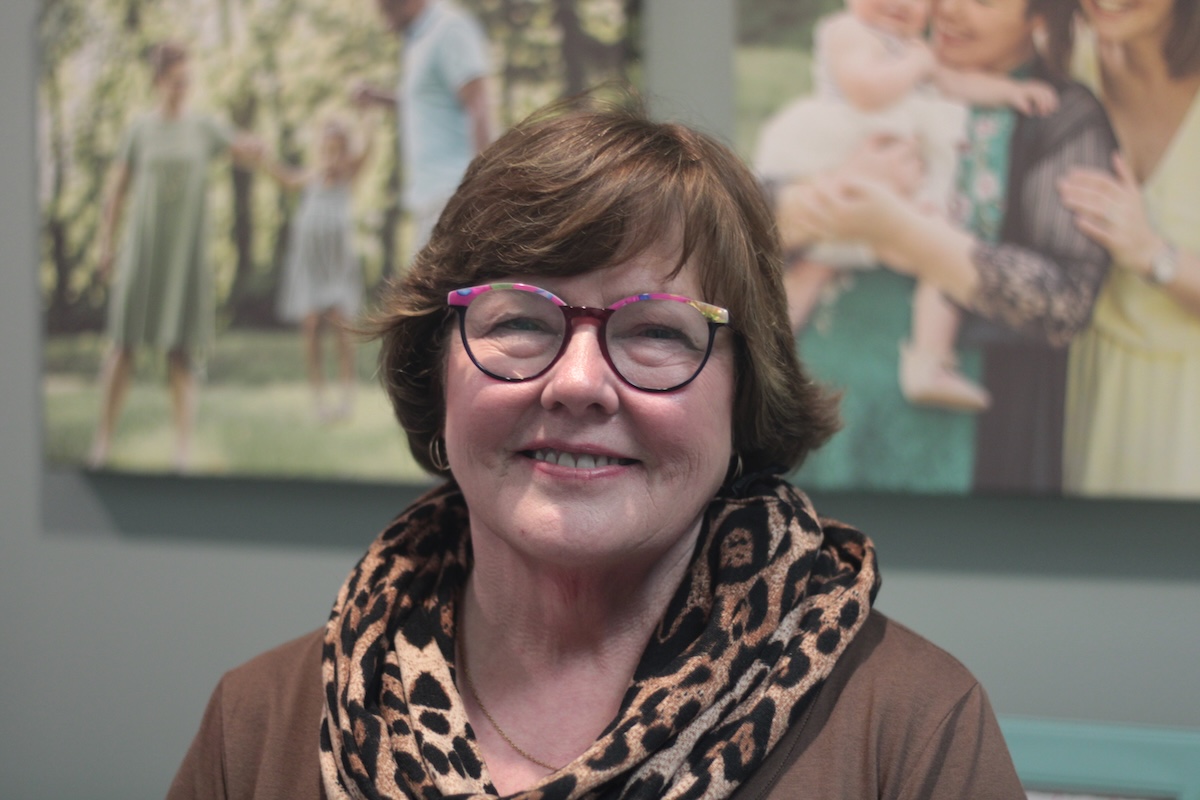
Adoptions of Indiana is a licensed child-placement agency focused on supporting everyone in the adoption process: birth families, adoptive families and adoptees. Co-founder and Executive Director Meg Sterchi helped create the organization in 1995 and has since gathered a dedicated, knowledgeable team of social workers and other professionals to help children find loving homes and families.
“Our goal is to develop a long-term relationship with families, so that they know they have our support throughout the years, both birth families and adoptive families,” says Sterchi.
Adoptions of Indiana provides child-placement services for prospective families looking to adopt and assists expectant mothers with finding options, including making an adoption plan. The organization also offers therapy and counseling for all parties involved, from grief counseling to adoption education.
Jennifer Morrissey is a social worker supervisor at Adoptions of Indiana who gives adoptive parents information about how to talk to their child — about their birth parent, about adoption in general and what kinds of questions children will have at different stages of development. She also explains how to talk about race if a family is adopting a child of a different race, as well as substance exposure and how that could impact the child.
“I provide post-adoption education for our families after they’ve had a placement. We try to help them do that with different age groups and run groups for kids. I’m a licensed clinical social worker, so I provide counseling for adoptees,” says adoption specialist Allison Montgomery. “I also run a ‘while we wait’ group. It’s a support group, because nobody understands what it’s like better than another family waiting to adopt a child.”
Not only is there a waitlist to adopt a child, there’s a waitlist to begin working with Adoptions of Indiana. Most families are matched in under two years, but it depends on many different factors. The organization offers services like home visits, even if families aren’t working with them for placement. The agency is very selective about who it brings into the program.
“We’re looking for families for children, not babies for families. The families we bring into our program understand that. It’s usually the prospective parent who is looking for a certain type of family,” Sterchi says. “The families that we bring in genuinely desire openness. Not every family will be prepared for that.”
Once potential adoptive families have passed the home-study stage and been approved as candidates by the agency, the choice is up to the expectant mother and what she wants for her child. She is presented with several family profiles and given the opportunity to meet them in person to see if it’s a good fit. There is never a fee for the birth family for any service that Adoptions of Indiana offers them, which is made possible exclusively through donations.
“We’re very pro-woman. We believe that women should have all of the options that are available for them. We want to support women in any way that we can,” Sterchi says.
“When a woman is pregnant and considering adoption, I provide options counseling to her. We look at support and resources that she may or may not have. We talk about kinship care or guardianship as short-term options. We form multiple plans at the same time so that she can think about what’s best for herself and her family. I’m with her every step of the way. I provide grief and loss counseling after placement. Placement isn’t just one moment — it’s a lifetime,” says Madison Smith, pregnancy and birth parent counselor.
“Single-parent adoptions are not as common, but we’ve had them. We work with same-sex families. We want to have a broad, diverse group of people because not every woman is looking for the same thing. We’re always looking for families of color,” says Sterchi.
“With more diversity, the mother isn’t pigeonholed into looking at the same sort of family 10 times; she’s got a broad variety of options and can think about what family she envisions her child growing up in,” Smith continues.
“They’re not looking for the most wealthy people or the biggest vacations; they’re really looking deeply at their values and beliefs. If faith is something that’s important to them, that’s what they’ll be looking for in a family. Sometimes they’re looking to make sure that a person’s faith isn’t dogmatic and that they’re going to love the child even if they’re gay or a little different,” adds Sterchi.
The adoption process requires sensitivity at times. Office manager and home-study administrator Liz Moser encourages potential parents to think about things from the child’s perspective. She recalls when a prospective family said they’d raise a child of any race, and another caseworker challenged the parents about the lack of diversity in their own lives.
“We know you would love them, but think of the child. Is this what’s best for the child if there’s no one in your life who isn’t white? How will the child feel about that when they’re 8 or 9 years old?” says Moser.
“It’s about being child-centered. I’m an adoptive parent. Sometimes it takes us a while to not just think about things through our own little sphere, but how that child will be impacted,” Sterchi says.
“My former husband and I adopted, and there was no education in the process. I knew that I didn’t know enough about adoption at the time, so I had to research for myself. We started thinking about how we might make this better, initially for adoptive families. Then I really started to understand that birth families didn’t have anyone in this process and were often the forgotten people in the adoption circle, and that needed to change,” Sterchi recalls.
The staff at Adoptions of Indiana is working to fight stereotypes and misconceptions about birth parents. People often assume the women are young teenagers acting without thought, but in many cases, the birth mothers they work with are in their late 20s or 30s, with real-life experience and who may have other children already.
“It takes a level of maturity and self-sacrifice to put a child’s needs before your own desires,” says Sterchi.
“We talk about shared loss theory. Each person within the adoption circle comes from a place of loss. The birth family loses the opportunity to see that child grow up firsthand, the adoptive family has usually had loss before they get to adoption with infertility, and the adoptee grows up separated from his or her family. It’s important for birth parents to recognize that loss so they can be sensitive to it, to the birth family as well as to the adoptee,” she continues. “There’s incredible grief for these families at times. Parents have to be both educated and supported in order to stand with that child in their grief, not try to fix it for them. That takes a lot of work.”
Sterchi describes the agency’s views on openness and how birth families can be almost like a “strange, 21st-century extended family” if they so choose. Adoptive families provide letters and photos to the birth mothers, and the adoptee can ask questions and have a relationship with them. She stresses that it isn’t shared parenting and boundaries are clear, but they want to foster those connections.
“Everyone’s going to get tired of hearing about a child at some point, but the birth mom never will,” she says.
“Some of the birth moms that I’ve worked with over the years are in their 50s now, and we still get together. Those relationships are really important. I’m grateful that we’ve created a very safe space for people,” says Sterchi.
For more information about adoption or how to donate, visit or call 317-574-8950. Adoptions of Indiana is located at 1980 E. 116th St., Suite 325, Carmel, IN 46032, and is open from 9 a.m. to 5 p.m. Monday through Friday.