

Writer & Photographer / John Wales
 In small towns across the Midwest, traditions matter. Franklin is a prime example. It’s a working-class town steeped in history, built on the backs of the middle class. Franklin is filled with small, family-owned businesses, many of which have weathered decades of ups and downs yet still prevail. However, frugality in business does not mean an absence of style—in business or even in the cars people drive.
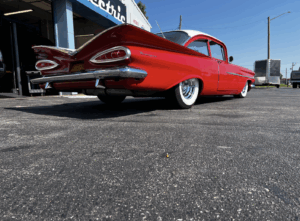
In the 1950s, America’s style began to evolve. The fat fenders of the ’40s automobile were being replaced by futuristic, aerospace-inspired lines and performance. Think exaggerated tail fins, cat’s-eye taillights and low rooflines. These new cars of the late ’50s brought in factory performance not seen before outside of the highly modified hot rods of the past.
In 1958, Chevrolet decided to introduce a new model in its full-size lineup. It was named the Biscayne. The flashier, more expensive models like the Bel Air and top-of-the-line Impala were filled with additional chrome and styling but shared the same body as the base model Biscayne. As such, the Biscayne became known as the working man’s car.
Interestingly, the blue-collar car was rumored to have been named after Biscayne Bay—or more specifically, the Key Biscayne Hotel and Resort near Miami, a favorite vacation spot of GM executives at the time.
Buyers could choose between a range of engines, from the modest 235-cubic-inch inline-six to the more powerful 348-cubic-inch V8s, depending on their budget and performance needs. Transmission options included a standard three-speed manual, a two-speed Powerglide automatic, or even a four-speed manual for those craving more control and speed. This flexibility helped the Biscayne appeal to a wide demographic—from fleet buyers and police departments to hot-rodders and budget-conscious families.
What truly set the Biscayne apart was its simplicity. With fewer chrome trim pieces, plainer interior appointments and fewer standard features, it delivered exactly what practical buyers needed—nothing more, nothing less. Yet despite its humble nature, the car’s radical body lines, batwing tail and aggressive stance gave it an unmistakable presence on the road.
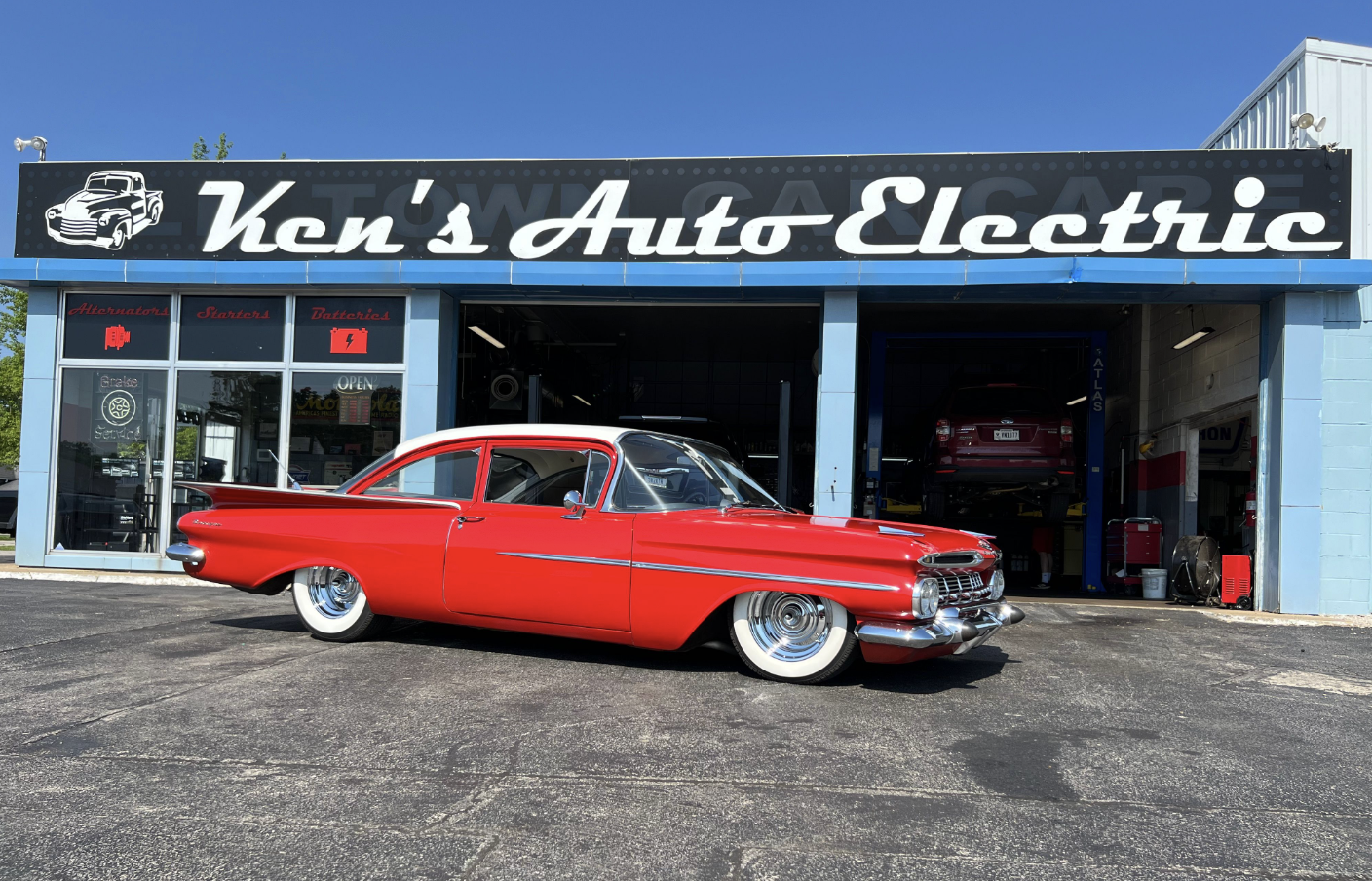
 Knowing its roots as a car for the working man, it only makes sense it would appeal to Tim Crouch, owner of Ken’s Auto Electric in Franklin. The shop is well known for its ability to find and fix virtually every automotive electrical bug. Named after Crouch’s father, Ken—who opened the business 57 years ago—it now includes Tim’s sons, Jarrod and Jayvan.
Tim’s car is a 1959 model cloaked in a Roman Red and Snowcrest White two-tone color scheme. It features a 348 big block Chevrolet engine and TH400 automatic transmission. The car, originally built at the Doraville Assembly plant in Georgia, was then shipped and sold at Plaxico Chevrolet in Clinton, South Carolina. It still proudly wears the dealership sticker on its tail panel.
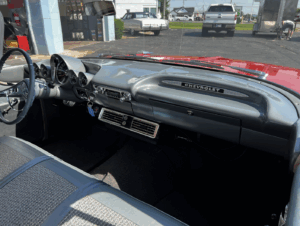
The car has several subtle custom touches, starting with its upgraded silver interior. Originally equipped with rubber floor matting and plain vinyl seats, it now boasts plush hook-and-loop carpeting throughout and reupholstered seating, creating a superior riding experience. The car also features air conditioning, ensuring this ride stays as cool as it looks.
Crouch’s beautiful Biscayne wears wide whitewall tires on chrome reverse rims and sits low thanks to a Viair air ride system. A full-sized 1959 model requires ample braking, which is provided by front disc brakes with slotted rotors, ensuring a smooth, safe stop.
Under the hood, the original inline-six cylinder was replaced with the period-correct 348 big block. While smaller than the famed 409 big block Chevy of the era, the 348 provides ample power without the overheating hassles common with the bigger cubic inch engine.
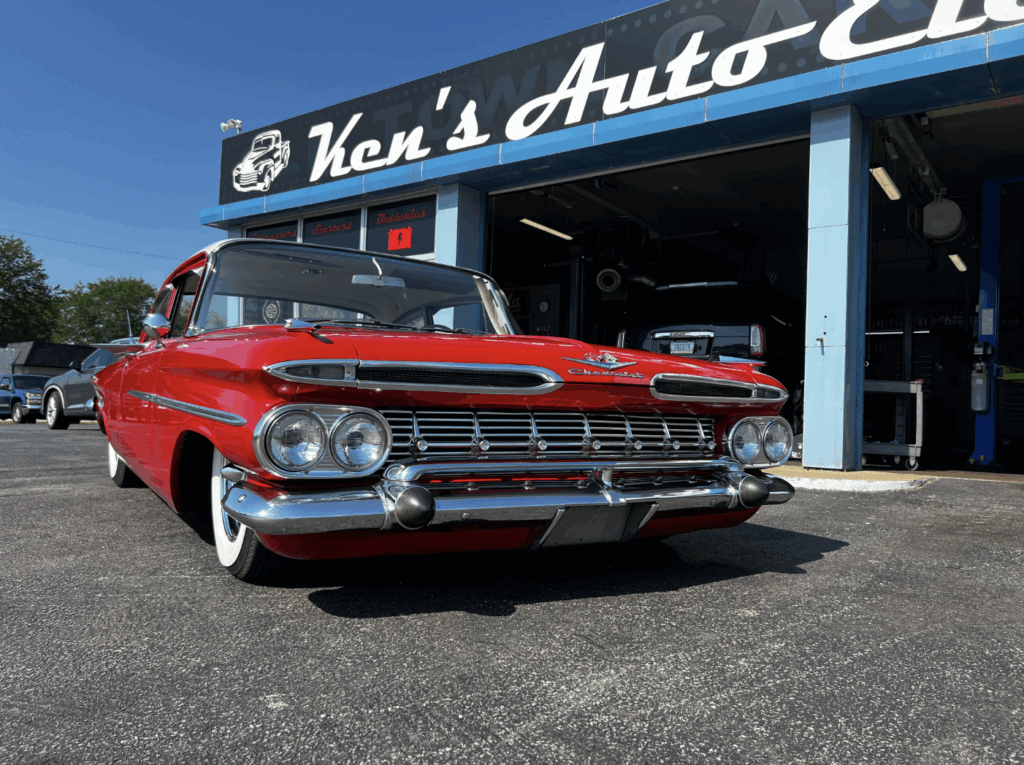 While Crouch has spent his entire life working on cars, he has surprisingly only owned about 15 hot rods during that time. His Biscayne shares garage space with his classic Chevy truck, clearly showing his love of blue-collar rides. He does hope to one day find another 1966 Chevy Nova, like one he used to own.
The car has only made it to a few cruise-ins so far, and Crouch has not entered it into a car show yet, as he purchased the car only a few months ago. He has spent that time fixing some of the wiring issues it arrived with and completing modest upgrades designed to keep the original look of the car with more modern, comfortable features.
When asked why he was drawn to the car, Crouch replied, “I just liked the style. The Biscayne is rarer than the Impala.”
In many ways, the subtle but stylish Biscayne mirrors its owner and the city of Franklin—blue-collar roots, hardworking and dependable, yet still stylish. On sunny summer days, look for the beautiful Biscayne sitting in front of Ken’s Auto Electric, where Crouch often drives it to work.
Until next time, keep cruising!