

Writer / Renée Larr
For many people seeking help for depression, anxiety or other mental health concerns, the journey can feel frustratingly familiar: another doctor’s appointment, another medication, another round of therapy and another waiting period to see if something finally works.
For Dr. Melissa Reed, founder of Klarity Mental Health & Wellness, that experience helped shape her desire to do things differently. “From the moment you walk through our door, I don’t want Klarity to feel like another doctor’s office,” Reed says.
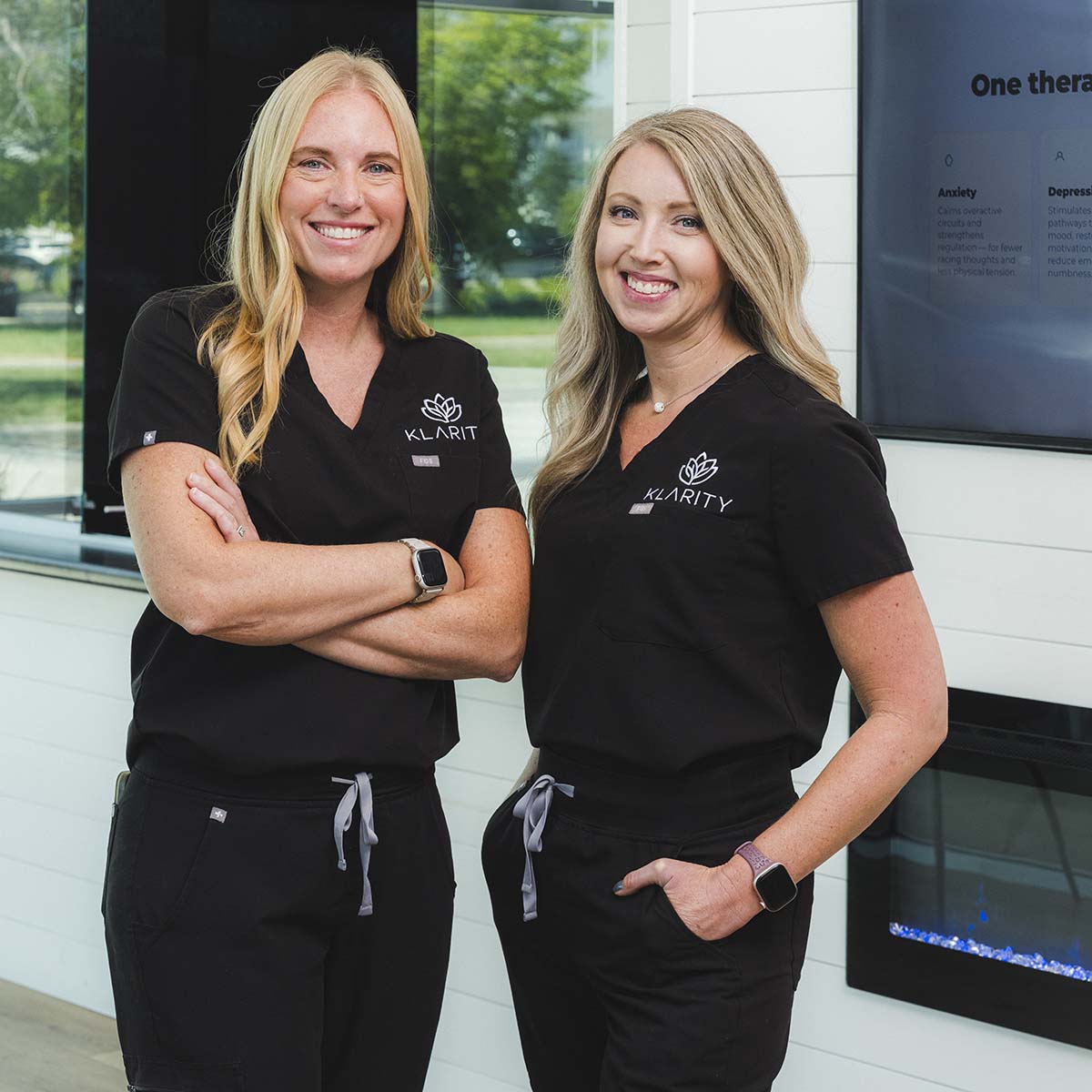
That philosophy shows in the environment she has intentionally created at Klarity’s Greenwood location. She designed a comfortable, calming atmosphere to feel more like a wellness space than a traditional medical office. Reed sometimes describes it as a “med spa for your brain.”
But beneath that welcoming environment, Klarity grounds its practice in medicine, science and a willingness to explore new approaches to mental health care.
Klarity opened in 2016 as the first ketamine clinic in Indianapolis. What began with Reed’s interest in emerging research has grown into a comprehensive practice offering IV ketamine, Spravato®, transcranial magnetic stimulation (TMS), psychiatry, therapy, ADHD testing and additional mental health and wellness services.
At the heart of it all is a simple question: What else might be possible for this person?
“I like to ask, ‘What would change in your life if you started feeling better?’” Reed says. “Maybe you’d have more energy for your family. Maybe you’d be more present at work. Maybe you’d sleep better, think more clearly, enjoy things again or simply wake up feeling more like yourself.”
Reed’s path to founding Klarity began while she was working full time as an anesthesiologist. She was already familiar with ketamine from its use as an anesthetic, but research suggesting the medication could have an impact on depression caught her attention.
Her first reaction wasn’t immediate enthusiasm. It was skepticism. “And then curiosity took over,” she says.
Reed began reading everything she could find and eventually spoke at length with one of the early ketamine providers in Seattle.
The more she learned, the more she wondered why patients in Indianapolis didn’t have access to the emerging treatment.
“There wasn’t a clinic in Indianapolis offering it for mental health,” she says. “So in 2016, I started one. Greenwood was our first place to call home.”
That original curiosity still shapes Klarity today. Reed says she doesn’t want the practice to chase treatments simply because they are new, but she also doesn’t want to stop paying attention to advances that could responsibly help patients.
“We were willing to be first with ketamine here,” she says. “I want to keep that same curiosity … what’s next, what does the science say, and could this responsibly help someone?”
Although ketamine remains an important part of Klarity’s story, Reed quickly learned that no single treatment meets the needs of every patient. That realization prompted the practice to expand into Spravato, TMS, psychiatry, therapy, ADHD testing and other services.
The goal is not to convince every patient to pursue a particular treatment. In fact, Reed emphasizes the opposite. “We don’t start with, ‘Which treatment do you want?’” she says. “We start with, ‘Tell us what’s going on.’”
The clinical team considers a patient’s symptoms, history, medications, previous treatments, health and goals before determining which options may be appropriate. Someone who initially calls about ketamine may ultimately discover that another treatment fits better.
“I don’t want to put people into treatments,” Reed says. “I want to understand people and then talk about treatments.” That individualized approach matters especially for people who have spent years searching for answers.
“I think we’re getting better at recognizing that when treatment doesn’t work, that doesn’t mean the patient failed,” she says.
By the time some patients arrive at Klarity, they are not only struggling with depression. They are exhausted from repeatedly hoping that the next treatment will finally make a difference.
“When someone says, ‘I’ve tried everything,’ what I hear is, ‘I’ve been trying really hard for a really long time,’” Reed says. “That’s a very different way of hearing that sentence.”
For Reed, that distinction matters. Klarity’s treatment philosophy continues to explore appropriate options while remaining honest about what those treatments can and cannot do.
“People don’t need another person promising to fix them,” Reed says. “They need someone who’s willing to listen and tell them the truth about their options.”
Klarity’s comprehensive approach reflects Reed’s belief that mental health does not always separate neatly from the rest of a person’s life. Someone may arrive feeling anxious, exhausted, unable to concentrate, unable to sleep or simply unlike themselves. Rather than automatically assigning those experiences to one diagnosis, Klarity’s broader range of services allows clinicians to consider the possibilities and determine where the appropriate expertise belongs.
“Patients don’t walk in thinking in medical specialties,” Reed says. “They walk in thinking, ‘I want to feel like myself again.’”
That philosophy also extends to collaboration with providers outside Klarity. If a patient already trusts a therapist, Reed says she wants to complement that good care, not replace the relationship.
Ultimately, Reed wants patients to leave Klarity with something that can be difficult to find when someone has struggled for a long time: hope. Not unrealistic optimism. Not a promise that everything will suddenly improve. Just genuine hope.
Some of Reed’s most rewarding moments come when patients tell her that treatment is changing their lives, not simply because they have improved an assessment score, but because they are getting out of bed, returning to work, playing with their children, enjoying dinner with a spouse, seeing friends again or feeling like themselves.
Nearly a decade after opening Klarity, Reed remains driven by the same curiosity that first led her to investigate ketamine.
The practice now has locations in Greenwood and Castleton, with a Carmel/Zionsville location coming soon. Reed’s vision is to continue bringing innovative mental health treatments to patients while preserving the warmth and personal experience that have defined Klarity from the beginning.
“I want us to be on the leading edge of what’s happening in mental health, and I want walking through our door to feel nothing like walking into a traditional mental health clinic,” she says.
For Reed, innovation is not about chasing the newest treatment or promising a perfect outcome. It is about staying curious, continuing to learn and allowing patients to discover whether another path might exist.
“You don’t have to wait until you’re falling apart,” she says. “‘I want to feel better than I do right now’ is a completely valid reason to ask for help.”
And ultimately, that is what Klarity represents: not a promise that every treatment will work, but an invitation to keep looking.
“Not promising a perfect life but allowing you to re-imagine your life,” Reed says. “Not promising every treatment will work. But continuing to look for ways to help people have more of the days they want to be living.”
For more information, visit getklarity.com.