

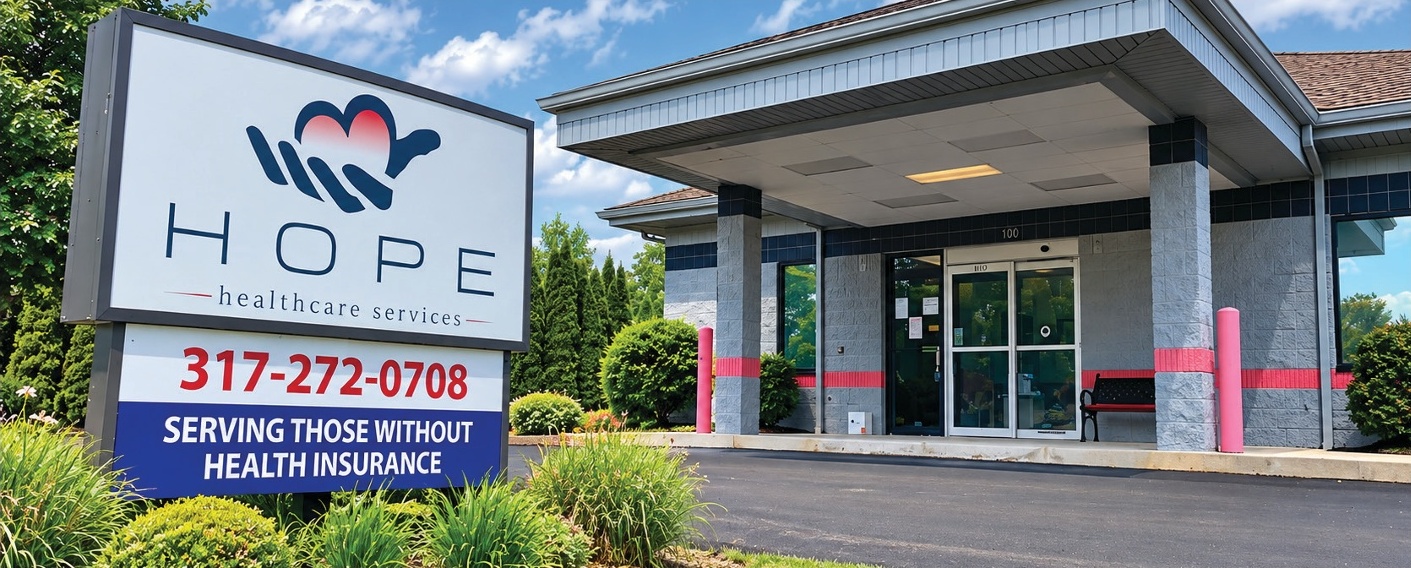
Hope Healthcare believes that everyone deserves to have access to quality, affordable health care. For 21 years, Hope Healthcare has provided free and affordable access to medical, dental, spiritual and mental health care services for 20,000 uninsured individuals in the community.
For individuals and families to have access to this care, the only requirement set by Hope Healthcare is that patients have no insurance. “There’s no geographic boundaries, no financial restrictions or income limitations. We really want to make it simple, so when people call to schedule an appointment, everything is by appointment only,” says Cliff Sweazey, Hope Healthcare’s executive director.
With the connotation that low-cost and free health care is low quality, Hope Healthcare is breaking that stigma, ensuring their patients have access to quality, compassionate health care. The organization sources doctors from Hendricks Regional Health, IU Health and Riley Hospital for Children who care about their initiative and are willing to donate their time for the mission.
Hope Healthcare originally started as a ministry in 2005 at Kingsway Church in Avon because of the belief that people need access to health care even if they don’t have insurance. In 2006, Hope Healthcare became a nonprofit and has had close to 100,000 volunteer hours contributed by people who are helping people in their community.
“There are so many different reasons behind why people don’t have health care. There are, like, a job transition or life transition. It may be a marital situation change. There are a multitude of reasons, but the majority of our patients are actually working. They’re trying to support themselves or their families, and they don’t qualify for government programs. Our patients don’t qualify for Medicaid, they’re not old enough for Medicare, and they haven’t served in the military to have access to VA benefits. Our patients fall through the cracks of every other program out there. People should not be gambling with their health because they don’t have access to affordable insurance through their work or through the government. People should not be making the choice of making your rent payment, car payment, paying for utilities or buying food over paying for insurance, but for so many people, that is their only choice to gamble with their health. The United Way coined a term years ago, ‘ALICE.’ It’s an acronym for Asset Limited, Income Constrained and Employed. Our patients are working, they’re trying to support their families, but they still don’t have access. People don’t think about Hendricks County as having vulnerable populations,” says Sweazey.
The first thing Hope Healthcare does with a new patient, regardless of what they are there for, is have them meet with a primary care physician to get them established as a patient and for the other providers to know their health history, including what underlying health conditions they may have, as well as what current medications they may be taking. Hope Healthcare does offer specialty care in neurology, urology, pulmonology, women’s health, pediatrics, physical therapy, nutrition services, mental health services and dental care.
Hope Healthcare offers limited medical procedures at or through the clinic, including EKGs, Pap smears, mammography referrals, minor incisions and drainage, and referrals for sleep studies. Hope Healthcare currently does not offer chronic pain management, trauma care (like X-rays, casting and orthopedics), emergency medicine, disability evaluations, vision care or surgical services.
Hope Healthcare provides additional resources for their patients to receive low-cost medication, which has saved patients more than $4 million in prescriptions.
Hope Healthcare also partners with Hendricks County Community Foundation, IU Health and Hendricks Regional Health to identify areas of impact and what new programs to offer to the community. Hope Healthcare is also a source of resources that can connect their patients to other local nonprofits, like Family Promise to assist with affordable housing access, Sheltering Wings for those experiencing a domestic violence situation, and the Food Pantry Coalition for people experiencing food insecurity.
“The biggest thing we need right now, we need providers. We need people to be aware of our mission, and we need that financial support. Our model is not sustained through insurance billings, we don’t receive federal money, and we’re not a federally qualified health center. We’re not government-run or controlled. So for us to sustain what we’re doing, we have to have community support. Yes, it’s a very different approach to health care, but we’re starting to see more of the impact as the number of people that we’re helping has grown,” says Sweazey.
Hope Healthcare doesn’t care about how many patients they see or symptoms they treat. They want to make a difference in people’s lives. They want to create an impact where the only goal that matters is to help as many people as they can.
To learn more about the services and how to get involved with Hope Healthcare, visit its website at myhopehealth.org.