

Center Grove Schools Kick Off a New School Year with Sustainability
Center Grove Community School Corporation is strategically advancing toward a more sustainable future, with a keen focus on both environmental impact and fiscal responsibility. A significant energy efficiency initiative is currently in progress across seven of the district’s schools. This initiative, which combines solar energy, geothermal HVAC systems and advanced energy controls, is designed to substantially reduce utility costs, cut emissions, and redirect savings into teacher compensation.
 “We spend 85% of our recurring operating budget on personnel,” says Dr. Jason Taylor, Associate Superintendent. “That leaves us with about 15% to work with when trying to improve compensation or address other priorities. Utilities are the biggest slice of that remaining budget, so this project is about being strategic with the dollars we have.”
The district has formed a partnership with CMTA Energy Solutions, a Louisville-based firm specializing in energy-saving projects for schools and public institutions. Selected through a competitive bid process, CMTA is implementing upgrades across six buildings initially: Center Grove Elementary, Maple Grove Elementary, Walnut Grove Elementary, Center Grove Middle School North, Center Grove Middle School Central and Center Grove High School. A seventh school, Sugar Grove Elementary, is expected to join the initiative later this year.
The district is also installing solar panels on the Emergency Operations Center and the transportation and maintenance facility. Most of the installations are rooftop systems, a choice driven by both aesthetics and practicality.
“A lot of our buildings don’t have available open land, so rooftop solar just made the most sense,” Dr. Taylor says. “For example, Center Grove Elementary has a flat roof with solar panels you’d never even notice unless you were looking for them. We also wanted to be good neighbors and make sure the installations fit the character of our community.”
CGCSC officials began by earmarking the buildings with the highest electricity costs. The district has three different utility providers—Duke Energy, Johnson County REMC, and Bargersville Utilities—and focused first on those served by Duke and Bargersville, where energy costs were highest. Schools in the Johnson County REMC service area, where rates are already lower, will be included in a future phase.
The financial structure behind the project is equally strategic. Rather than pay upfront, the district is using a financing model similar to a mortgage, allowing it to invest now and pay over time using the energy savings. The project also qualifies for federal incentives through the Inflation Reduction Act, expecting to return roughly $4.2 million in tax credits to the district over the next two years.
“In Indiana, this type of arrangement is known as a Guaranteed Energy Savings Contract,” Dr. Taylor says. “CMTA guarantees a certain level of energy savings, and if we don’t hit that mark, they must make up the difference. That guarantee gave us the confidence to move forward.”
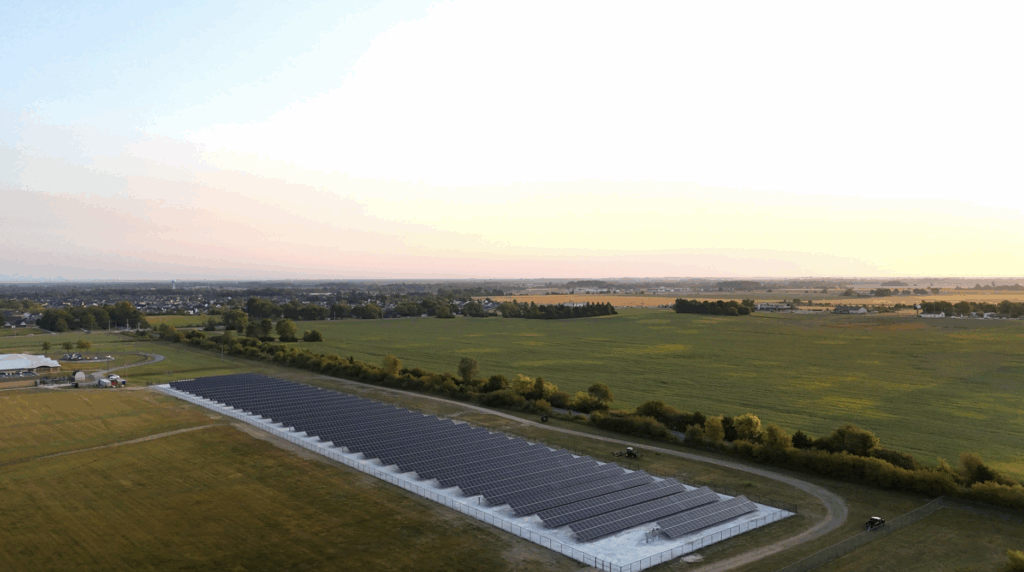 Maple Grove Elementary is emerging as the district’s crown jewel in sustainability. When renovations are complete later this year, it will become CGCSC’s first net-zero energy school, meaning it will generate as much energy as it uses annually.
“Even though it’s not our oldest building, Maple Grove had some of the oldest HVAC equipment in the district because it was one of the first newer buildings built in the early 2000s,” Dr. Taylor says. “We were already planning to renovate it in the upcoming years, so it made sense to go all in and create a fully electric, net-zero facility.”
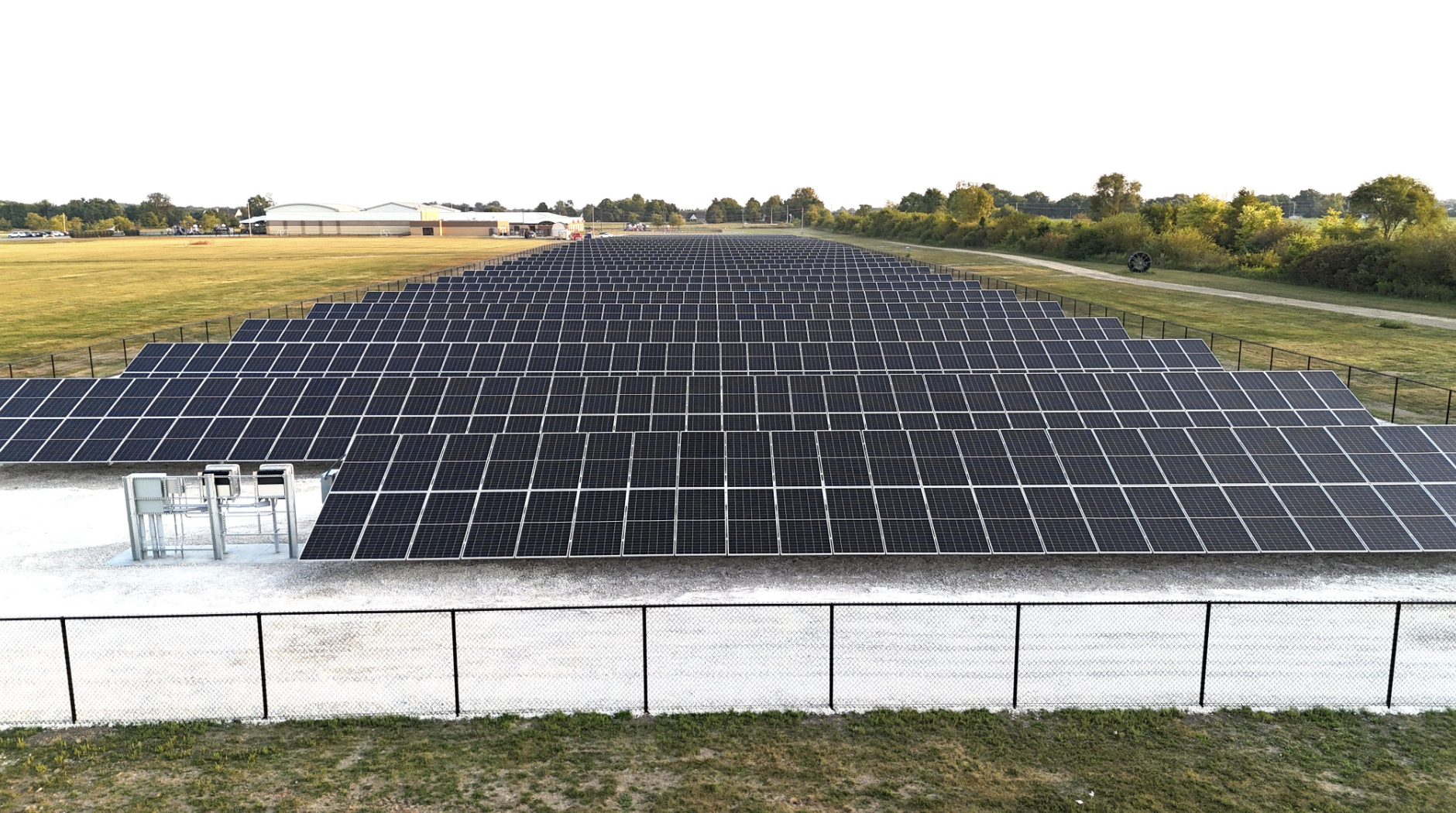
The transformation involved converting gas-powered kitchen equipment and water heaters to electric, installing a geothermal HVAC system and building a ground-mounted solar array large enough to power the school entirely.
“Once it’s up and running, we’ll have completely eliminated that school’s utility costs from our recurring budget,” Dr. Taylor says. “That’s money we can now put toward our teachers and students.”
While the financial and environmental benefits are clear, Dr. Taylor says the upgrades also provide opportunities for student engagement. Each building features a digital information panel that displays live solar output, energy savings and equivalent environmental impacts, such as the number of trees saved or emissions avoided.
“We’ve incorporated these real-world examples into our curriculum wherever possible,” he says. “When students can see how much energy their school is producing and how it affects the environment, it becomes a powerful learning tool.”
The initiative not only supports long-term environmental stewardship but also offers tangible benefits to taxpayers. “For those in the community who don’t have kids in the school system, this still benefits them,” Dr. Taylor says. “By reducing operating costs, we can keep our tax rate low. In lieu of a referendum, we’re creating new money through smart investments.”
This is only the beginning. The next phase of upgrades will target additional buildings not yet included in the current rollout, particularly those served by Johnson County REMC. Dr. Taylor also says the district is exploring partnerships with the cooperative to install large-scale batteries that could help mitigate outages and provide backup power.
“These batteries would also help with peak demand management and could be beneficial to both the school and the utility provider,” he says. “It’s a win-win.”
Dr. Taylor believes Center Grove’s model could be replicated in districts across the state, especially as energy prices continue to rise and school budgets remain tight.
“We’re not the only district doing this,” Dr. Taylor says. “Clark-Pleasant and Wayne Township are constructing similar projects, but it does require forward thinking, available land or newer buildings, and local support. For us, it’s about finding creative ways to put more money where it matters most in the classroom.”
The district is already seeing real savings. In just the first quarter of 2025, even before Maple Grove’s upgrades, Center Grove saved more than $100,000 in utility costs. It’s a promising start to what Dr. Taylor hopes will be a long-term commitment to sustainability and fiscal responsibility.